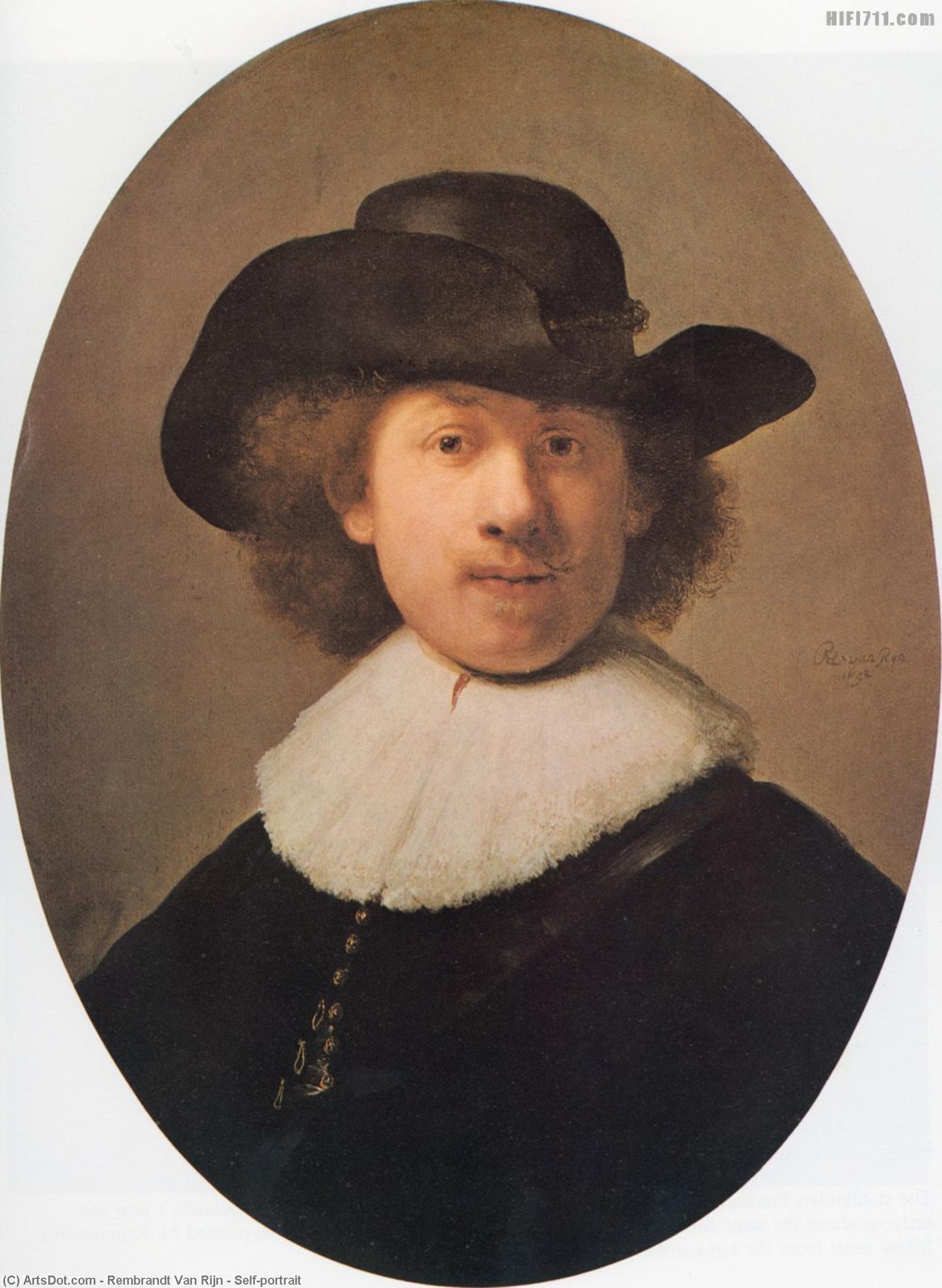
Self-Portrait from 1632: A Window Into Rembrandt’s Soul
Rembrandt van Rijn's Self-Portrait from 1632 stands as one of the most poignant and enduring images of the Dutch Golden Age, capturing not merely a likeness but an essence—a profound meditation on identity, aging, and artistic contemplation. More than just a depiction of a man in black attire, it’s a masterful exploration of psychological depth achieved through Rembrandt's unparalleled command of chiaroscuro, a technique that elevates the portrait beyond mere representation into a realm of emotional resonance.
Located within the Glasgow Art Gallery and Museum, this oil on panel painting measures 64 x 47 cm—dimensions that convey both grandeur and intimacy simultaneously. The composition is deceptively simple: Rembrandt sits before a dark background, bathed in diffused light emanating from an unseen source, creating dramatic contrasts between illuminated flesh tones and shadowed recesses. This masterful use of light isn’t merely aesthetic; it serves as a conduit for conveying inner turmoil—a subtle suggestion of melancholy that speaks volumes about the artist's state of mind during this turbulent period of his life.
The portrait itself is meticulously rendered with painstaking detail. Rembrandt’s gaze directs outwards, engaging the viewer in an unspoken dialogue—a gesture of vulnerability and self-awareness that distinguishes it from many portraits of its time. The inclusion of a black hat adorned with white lace adds formality to his appearance, yet beneath the surface lies a palpable sense of unease. His beard and mustache are rendered with remarkable accuracy, capturing the texture and contours of aging flesh—a visual reminder of mortality and the passage of time. The ruffled collar further emphasizes Rembrandt’s status as an artist, signaling both ambition and adherence to prevailing stylistic conventions.
Context Within Rembrandt's Oeuvre: A Reflection of Artistic Evolution
Rembrandt produced numerous self-portraits throughout his career, each offering invaluable insights into his artistic development and personal experiences. This particular portrait marks a significant shift from his earlier works—characterized by brighter palettes and more optimistic expressions—towards a darker, more introspective aesthetic. It’s notable that Rembrandt created several similar portraits during this period, demonstrating an unwavering fascination with exploring the complexities of human psychology through visual representation.
Considered alongside other self-portraits like
Self-Portrait (20) housed in the Musée du Louvre, Paris, and
Richard Rothwell's Self Portrait (copy after Rembrandt van Rijn) at the Ulster Museum in Ireland—all demonstrate a similar preoccupation with capturing inner emotion and psychological nuance. These works underscore Rembrandt’s commitment to portraying not just outward appearances but also the internal landscape of the artist’s consciousness.
Furthermore, Rembrandt’s exploration of light and shadow—a hallmark of his style—is particularly evident in this Self-Portrait from 1632. The dramatic interplay between illumination and darkness serves as a powerful metaphor for confronting existential questions—a visual representation of the artist's wrestling with themes of vulnerability, mortality, and artistic identity. It’s a technique that anticipates the expressive innovations of later artists like Caravaggio and continues to inspire painters today.
Art History Significance: A Legacy of Psychological Portraiture
Rembrandt’s Self-Portrait from 1632 occupies a pivotal position within art history—a cornerstone of the tradition of psychological portraiture that flourished during the Dutch Golden Age. Artists such as Titus van Rijn created copies after Rembrandt's works, like
Discover the Masterpieces of Mauritshuis, The Hague—demonstrating a profound admiration for Rembrandt’s artistic genius and his ability to convey inner emotion through visual means.
The influence of Rembrandt extends far beyond its immediate context—inspiring generations of artists who sought to emulate his mastery of technique and his unwavering commitment to exploring the human psyche. As Kenneth Clark famously remarked, “Rembrandt is with the possible exception of Van Gogh, the only artist who has made the self-portrait a major means of artistic self-expression, and he is absolutely the one who has turned self-portraiture into an autobiography.” This enduring legacy testifies to Rembrandt’s unparalleled contribution to the history of art—a testament to his ability to transform a simple depiction of a man into a profound meditation on human experience.
View the painting on ArtsDot
List of paintings by Rembrandt on Wikipedia
Richard Rothwell's Self Portrait (copy after Rembrandt van Rijn)