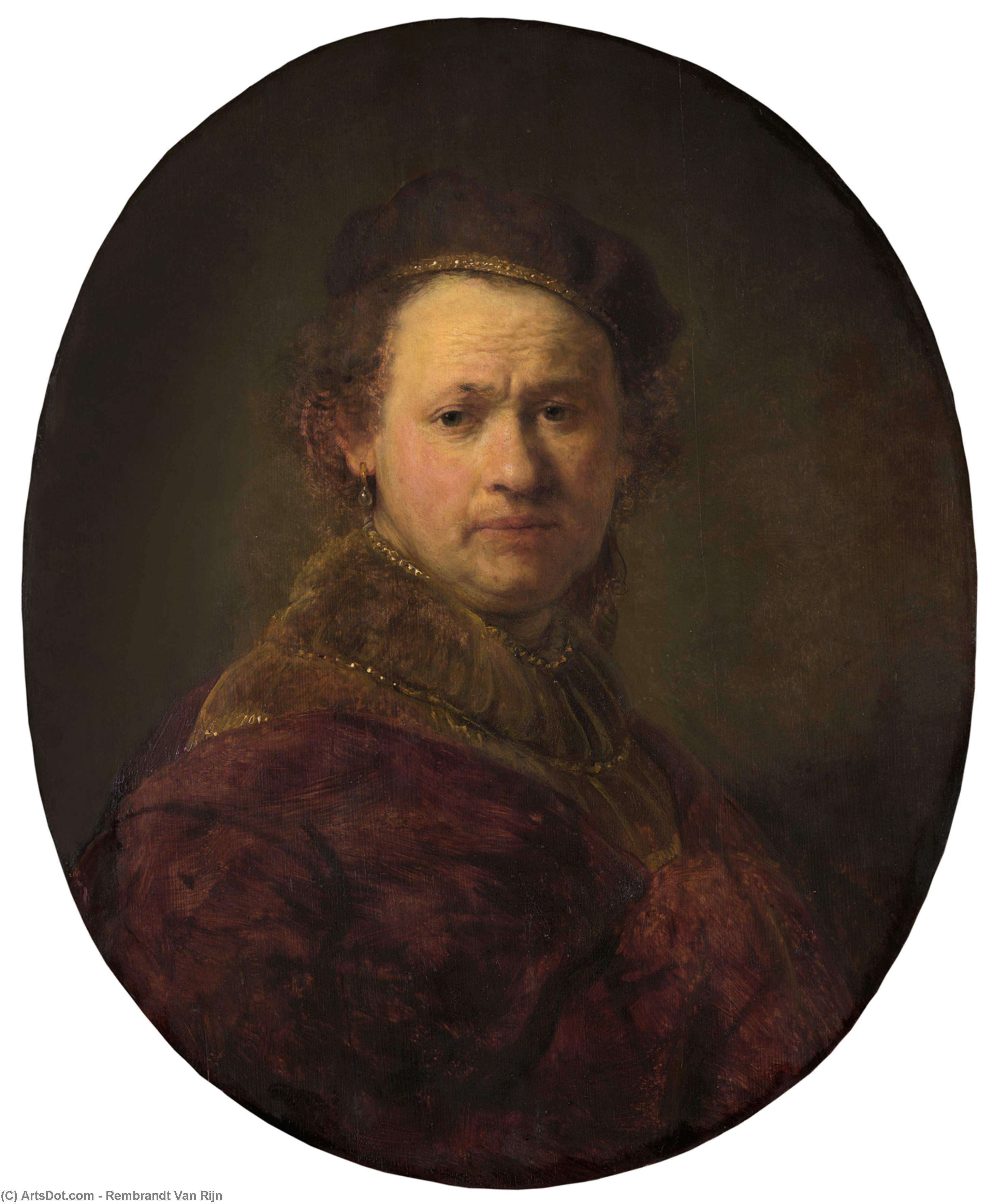
Rembrandt’s Self Portrait (1639): A Window Into Artistic Soul
Rembrandt Harmenszoon van Rijn, one of the most celebrated artists of the Dutch Golden Age, left an indelible mark on the world of art with his captivating self-portraits. Among these, the
Self Portrait created in 1639 stands out for its profound depth and artistic mastery. This oil painting on panel, measuring 81 x 63 cm, is a testament to Rembrandt’s skillful use of light and shadow, as well as his ability to convey emotion through facial expressions—a hallmark of Baroque art that continues to resonate with viewers today.
### The Artistic Genius of Rembrandt Van Rijn
Rembrandt was renowned for his portraits and landscapes, which often featured complex compositions and innovative lighting techniques. His self-portraits, in particular, offer a glimpse into his personal life and artistic evolution. They weren’t merely representations of the physical form; they were explorations of psychological states—a daring ambition for an artist of his time. Unlike many contemporaries who prioritized idealized beauty, Rembrandt unflinchingly depicted himself with wrinkles, blemishes, and a gaze that conveyed both weariness and contemplation. This honesty is arguably what elevates these portraits beyond mere likenesses into enduring symbols of human experience.
### A Closer Look at the Painting
The painting depicts Rembrandt with long hair and wearing a hat—a deliberate choice reflecting the fashion trends of the period but also serving as a visual anchor for the composition. The use of chiaroscuro, a technique that emphasizes contrasts between light and dark—developed by Leonardo da Vinci and perfected by Caravaggio—creates a sense of volume and depth. Rembrandt meticulously layered paint to build up highlights on his face and clothing, while plunging large areas into shadow, drawing attention to the expressive power of facial features. Notice how Rembrandt’s gaze is directed slightly off-center, conveying an inner focus that invites viewers to contemplate his thoughts and feelings. The subtle shading around his eyes captures a profound sadness—a poignant reminder of the artist's struggles during this period.
### Historical Significance
The
Self Portrait is housed at the
Musée du Louvre in Paris, France—one of the world’s most famous museums. The Louvre's collection includes an extensive array of paintings from various periods and styles, making it a treasure trove for art enthusiasts. Rembrandt’s work embodies the spirit of the Dutch Golden Age, a time of unprecedented artistic flourishing fueled by economic prosperity and intellectual curiosity. It stands as a testament to Rembrandt’s enduring legacy—a symbol of artistic brilliance and psychological insight that continues to inspire artists and scholars centuries later.
### Discovering More Masterpieces For those interested in exploring more works by Rembrandt Van Rijn or other artists at the Musée du Louvre,
Discover the Masterpieces of Musée du Louvre Département Des Peintures (Paris, France) offers a comprehensive guide.
### Handmade Oil Painting Reproductions At
ArtsDot, we specialize in creating handmade oil painting reproductions of famous artworks, including Rembrandt's
Self Portrait. Our skilled artists ensure that each reproduction captures the essence and beauty of the original piece—preserving its artistic integrity for generations to come.