A Window Into Rembrandt’s Soul: Examining “Self Portrait Wearing a White Feathered Bonnet”
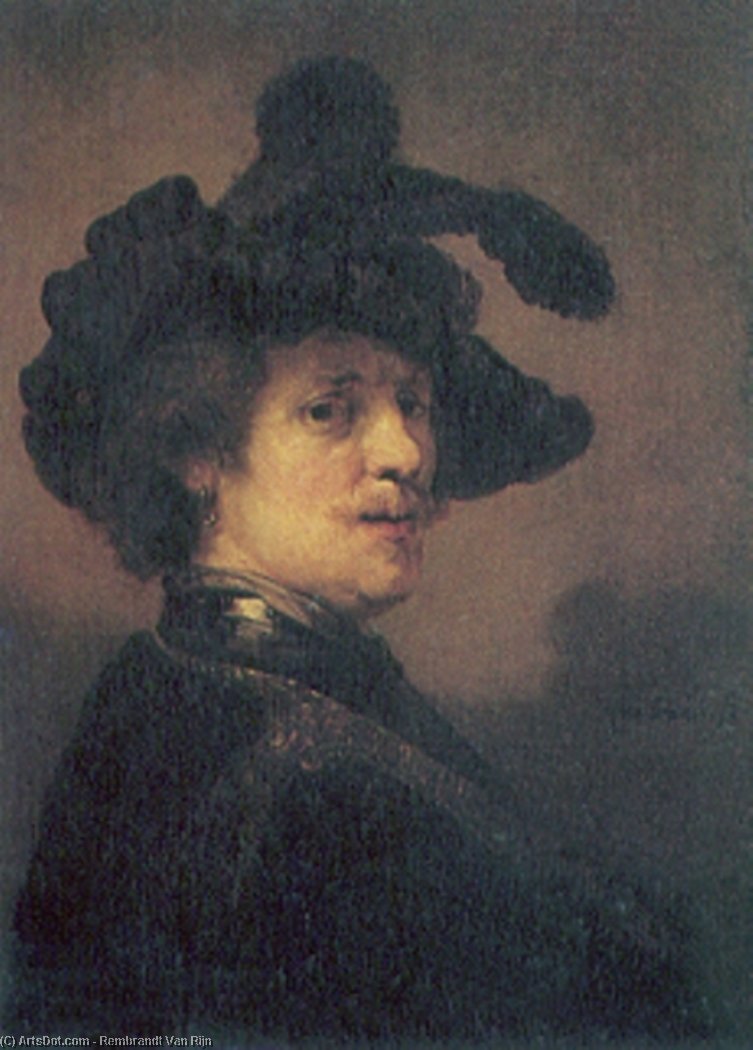
Rembrandt Harmenszoon van Rijn, arguably the most influential painter of the Dutch Golden Age, continues to fascinate audiences centuries after his death. His ability to distill profound emotion onto canvas—particularly evident in portraits like “Self Portrait Wearing a White Feathered Bonnet,” completed in 1635—solidifies his place as one of history’s greatest artistic innovators. Currently residing within the Mauritshuis Royal Picture Gallery in The Hague, Netherlands, this painting transcends mere representation; it offers an intimate glimpse into Rembrandt's psyche and embodies the spirit of his era.
- Subject Matter & Composition: The portrait depicts Rembrandt himself, dressed in a dark coat and hat adorned with a prominent white feathered bonnet—a bold stylistic choice reflecting the prevailing fashions of the time. His gaze is directed outwards, engaging the viewer with an expression of quiet contemplation that speaks volumes about his inner life.
- Style & Technique: Rembrandt’s masterful use of chiaroscuro – dramatic contrasts between light and shadow – dominates the composition. This technique isn't merely decorative; it serves to sculpt Rembrandt’s face, emphasizing features and creating an atmosphere of solemn seriousness. The oil paint on panel lends itself beautifully to capturing subtle tonal variations, resulting in a luminous surface that conveys depth and realism.
Historical Context: Portraiture During the Dutch Golden Age
The mid-17th century witnessed an unprecedented flourishing of artistic creativity in Holland—the Dutch Golden Age. Portraiture experienced a remarkable surge in popularity, driven by factors such as burgeoning merchant wealth and a growing desire for self-representation amongst the elite. Artists like Rembrandt pushed the boundaries of convention, experimenting with innovative approaches to capturing human emotion and psychological complexity. The patronage system supported ambitious projects, fostering artistic excellence and establishing Holland as a center for visual culture.
- Symbolism: Beyond its aesthetic qualities, “Self Portrait Wearing a White Feathered Bonnet” carries symbolic weight. The white feather represents purity and nobility—qualities Rembrandt himself sought to embody. Furthermore, the bonnet’s placement obscures much of Rembrandt's face, prompting speculation about his inner thoughts and anxieties. This deliberate ambiguity underscores the artist’s preoccupation with introspection.
- Influence & Legacy: Rembrandt’s self-portraits profoundly impacted subsequent generations of painters. They established a precedent for exploring psychological realism and demonstrating the transformative power of artistic expression. Artists throughout Europe emulated Rembrandt's technique, furthering the development of chiaroscuro and elevating portraiture to new heights.
Emotional Impact & Artistic Significance
“Self Portrait Wearing a White Feathered Bonnet” remains powerfully evocative today. The painting’s subdued palette—dominated by browns and blacks—creates an atmosphere of melancholy and contemplation, mirroring Rembrandt's own emotional state during this period. It is not merely a likeness; it is a portrait of the artist as man—a figure wrestling with existential questions and striving for spiritual understanding. This enduring fascination testifies to Rembrandt’s unparalleled ability to convey profound human experience through visual art.
Explore a stunning reproduction of “Self Portrait Wearing a White Feathered Bonnet” at ArtsDot – bringing Rembrandt's masterpiece into your home!