A Window Into the Soul: Rembrandt’s ‘Self Portrait at the Age of 63’
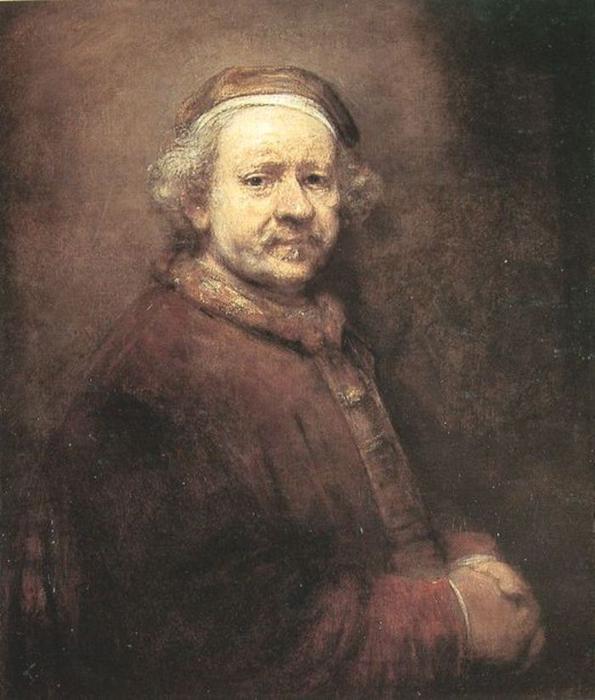
Rembrandt van Rijn's 'Self Portrait at the Age of 63,' painted in 1669, isn’t merely a depiction of an aging artist; it’s a profoundly intimate and unsettling exploration of mortality, artistic ambition, and the quiet dignity of experience. Housed within the venerable walls of the National Gallery in London, this oil-on-canvas masterpiece transcends its physical dimensions to become a portal into the mind of one of history's most complex and compelling figures. The painting immediately commands attention with its dramatic contrast – a deep, brooding background rendered in shadowy browns and blacks that seem to absorb light, juxtaposed against the luminous, almost ethereal quality of Rembrandt’s own attire. This stark division isn’t simply an artistic choice; it mirrors the internal landscape he so masterfully portrays: a world of profound darkness tempered by moments of startling clarity.
The subject himself is presented with remarkable honesty. At 63, Rembrandt doesn't attempt to conceal the signs of time – the sagging skin around his eyes and mouth, the subtle lines etched into his forehead. Yet, these imperfections aren’t portrayed as weaknesses; instead, they are rendered with a delicate sensitivity that imbues them with a poignant beauty. His gaze is direct, unwavering, meeting the viewer with an intensity that feels both challenging and profoundly vulnerable. It's not a boastful self-regard, but rather a quiet acknowledgment of his own existence, a willingness to confront the realities of aging and the weight of years spent dedicated to his craft. The inclusion of the hat and fur collar speaks to his status as a respected artist, while simultaneously hinting at the hardships he’d faced – a subtle reminder that even within the world of artistic acclaim, life could be difficult.
Rembrandt's masterful technique is evident in every brushstroke. He employs a layered approach, building up color gradually through countless thin glazes, creating an astonishingly rich and textured surface. The use of *chiaroscuro* – the dramatic interplay of light and shadow – is particularly striking. Rembrandt doesn’t simply illuminate his face; he sculpts it with light, revealing every wrinkle, every nuance of expression. This technique wasn't merely a stylistic flourish; it was integral to his ability to convey emotion and psychological depth. The painting feels alive, imbued with a palpable sense of movement and breath. The subtle variations in tone suggest the passage of time, mirroring the artist’s own journey through life.
Beyond its technical brilliance, ‘Self Portrait at the Age of 63’ is steeped in historical context. Painted during a period of personal and financial turmoil for Rembrandt – a time marked by debt, legal troubles, and the loss of his beloved wife – the painting offers a rare glimpse into the artist's inner world. It’s a moment of quiet introspection amidst chaos, a testament to his enduring spirit and unwavering commitment to his art. The fact that he continued to paint self-portraits during this difficult period speaks volumes about his need to understand himself, to grapple with his own mortality, and to find solace in the act of creation. The painting’s journey through private collections before finding its home at the National Gallery adds another layer of intrigue – a silent testament to its enduring value and artistic significance.
- Artist: Rembrandt van Rijn
- Year: 1669
- Museum: National Gallery (London, United Kingdom)
- Medium: Oil on Canvas
- Size: 86 x 71 cm
The Symbolism of Light and Shadow
Rembrandt’s strategic use of light and shadow is not merely aesthetic; it's deeply symbolic. The dark background, often interpreted as representing the artist’s struggles and anxieties, creates a sense of isolation and introspection. It’s a space where the viewer is invited to contemplate the complexities of Rembrandt’s inner life. Conversely, the light that illuminates his face – particularly around his eyes – suggests wisdom, experience, and perhaps even a touch of melancholy. These are not the bright, youthful features of an artist at the peak of his career; instead, they represent the accumulated knowledge and emotional depth gained through years of observation and artistic practice. The contrast between these elements highlights Rembrandt’s acceptance of aging and his ability to find beauty in both light and darkness.
- Dark Background: Represents struggle, anxiety, isolation.
- Luminous Attire: Symbolizes wisdom, experience, and a quiet dignity.
- Direct Gaze: Conveys introspection, vulnerability, and a willingness to confront reality.
A Legacy of Introspection
Rembrandt’s ‘Self Portrait at the Age of 63’ stands as a pivotal work in the history of art, not just for its technical brilliance but also for its profound psychological insight. It's a remarkably honest and unflinching portrayal of an aging artist grappling with his own mortality and legacy. His influence extends far beyond this single painting; he profoundly impacted generations of artists who followed, shaping the course of Western art with his innovative use of light, shadow, and emotional expression. The painting’s enduring appeal lies in its ability to resonate with viewers on a deeply personal level – inviting us to contemplate our own lives, our own struggles, and our own place within the grand tapestry of human experience.
- Influence: Rembrandt profoundly influenced subsequent generations of artists.
- Themes: Explores themes of aging, mortality, introspection, and artistic legacy.
Bringing Rembrandt Home – A Hand-Painted Reproduction
ArtsDot offers exquisite hand-painted reproductions of ‘Self Portrait at the Age of 63,’ meticulously crafted by our team of highly skilled artists who share a deep appreciation for Rembrandt’s genius. Each reproduction is created using traditional oil painting techniques, capturing the nuances of light, shadow, and texture that define this iconic masterpiece. We offer various sizes and canvas options to suit your individual taste and décor. Owning a ArtsDot reproduction allows you to bring this powerful work of art into your home or office, celebrating Rembrandt’s legacy for generations to come. Explore our collection today and discover the perfect way to experience the profound beauty and emotional depth of ‘Self Portrait at the Age of 63.’