Explore Rembrandt van Rijn (1606-1669), Dutch Baroque master of light & shadow! Discover iconic self-portraits, biblical scenes & groundbreaking etchings. Experience the Dutch Golden Age.
A Window Into Rembrandt’s Soul: Examining ‘Self-Portrait With Saskia’
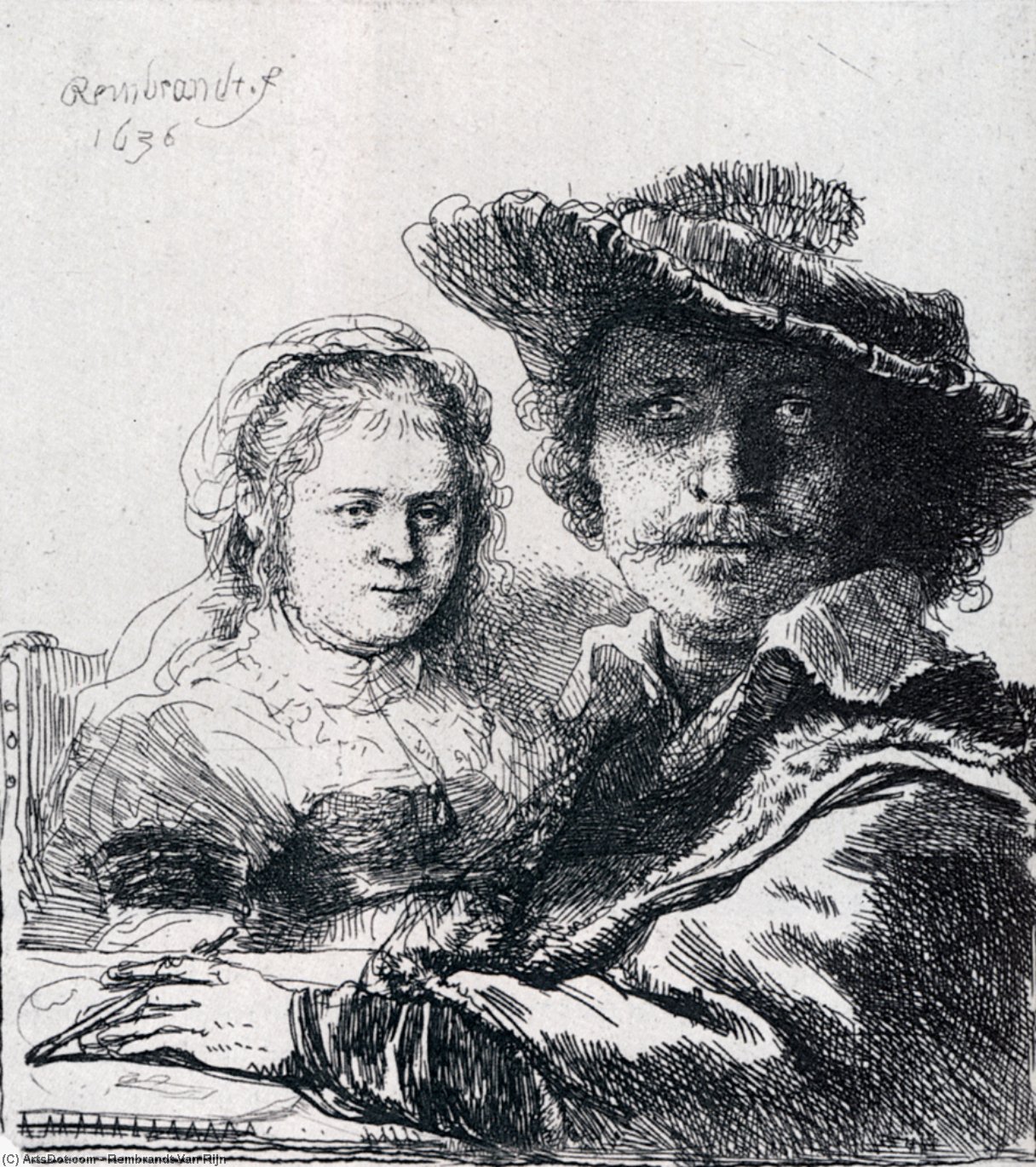
Rembrandt van Rijn's “Self-Portrait With Saskia,” etched in 1636, stands as a cornerstone of Baroque art and an enduring testament to the artist’s profound understanding of human emotion. More than just a likeness of two figures seated together—a husband and wife—the etching delves into themes of contemplation, vulnerability, and the quiet beauty found within domestic life, offering viewers a glimpse into Rembrandt's inner world during a pivotal moment in his artistic career.
The Baroque Embrace: Style and Technique
Executed with masterful precision using the etching technique – a process involving transferring an image onto a metal plate (typically copper), applying ink, and pressing it onto paper – “Self-Portrait With Saskia” exemplifies the Baroque aesthetic’s obsession with realism combined with dramatic chiaroscuro. Rembrandt skillfully employed hatching and crosshatching to sculpt light and shadow, creating textures that mimic skin tones and clothing fabrics with astonishing accuracy. The delicate lines delineating facial features—particularly Saskia's gaze—speak volumes about Rembrandt’s artistic sensitivity and his ability to convey subtle nuances of expression. This technique wasn’t merely decorative; it served as a crucial tool for capturing the psychological depth inherent in the scene.
A Moment Frozen in Time: Historical Context
Created during Rembrandt’s prolific period, “Self-Portrait With Saskia” reflects the burgeoning humanist spirit of the Dutch Golden Age. Saskia van Uylenburgh, Rembrandt's beloved wife and patroness, represents not only his personal life but also embodies the ideals of refined taste and intellectual curiosity prevalent in Amsterdam society at the time. The etching captures a scene from their home—likely Rembrandt’s studio—where Saskia sits beside him, gazing intently outwards. This posture suggests a shared preoccupation with observation and contemplation, mirroring Rembrandt's own artistic endeavors. It’s a portrait not just of individuals but also of an era defined by burgeoning artistic innovation and humanist values.
Symbolism Beyond Appearance: Layers of Meaning
The composition itself is laden with symbolic significance. The positioning of Rembrandt and Saskia—facing each other—creates a visual dialogue, hinting at intimacy and mutual respect. The book resting on the table symbolizes intellectual pursuits and represents Saskia’s erudition – an important facet of her character and status within Amsterdam's cultural landscape. Rembrandt’s gaze directs our attention inward, inviting us to consider his own self-awareness as an artist grappling with profound questions about beauty, mortality, and the human condition.
Emotional Resonance: Capturing Inner Light
Ultimately, “Self-Portrait With Saskia” succeeds in conveying a palpable sense of emotion—a quiet serenity underpinned by vulnerability. Rembrandt’s masterful use of tonal variation captures the subtle luminescence of skin tones, creating an illusion of depth that draws us into the scene. The etching isn't merely documenting reality; it strives to illuminate the human spirit, mirroring Rembrandt’s own artistic mission to portray the complexities of human experience with unwavering honesty and compassion. It remains a powerful reminder of the enduring beauty found in capturing fleeting moments of connection and introspection—a legacy that continues to inspire artists and collectors alike.