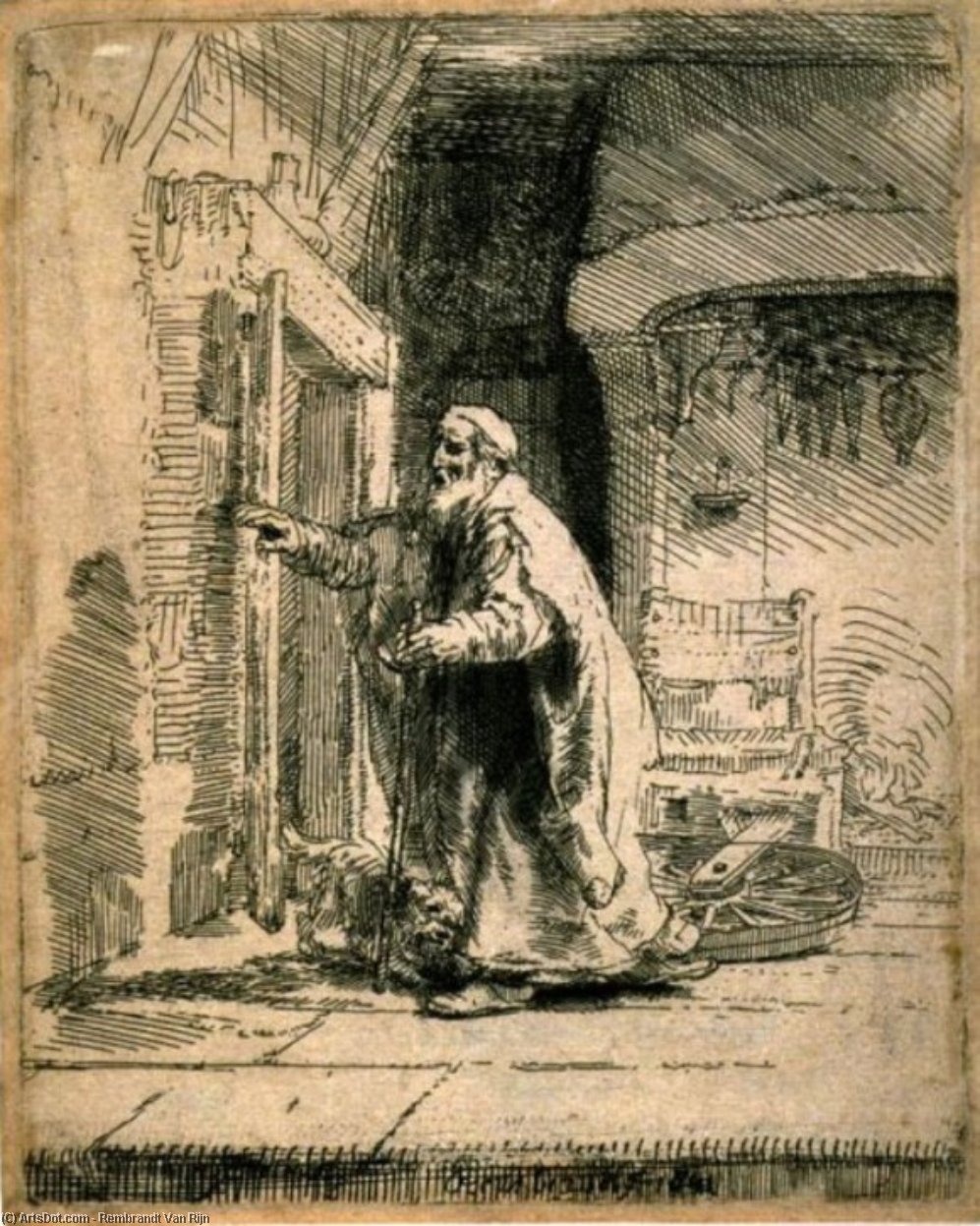
A Window into Faith: Rembrandt’s ‘The Blindness of Tobit’
Rembrandt van Rijn's etching, “The Blindness of Tobit,” stands as a testament to the artist’s unparalleled ability to distill biblical narrative into visual poetry. Executed around 1650-52 during his prolific output—a period marked by both artistic brilliance and personal hardship—this work transcends mere illustration; it embodies Rembrandt's signature style, characterized by dramatic chiaroscuro – a masterful manipulation of light and shadow – that elevates the scene beyond a simple depiction of scripture. The etching captures a pivotal moment from the Book of Tobit, recounting the tale of Tobias’s blindness as he navigates perilous journeys guided by divine providence.
- Subject Matter: The composition centers on Tobias and his wife Anna, confronting a daunting task – retrieving their son Raphael's sight after it has been afflicted by demonic influence. This narrative explores themes of faith, perseverance, and reliance upon God’s intervention in human affairs.
- Style & Technique: Rembrandt employed the etching technique—a process involving transferring ink onto metal plate—to achieve remarkable tonal gradation and textural detail. The artist skillfully utilized hatching and cross-hatching to create depth and dimension, mirroring the psychological complexity of the characters’ predicament. His meticulous attention to anatomical accuracy reflects his unwavering commitment to realism, a hallmark of Dutch Baroque art.
The etching's historical context is firmly rooted in the Dutch Golden Age, a period of artistic innovation fueled by burgeoning humanist ideals and patronage from wealthy merchants and nobles. Rembrandt’s work aligns with the broader artistic movement that sought to convey moral lessons through evocative imagery—a tradition deeply ingrained within European culture at the time. The inclusion of a dog symbolizes loyalty and guardianship, mirroring Tobias's unwavering devotion to his family as they embark on their arduous quest.
Symbolism:
- The darkness surrounding Tobias and Anna represents spiritual blindness—the inability to perceive God’s guidance amidst adversity. However, Rembrandt subtly illuminates the figures with carefully placed highlights, symbolizing divine grace and hope that pierces through despair.
- The doorway serves as a visual metaphor for transition – representing the passage from darkness into light, mirroring Tobias's journey toward restoring Raphael’s vision and reaffirming faith in God’s power.
Ultimately, “The Blindness of Tobit” resonates with viewers on an emotional level. Rembrandt’s masterful rendering captures not only the physical details of the biblical story but also its profound spiritual significance. It invites contemplation on themes of resilience, divine compassion, and the transformative potential of unwavering faith—elements that continue to captivate audiences centuries later. This etching exemplifies Rembrandt's enduring legacy as one of the greatest artists of all time, securing his place within art history’s canon.