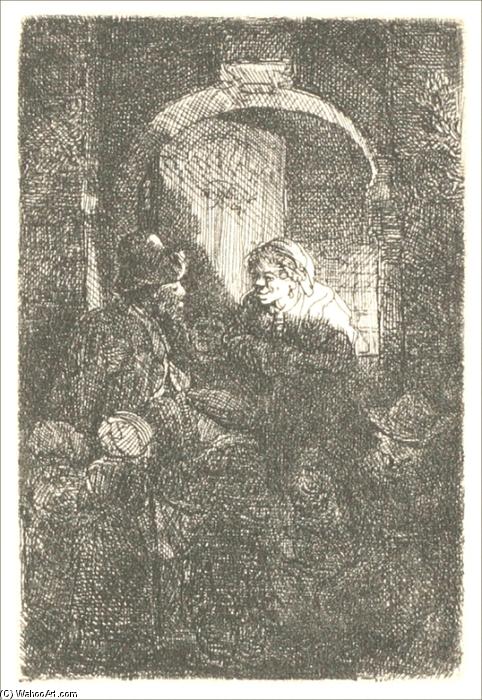
The Schoolmaster

Explore Rembrandt’s ‘The Schoolmaster,’ a dramatic etching showcasing masterful light & shadow in 17th-century Dutch art. Discover its rich symbolism and unique style.


Rembrandt van Rijn (1606 - 1669)

Explore Rembrandt van Rijn (1606-1669), Dutch Baroque master of light & shadow! Discover iconic self-portraits, biblical scenes & groundbreaking etchings. Experience the Dutch Golden Age.

A Glimpse into Dutch Intimacy: Exploring Rembrandt’s “The Schoolmaster”

  • Subject and Narrative: This captivating etching by Rembrandt van Rijn presents a scene of quiet contemplation within a dimly lit interior. A small group, likely men engaged in scholarly or professional discussion, are clustered around a table. While the specific subject of their conversation remains elusive – adding to its mystique – the composition strongly suggests an atmosphere of seriousness and perhaps even secrecy. The title, “The Schoolmaster,” hints at an educational setting, but the scene transcends a simple classroom depiction, inviting viewers to construct their own narrative.
  • Artistic Style & Technique: Executed with masterful skill in etching – enhanced by drypoint for added textural richness – "The Schoolmaster" exemplifies Rembrandt’s signature style. The work is characterized by dramatic *chiaroscuro*, a stark contrast between light and shadow, which sculpts the figures and intensifies the emotional impact. Rembrandt doesn't prioritize precise realism; instead, he focuses on capturing atmosphere and psychological depth through expressive lines and tonal variations. Hatching and cross-hatching are employed extensively to build form and create a palpable sense of texture.
  • Historical Context & Rembrandt’s Mastery: Created during the Dutch Golden Age (1606-1669), a period of unprecedented artistic and economic prosperity in the Netherlands, this etching reflects the era's growing interest in genre scenes and intimate portrayals of everyday life. Rembrandt, born in Leiden in 1606, quickly rose to prominence as a painter and printmaker. He revolutionized etching by elevating it from a primarily reproductive technique to a powerful artistic medium in its own right. His innovative use of light, shadow, and psychological insight set him apart from his contemporaries.
  • Symbolism & Emotional Resonance: The limited color palette – monochromatic tones of black and white – contributes to the work’s somber mood. The deep shadows obscure details, fostering a sense of mystery and introspection. This isn't merely a depiction of figures; it is an exploration of human thought and emotion. The confined space and focused grouping suggest intimacy but also perhaps constraint or hardship. The scene evokes themes of contemplation, learning, and the weight of knowledge.
  • Impact & Interior Design Considerations: “The Schoolmaster” possesses a timeless quality that makes it suitable for a variety of interior settings. Its subdued palette and introspective mood lend themselves well to libraries, studies, or living rooms seeking an air of sophistication and intellectual depth. A high-quality reproduction would serve as a striking focal point, adding character and historical resonance to any space. The etching’s vertical orientation makes it particularly effective in hallways or above furniture.
  • Further Exploration: To delve deeper into Rembrandt's life and work, consider visiting the Rembrandt House Museum in Amsterdam, or exploring resources at the Rijksmuseum. His profound influence on art history continues to inspire artists and captivate audiences worldwide.