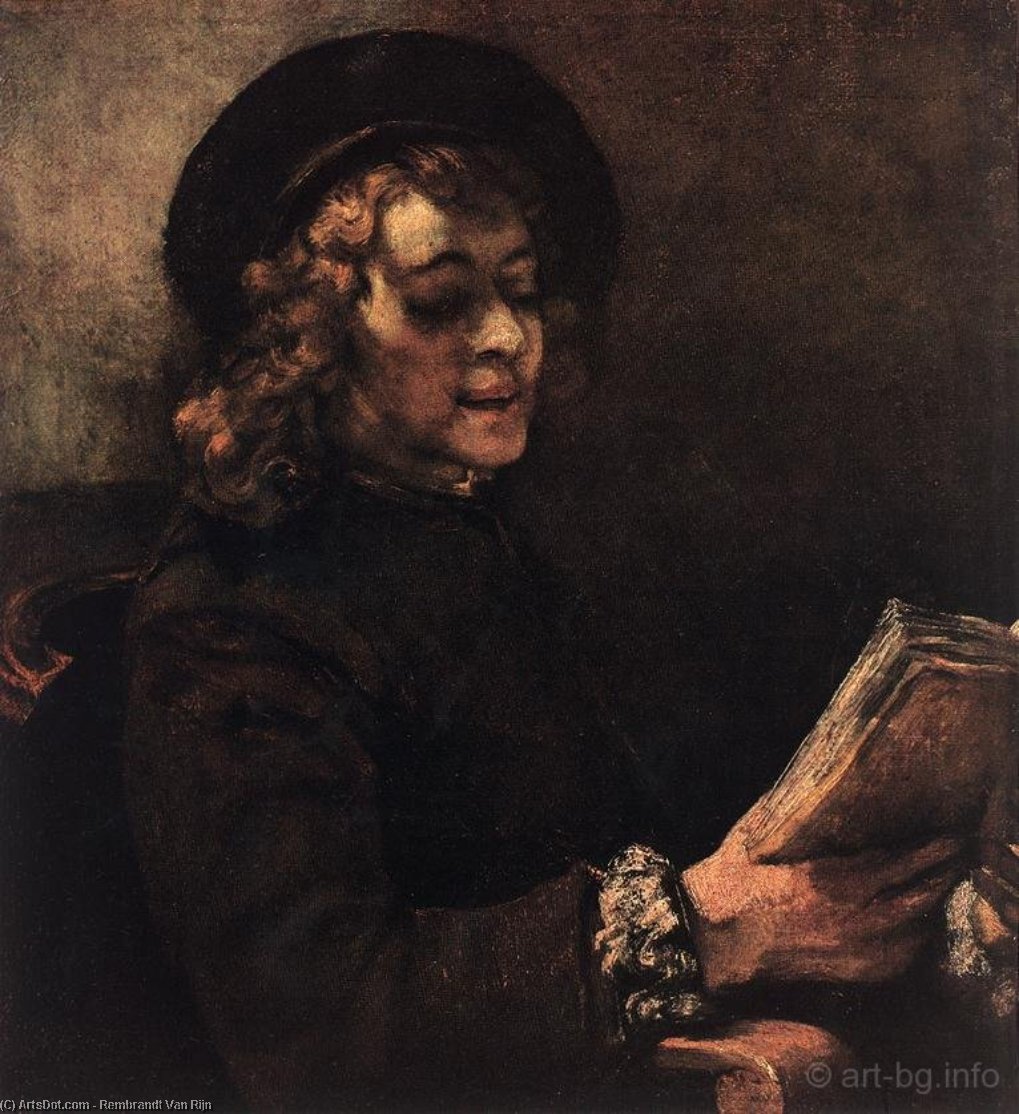
Titus Reading
Rembrandt van Rijn, one of the most celebrated artists of the Dutch Golden Age, created a plethora of masterpieces that continue to captivate art enthusiasts worldwide. Among his notable works is Titus Reading, an oil on canvas painting from 1656. This captivating piece showcases Rembrandt’s skill in capturing the essence of his subjects and invites viewers into a world of contemplation.
The Painting: A Study in Introspection
Measuring 71 x 64 cm and housed at the Kendal Museum, United Kingdom, Titus Reading depicts Titus, Rembrandt’s son, engrossed in reading a book. The subject is positioned against a simple background, with a chair placed behind him, creating a sense of depth and solitude. The focus on Titus's face and the book he holds emphasizes his absorption in the text, drawing the viewer into his world of study.
Rembrandt’s masterful use of chiaroscuro—a technique employing strong contrasts between light and dark—is immediately apparent. Soft, golden light illuminates Titus’s visage, highlighting his brow ridge and eyes with remarkable sensitivity, while the background remains shrouded in shadow, generating a dramatic effect that amplifies the painting's emotional resonance. This deliberate manipulation of illumination isn’t merely stylistic; it serves to convey a profound psychological state—one of quiet contemplation and focused concentration.
Artistic Techniques
The artist’s meticulous attention to detail is evident in every brushstroke. Rembrandt skillfully renders the texture of Titus's clothing, capturing subtle folds and creases with astonishing realism. Furthermore, he employs impasto—thickly applied paint—to build up volume on Titus’s face and hands, adding a tactile dimension to the image that invites viewers to engage their senses.
Historical Context
Created during Rembrandt’s prolific period, Titus Reading reflects the humanist ideals prevalent in 17th-century Europe. The depiction of Titus—a young man dedicated to intellectual pursuits—represents a celebration of learning and contemplation, aligning with the broader cultural fascination for philosophical inquiry during this era.
Relevance in Modern Times
Despite its origins centuries ago, Titus Reading continues to resonate with contemporary audiences. Its quiet stillness and introspective gaze speak to universal themes of self-reflection and the pursuit of knowledge—a timeless message that transcends temporal boundaries.
For those interested in exploring more of Rembrandt’s works, Titus Reading and other notable paintings can be found on ArtsDot.com.
Rembrandt Van Rijn's legacy is a testament to his enduring impact on the world of art. His works continue to captivate audiences, inviting them into a realm of beauty and contemplation.