ENLÈVEMENT D'EUROPE: A Rococo Masterpiece by René-Antoine Houasse
- Artist: René-Antoine Houasse
- Date: Unknown
- Materials: Ceramic or Plaster with Applied Gold Leaf
A Mythological Scene of Desire and Transformation
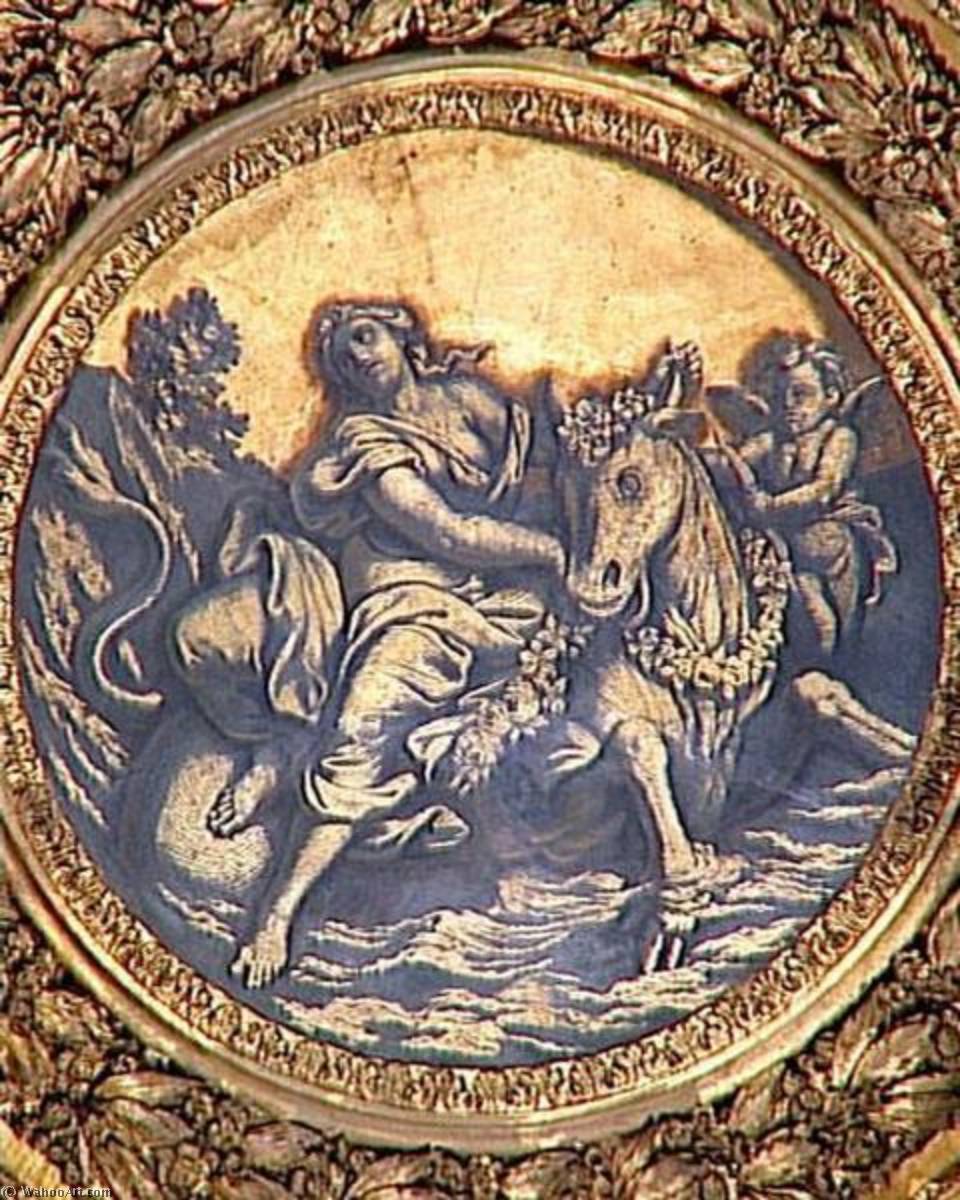
René-Antoine Houasse's Enlèvement d'Europe (The Abduction of Europa) is a captivating work that draws viewers into the heart of Greek mythology. The artwork depicts the pivotal moment when Zeus, disguised as a magnificent white bull, abducts Europa, a Phoenician princess. This narrative, rich in symbolism, explores themes of divine power, desire, and destiny. Presented within an ornate oval medallion, the scene is framed by elaborate gilded ornamentation, characteristic of the Rococo style.
Style and Technique: Late Baroque Opulence
Houasse’s Enlèvement d'Europe exemplifies the late Baroque period, transitioning into the elegant aesthetics of Rococo. The composition is dynamic and theatrical, with figures arranged in a diagonal movement that conveys a sense of urgency and drama. Strong outlines define the forms, typical of Baroque art, while curved lines contribute to the overall feeling of motion. The technique likely involves relief carving or a similar sculptural method, creating raised forms within the medallion. The extensive use of gold leaf—gilding—adds a layer of opulence and visual richness, contrasting beautifully with the cool blues used to depict Europa and the bull.
Color Palette and Compositional Elements
The color palette is dominated by shades of blue and gold. Varying tones of blue create a somewhat monochromatic effect for the central scene, while the surrounding ornamentation bursts with golden hues. This stark contrast draws immediate attention to the mythological narrative unfolding within. The tight framing within the oval medallion creates a sense of intimacy and containment, focusing the viewer's gaze on the embrace between Europa and the bull. A smaller figure, Cupid, perched atop the bull’s back, introduces an element of playful mischief into this otherwise dramatic scene. The limited perspective emphasizes the foreground, contributing to the artwork's overall flatness.
Symbolism and Emotional Impact
Beyond its narrative depiction, Enlèvement d'Europe is laden with symbolic meaning. Europa’s abduction represents not only a tale of divine intervention but also a metaphor for transformation and destiny. The embrace between Europa and the bull evokes complex emotions – fear, surrender, and perhaps even an unexpected connection. The presence of Cupid suggests that love, in all its forms, plays a crucial role in shaping human events. This piece, originally intended to adorn the Château de Versailles, embodies the grandeur and artistic sophistication of the French court during the reign of Louis XIV, offering viewers a glimpse into a world of myth, power, and exquisite beauty.