A Dreamscape of Disproportion: The Enigma of Call of Peaks
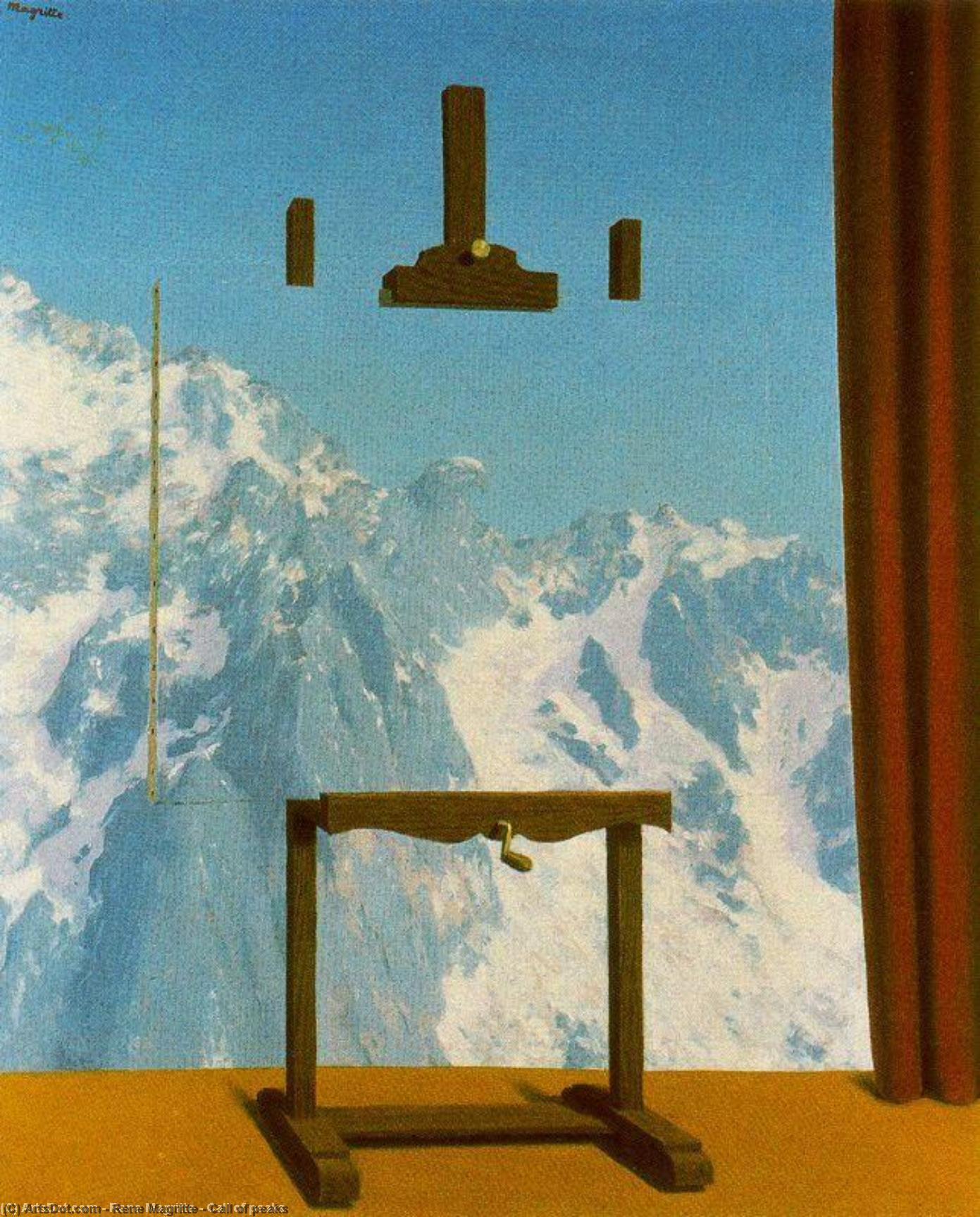
In the vast, silent theater of René Magritte’s Call of Peaks, reality does not merely bend; it fractures into a beautiful, unsettling mystery. Painted in 1943, this surrealist masterpiece invites the viewer into a world where the familiar is stripped of its logic and rearranged into a hauntingly poetic composition. At first glance, one encounters an intimate, almost domestic stillness: a meticulously rendered wooden easel stands anchored in the foreground, while a small hammer hangs suspended above it with a weight that feels both precarious and threatening. Yet, as the eye wanders beyond this quiet arrangement, the horizon explodes into a monumental, stylized mountain range that dominates the sky. This deliberate disparity in scale—the miniature, fragile objects dwarfed by the colossal, indifferent peaks—creates an immediate sense of disorientation, pulling the observer into a dreamlike state where the boundaries between the small and the infinite dissolve.
Magritte’s technical mastery is on full display through his use of oil on canvas, employing a style that blends precise realism with the illogical. There is no frantic brushwork here; instead, the surface is smooth and deliberate, allowing for subtle gradations of color that lend the mountains a sculptural, almost artificial permanence. The lighting is diffused and even, casting soft shadows that avoid harshness, which only serves to heighten the eerie, frozen quality of the scene. This geometric precision—seen in the sharp angles of the easel and the jagged silhouettes of the peaks—contributes to an aesthetic of rigid clarity. For the collector or interior designer, this painting offers a sophisticated tension; its cool, muted palette of blues and whites provides a serene atmosphere, yet its underlying structural complexity demands intellectual engagement, making it a profound focal point for any curated space.
Symbolism and the Echoes of an Uncertain Era
To look upon Call of Peaks is to confront the profound isolation that characterized much of Magritte’s work. The painting functions as a window into the subconscious, where objects are stripped of their utility and transformed into symbols of existential weight. The suspended hammer, poised above the easel, suggests a latent tension—a moment of interrupted action or an impending strike that never arrives. This sense of suspension is mirrored by the vast, empty sky and the distant, unapproachable mountains, evoking themes of detachment and the insignificance of human endeavor when measured against the grandeur of nature. The work speaks to the quiet drama of existence, where the tools of our creation are dwarfed by the overwhelming scale of the world around us.
The historical context of 1943 adds a layer of poignant depth to this visual narrative. Created during the height of World War II, the painting’s sense of dislocation and its stark, lonely atmosphere may reflect the broader emotional climate of an era defined by uncertainty and global upheaval. While Magritte often avoided overt political messaging, the psychological weight of his imagery—the way he uses familiar objects to provoke questions about what is real and what is perceived—resonates with the anxieties of a world in flux. For those seeking to bring a piece of art history into their homes, this reproduction offers more than mere decoration; it provides an enduring exploration of mystery, a silent conversation between the viewer and the infinite, and a timeless reminder of the power of the surreal to touch the deepest parts of the human soul.