The Enigmatic Dialogue Between Sculpture and Silence
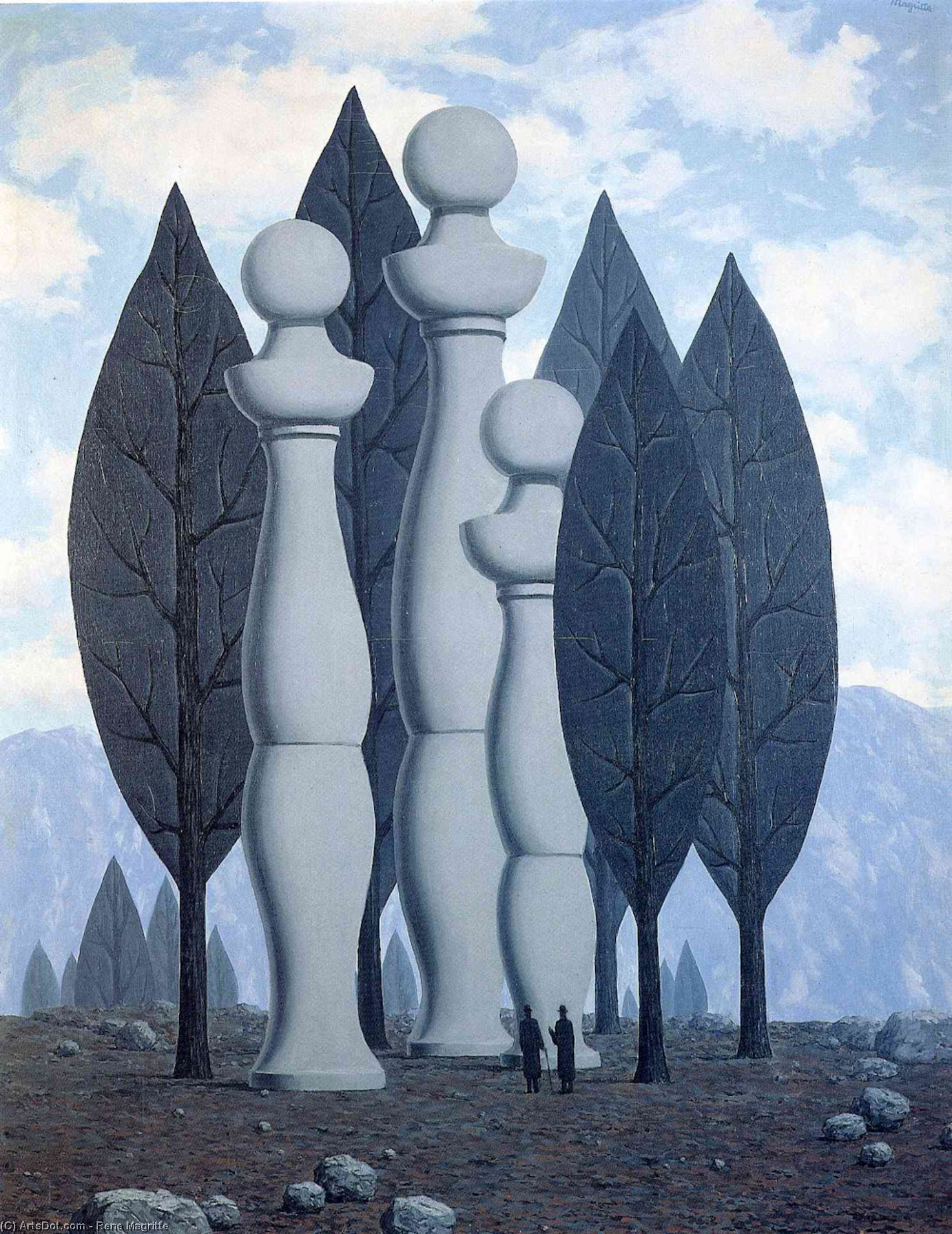
In the quiet, unsettling realm of René Magritte’s 1950 masterpiece, “The Art of Conversation,” the boundaries between the tangible world and the subconscious begin to dissolve. This is not merely a painting of statues set against an autumnal backdrop; it is a profound invitation to question the very nature of perception. As viewers encounter the three stark white sculptures perched before a screen of trees, they are drawn into a surrealist meditation on what remains unsaid. Magritte, a master of the Belgian Surrealist movement, utilizes a deceptive simplicity to mask a complex philosophical inquiry, prompting us to consider what lies beneath the surface of appearances and how art itself serves as a vessel for unspoken ideas.
The composition is anchored by a striking visual balance, where the symmetry of the three figures creates an atmosphere of profound stillness. Magritte’s signature technique—a meticulous, almost hyper-real rendering of objects—is used here to heighten a sense of uncanny displacement. The smooth, matte finish of the statues contrasts sharply with the organic textures of the surrounding foliage, creating a tension that is both beautiful and disquieting. By placing familiar forms in unexpected, dreamlike contexts, Magritte achieves his goal of liberating the mind from rational constraints, allowing the viewer to wander through a landscape where the laws of reality are subtly suspended.
Symbolism and the Essence of Thought
At the heart of this visual enigma lies the potent symbolism of the spheres resting atop each statue. These celestial orbs can be interpreted as representations of thought itself—the elusive, weightless essence of communication that floats just above the physical form. The placement of these spheres suggests a connection between the terrestrial and the cerebral, mirroring the way ideas emerge from silence to form a dialogue. This is further enriched by the presence of two human figures within the scene, appearing as quiet observers or participants in this silent exchange. Their interaction with the sculptures suggests that conversation is not merely an act of speech, but a profound engagement with the world and its mysteries.
For the collector or interior designer, this piece offers more than just aesthetic appeal; it provides a focal point for intellectual contemplation. The painting’s ability to evoke a sense of "whispered mystery" makes it an extraordinary addition to any curated space, particularly those seeking to introduce a layer of cerebral depth and sophisticated intrigue. Whether viewed as a study in scale or a meditation on the relationship between nature and human artifice, “The Art of Conversation” remains a timeless testament to the power of the surreal to challenge our assumptions about the world we inhabit.