Early Life and the Seeds of SurrealismRené Magritte (1898-1967): Explore the surreal world of this Belgian master! Discover iconic paintings like ‘The Lovers,’ challenging reality & perception. He began drawing lessons at age ten, revealing an innate inclination towards visual expression, but initially explored Impressionism before
A Portal to the Subconscious: Unveiling The King's Museum
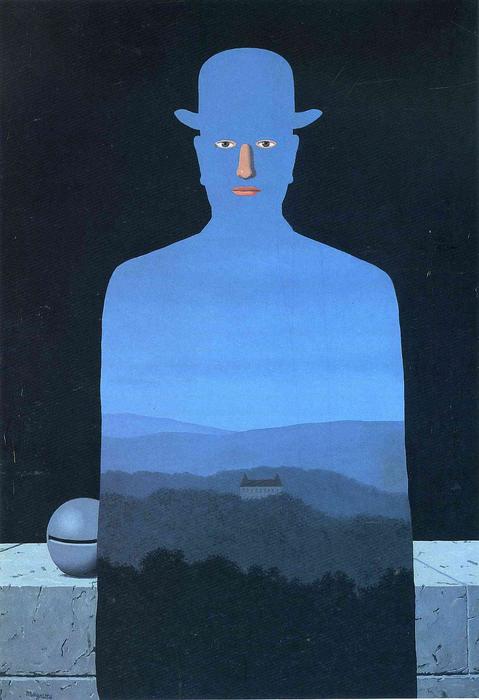
In the vast, enigmatic landscape of Surrealism, few works capture the tension between visibility and concealment as poignantly as René Magritte’s 1966 masterpiece, The King's Museum. To encounter this painting is to step into a realm where the familiar dissolves into the mysterious, inviting the viewer to question the very foundations of their perception. Magritte, a titan of the Belgian Surrealist movement, does not merely present a scene; he constructs a psychological threshold. The artwork presents a solitary figure standing before the imposing facade of a grand museum, yet this architectural monument is famously disrupted by a sky filled with drifting clouds that seem to swallow the structure itself. This deliberate obscuration creates an immediate sense of visual dissonance, forcing us to grapple with what is present and what has been lost to the ether of the subconscious.
The technical execution of the piece reflects Magritte’s profound mastery over oil paint, utilizing a meticulous technique characterized by smooth blending and subtle tonal gradations. There is an unsettling stillness in the way the muted blues and grays wash over the canvas, creating an atmosphere of quiet contemplation that mirrors the inward gaze of the central figure. The man, often depicted in silhouette or with a hauntingly ambiguous expression, serves as our surrogate within this dreamscape. His presence is both grounding and ghostly, embodying the human struggle to find meaning within the fragmented pieces of memory and reality. For the discerning collector or interior designer, the painting offers a sophisticated palette that brings a sense of calm, intellectual depth, and a touch of melancholic elegance to any curated space.
Symbolism and the Architecture of Memory
Beyond its striking visual surface, The King's Museum is a profound meditation on the elusive nature of truth. The obscured museum facade acts as a powerful metaphor for the inaccessible realms of memory—the parts of our personal history that remain shrouded, partially forgotten, or reconstructed by the mind's eye. Magritte masterfully employs juxtaposition to provoke thought; the inclusion of a seemingly incongruous sports ball in the lower corner serves as a sudden, jarring disruption of the somber atmosphere. This small, playful element challenges the viewer’s expectations, acting as a visual catalyst that prompts us to wonder if what we perceive is truly "real" or merely a projection of our own internal narratives.
The historical context of this work further enriches its emotional resonance. Emerging from a period of profound societal upheaval and the psychological shadows of the mid-20th century, Magritte’s art sought to liberate the mind from the constraints of rationalism. In The King's Museum, we see the culmination of his lifelong fascination with hidden realities—a fascination born from early personal traumas that left him forever searching for what lies beneath the surface. For those seeking to adorn a home or gallery with art that sparks conversation and invites deep introspection, this reproduction offers more than just aesthetic beauty; it provides a window into the eternal mystery of the human experience, making it an incomparable centerpiece for any collection dedicated to the wonders of the Surrealist imagination.