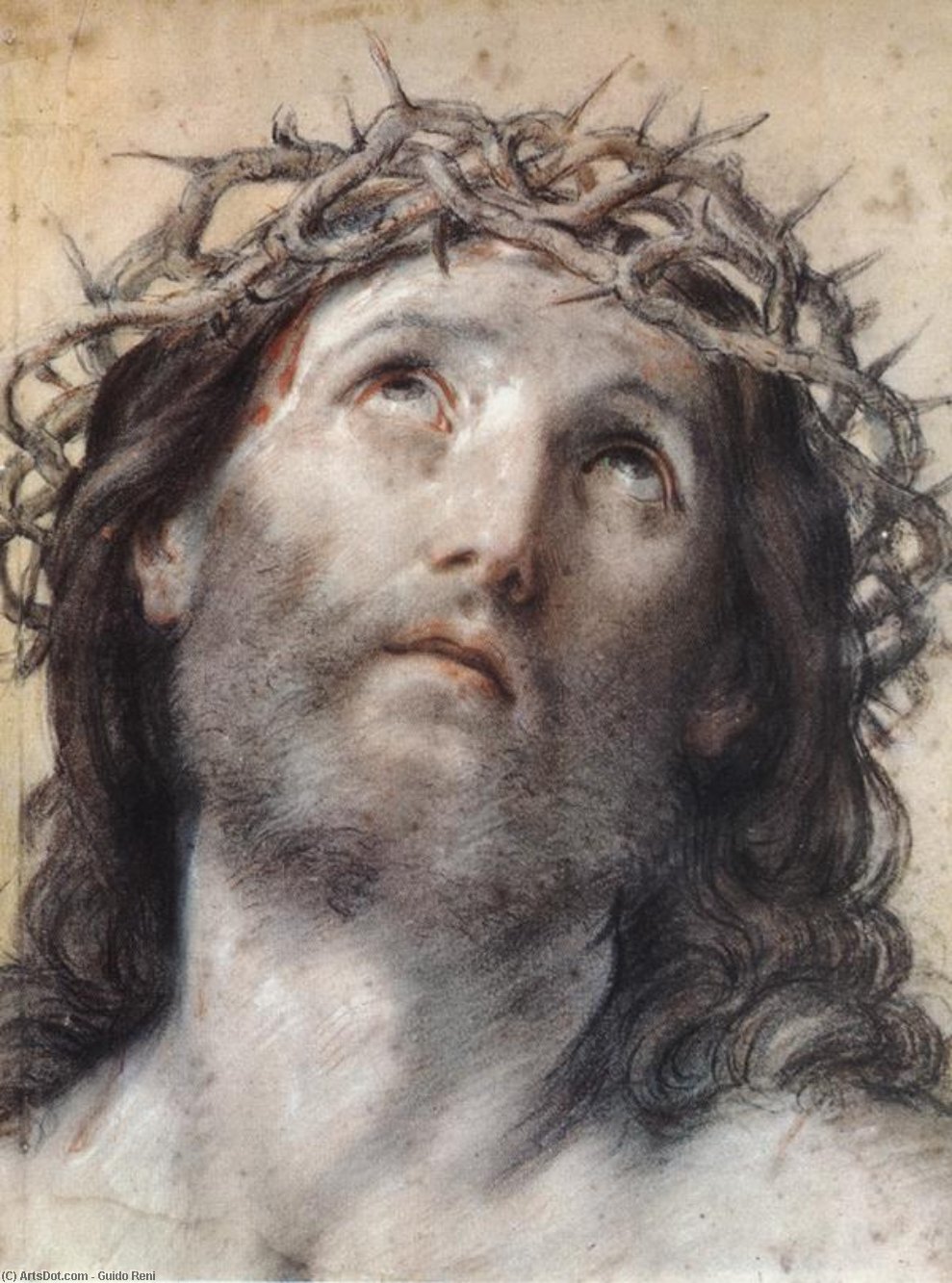
Experience Guido Reni's 'Ecce Homo,' a stunning 1639 Baroque masterpiece depicting Christ's poignant suffering. Hand-painted reproduction, museum quality. Own art history! #GuidoReni #EcceHomo #BaroqueArt #ReligiousArt #ArtsDot
Discover Guido Reni (Le Guide), a master of Baroque painting! Explore his religious & mythological artworks, influential style, and legacy in Italy. Shop reproductions at ArtsDot.
Experience the soul of Emilian art at Bologna's Pinacoteca Nazionale, where masterpieces by Raphael and the Carracci family await your discovery within a historic Jesuit sanctuary that invites you to explore Italy's legacy.
Ecce Homo: A Portrait of Suffering by Guido Reni
Guido Reni’s “Ecce Homo,” painted in 1639, is more than just a depiction of a biblical scene; it's a profound meditation on human suffering and divine judgment. Executed during a pivotal moment in the Counter-Reformation, this monochrome masterpiece embodies the Baroque aesthetic’s emphasis on emotional intensity and dramatic realism. The painting portrays Jesus Christ – “Ecce Homo,” Latin for "Behold the Man” – presented to the crowd by Pontius Pilate, a scene laden with theological and psychological weight.
- Subject Matter: The artwork centers around the iconic moment when Pilate forces Jesus before the throng, offering him as the culprit for the unrest in Jerusalem. This event is central to Christian theology, representing humanity’s flawed judgment and God's ultimate sacrifice.
- Style & Technique: Reni masterfully employs a restrained yet powerful style characteristic of his mature work. The composition is meticulously balanced, drawing the viewer’s eye directly to Jesus’ face – an expression of profound sorrow and resignation. His brushwork is remarkably smooth, creating a sense of stillness that amplifies the emotional impact. The use of monochrome enhances the solemnity and emphasizes the stark reality of the scene.
The Artist: Guido Reni - A Classicist at Work
Guido Reni (1575-1642), born in Bologna, was a key figure in the transition from Mannerism to Baroque painting. His early training under Denis Calvaert exposed him to Flemish influences, particularly in anatomical detail and dramatic lighting. However, Reni quickly surpassed his teacher, developing a distinctly classical style marked by its elegance, refined technique, and profound understanding of human emotion. He was part of a group of artists who sought to revive the ideals of classical art, emphasizing harmony, proportion, and idealized beauty – qualities that resonated deeply with the Catholic Church during this period.
- Background: Reni’s career flourished in Rome, Naples, and Bologna. He was influenced by the Carracci brothers, but forged his own path, creating works that are both technically brilliant and emotionally resonant.
- Key Influences: His work reflects a deep engagement with classical antiquity, particularly Roman sculpture and painting. This influence is evident in the idealized portrayal of Christ’s figure and the careful attention to detail.
Symbolism and Emotional Impact
“Ecce Homo” is rich in symbolic meaning. Jesus' open eyes, gazing upwards, convey a sense of acceptance and resignation – he understands his fate. The thorns on his crown represent suffering and humiliation, while the cross symbolizes sacrifice and redemption. The surrounding figures, though largely indistinct, represent the indifferent crowd, highlighting humanity’s failure to recognize Christ’s divinity. Reni's ability to capture such raw emotion is remarkable; it invites viewers to contemplate themes of faith, guilt, and forgiveness.
- Color & Light: The absence of color intensifies the emotional impact, focusing attention on form and expression.
- Compositional Dynamics: The diagonal lines created by Christ’s body and the cross draw the viewer into the scene, creating a sense of movement and drama.
A Timeless Masterpiece – Recreated for Today
ArtsDot.com is proud to offer meticulously crafted hand-painted reproductions of Guido Reni's “Ecce Homo.” Each reproduction captures the essence of this iconic artwork, faithfully recreating Reni’s masterful technique and profound emotional depth. Whether you are an art collector seeking a significant addition to your collection or an interior designer looking for a statement piece that evokes contemplation and reverence, our hand-painted reproductions provide an unparalleled opportunity to experience the power and beauty of this timeless masterpiece. Own a piece of art history – order your “Ecce Homo” reproduction today.