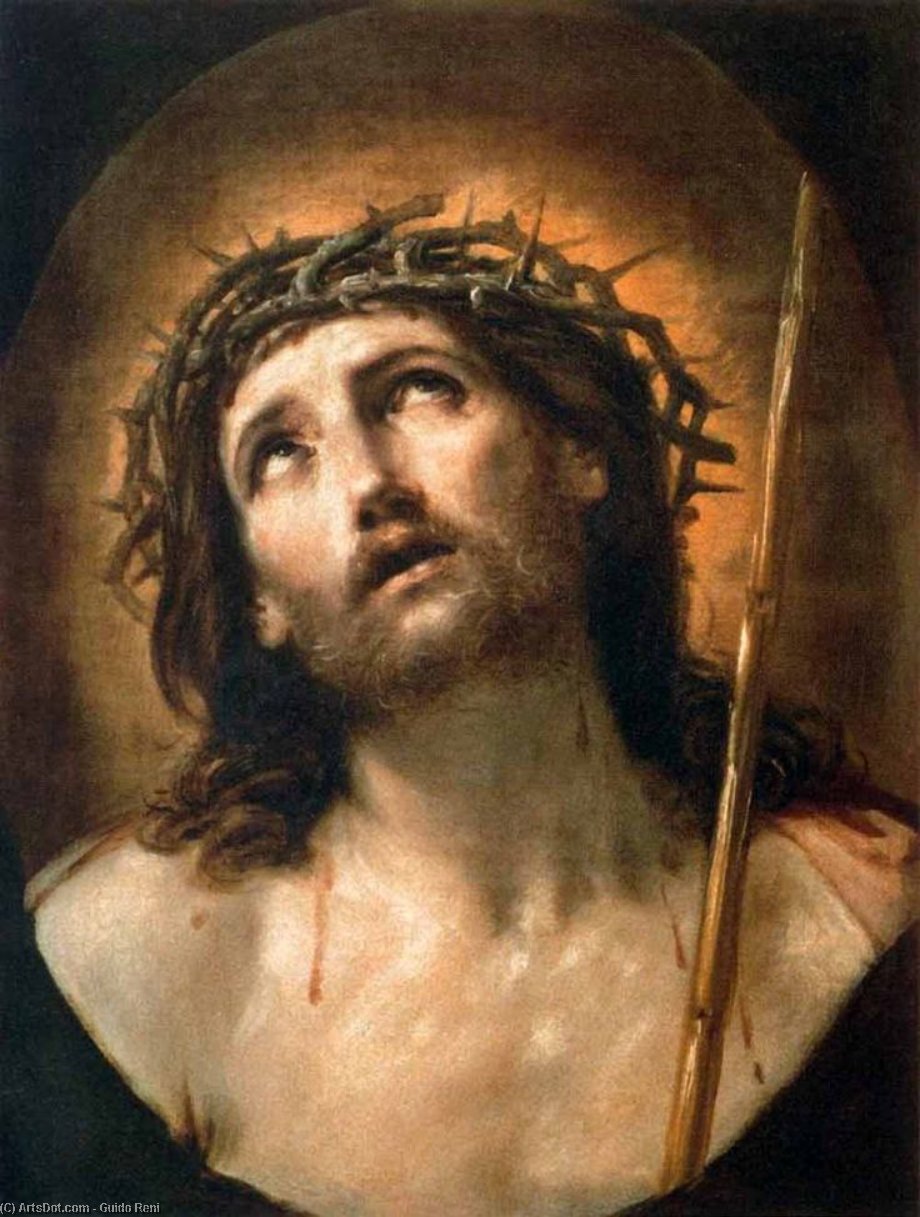
Ecce Homo: A Baroque Portrait of Suffering and Divine Grace
Guido Reni’s “Ecce Homo,” completed in 1640, stands as an emblem of Baroque artistic achievement—a monumental canvas that transcends mere representation to embody profound spiritual contemplation. Painted during the height of Rome’s papal patronage, this masterpiece captures a pivotal moment in Christian iconography: Jesus Christ presented before Pontius Pilate, bearing the marks of his impending crucifixion.
Subject Matter and Composition
The artwork centers on a strikingly realistic depiction of Jesus Christ—his face turned towards the viewer with an expression of serene dignity amidst palpable sorrow. Reni meticulously rendered every detail, from the furrowed brow to the subtle musculature of his torso, demonstrating unparalleled anatomical precision for its time. The pyramidal composition directs the eye upwards toward Christ’s head, emphasizing his central importance and conveying a sense of solemn grandeur. The positioning of Christ slightly off-center contributes to visual dynamism and reinforces the dramatic narrative.
Style and Technique: Baroque Mastery
“Ecce Homo” exemplifies the hallmarks of Baroque painting—characterized by intense emotion, dynamic movement, and masterful use of chiaroscuro (light and shadow). Reni skillfully employed glazing techniques—applying thin layers of translucent paint over subsequent coats—to achieve luminous colors and create a palpable sense of depth. The artist’s meticulous attention to detail extends beyond the figure itself; the hazy golden light bathing the background evokes an ethereal realm, symbolizing divine presence and reinforcing the spiritual significance of the scene.
Symbolism: Layers of Meaning
Beyond its visual splendor, “Ecce Homo” is laden with symbolic elements that resonate deeply within Christian tradition. The crown of thorns—a poignant reminder of Christ’s humiliation—is prominently displayed, highlighting his suffering and sacrifice for humanity's salvation. Bloodstains subtly etched onto Christ’s garments symbolize pain and atonement, underscoring the central theological message of redemption. Furthermore, Christ’s gaze upward conveys hope and prayerfulness, suggesting a connection to God amidst earthly trials.
Emotional Impact: A Window into Baroque Spirituality
"Ecce Homo" powerfully communicates the emotional core of Baroque spirituality—a preoccupation with human suffering and divine compassion. Reni's masterful rendering captures not only Christ’s physical appearance but also his inner turmoil, eliciting empathy and prompting viewers to contemplate themes of faith, humility, and grace. It remains a testament to the enduring power of art to convey profound spiritual truths and inspire contemplation.
- Artist: Guido Reni (Le Guide)
- Year Created: 1640
- Medium: Oil on Canvas
- Dimensions: 60 x 45 cm
- Location: Currently housed in Museo Nazionale Romano, Rome
Explore a stunning reproduction of “Ecce Homo” today and immerse yourself in the grandeur of Baroque art!