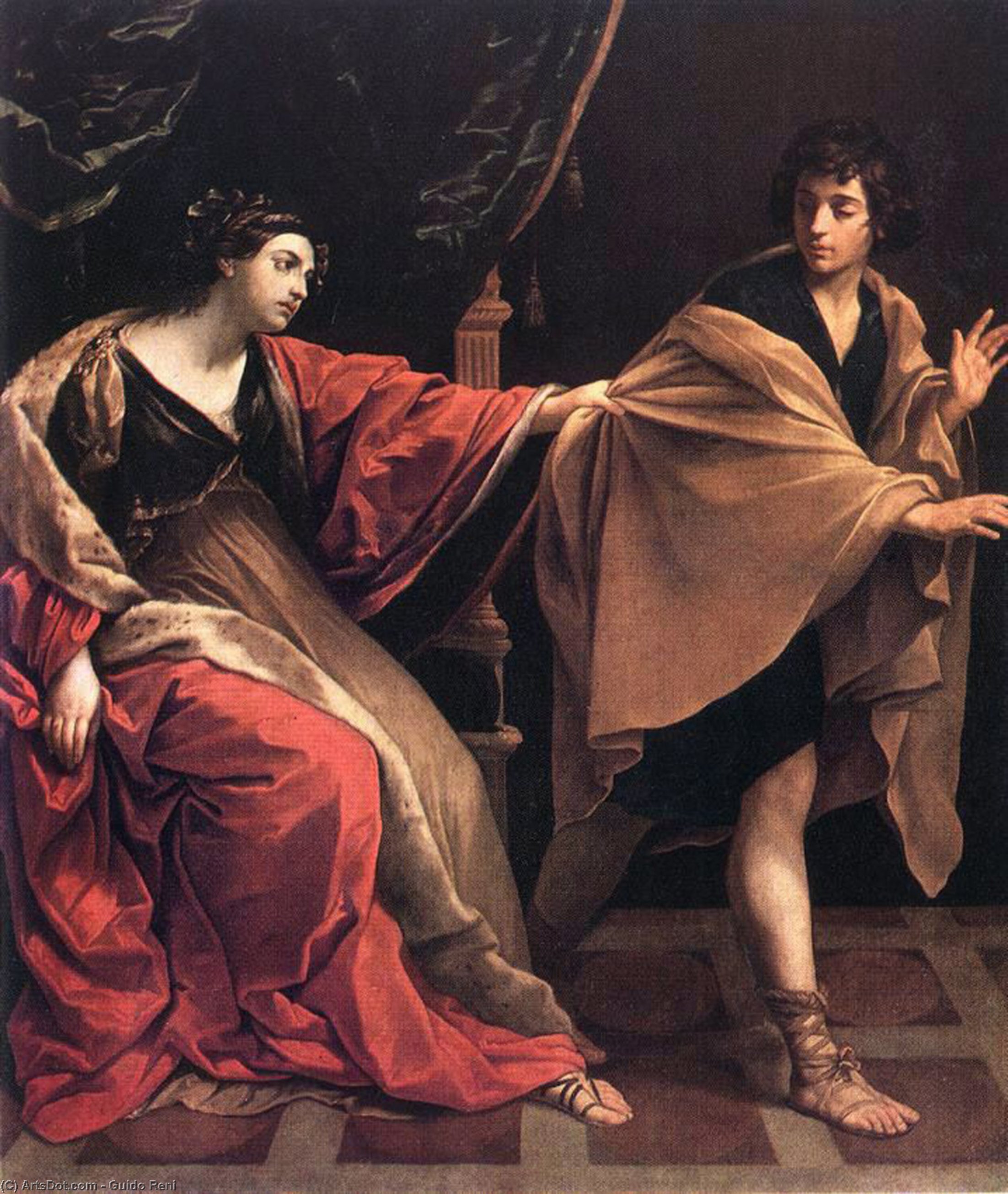
Guido Reni’s ‘Joseph and Potiphar’s Wife’ is a serene Baroque masterpiece showcasing elegant classicism with its intimate portrayal of biblical figures on a staircase. Admire Reni's refined Venetian style and discover this captivating artwork.
Discover Guido Reni (Le Guide), a master of Baroque painting! Explore his religious & mythological artworks, influential style, and legacy in Italy. Shop reproductions at ArtsDot.
Explore European art's evolution at the Pushkin State Museum of Fine Arts in Moscow! Discover masterpieces from Italian Primitives to Impressionism & beyond – a cultural journey awaits.
Guido Reni’s “Joseph and Potiphar’s Wife”: A Study in Elegant Classicism
The painting "Joseph and Potiphar's Wife," attributed to Guido Reni (Le Guide), stands as a testament to the artist’s mastery of Venetian classicism during the Baroque period. Executed around 1631, this monumental canvas—measuring 227 x 195 cm—captures a pivotal moment from biblical narrative, transforming it into an exquisitely rendered portrait imbued with psychological depth and subtle emotional resonance. Its enduring appeal lies not merely in its depiction of the story itself but also in Reni’s meticulous attention to detail and his ability to convey a profound sense of intimacy between the figures involved.
Subject Matter and Narrative Context
The artwork portrays Joseph, son of Jacob and Rachel, engaged in a conversation with Potiphar's wife—a woman who harbors desires for Joseph despite his unwavering piety. This scene draws upon Genesis 39-41, recounting Joseph’s unjust imprisonment orchestrated by Potiphar’s jealous steward due to the wife’s advances. Reni skillfully avoids sensationalism, prioritizing a contemplative portrayal of human interaction rather than dramatic action. The figures are positioned on a staircase—a deliberate compositional choice that symbolizes ascension and moral fortitude—underscoring Joseph's steadfast virtue amidst temptation.
Style and Technique: Venetian Classicism Embodied
Reni’s style aligns perfectly with the burgeoning Venetian Renaissance, which championed idealized beauty and harmonious proportions. Unlike the turbulent dynamism of Caravaggio or Bernini, Reni favored a restrained palette dominated by muted reds, browns, and creams—colors that contribute to the painting's serene atmosphere. His technique is characterized by smooth glazing—a hallmark of Venetian painting—creating an illusionistic surface that captures light with remarkable accuracy. Anatomical precision is paramount; Joseph’s musculature is rendered flawlessly, reflecting Reni’s dedication to classical anatomical studies. The artist meticulously blended pigments to achieve subtle tonal variations, enhancing the realism and emotional impact of the scene.
Symbolism: Virtue Amidst Temptation
Beyond its narrative content, “Joseph and Potiphar's Wife” resonates with symbolic significance. The staircase represents Joseph’s moral climb toward righteousness—a visual metaphor for overcoming adversity through faith and integrity. The woman’s gaze—directed towards Joseph—suggests a subtle challenge to his virtue, highlighting the pervasive influence of desire and temptation within human relationships. However, Reni deftly balances these elements, portraying Joseph as dignified and resolute despite the surrounding circumstances.
Emotional Impact: Tranquility and Reflection
The painting's overall emotional impact is one of contemplative tranquility. Reni’s masterful use of light—particularly diffused illumination—creates a sense of stillness and invites viewers to engage in introspection. The figures’ expressions convey understated emotion, conveying both vulnerability and inner strength. This careful consideration of psychological nuance elevates the artwork beyond mere visual representation, transforming it into an evocative meditation on human morality and spiritual resilience. It remains a captivating masterpiece that continues to inspire admiration for its beauty and intellectual depth.