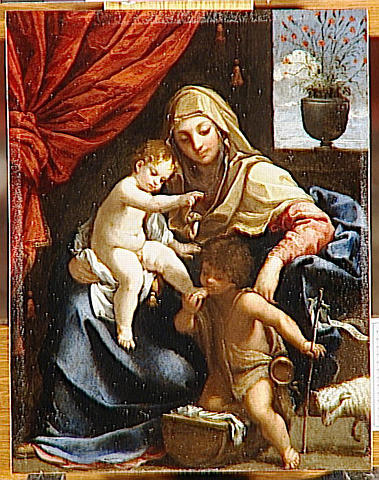
This painting hails from Bolognese Baroque art, influenced by Calvaert and the Carracci brothers. It’s notable for its meticulous anatomical accuracy and dramatic composition, reflecting Reni's distinctive style characterized by elegance and emotional intensity. Its history includes royal patronage and subsequent ownership transfers.
Discover Guido Reni (Le Guide), a master of Baroque painting! Explore his religious & mythological artworks, influential style, and legacy in Italy. Shop reproductions at ArtsDot.
Explore the Louvre Museum in Paris! Home to iconic masterpieces like the Mona Lisa & Venus de Milo, journey through art history from ancient Egypt to Renaissance icons. Plan your visit today!
Guido Reni’s “La Vierge, l'Enfant Jésus et Saint Jean Baptiste”: An Ode to Divine Grace
The painting "La Vierge, l'Enfant Jésus et Saint Jean Baptiste," attributed to Guido Reni (Le Guide), stands as a testament to the enduring power of classical idealism and serene devotional beauty. Executed around 1606-1607 during Reni’s formative years in Rome—a period marked by burgeoning artistic patronage and stylistic experimentation—this masterpiece embodies the spirit of Mannerism, subtly blending influences from both Florentine Renaissance masters like Raphael and the innovative Carracci brothers with a distinctly Bolognese sensibility.
- Subject Matter: The composition depicts Mary cradling Jesus Christ in her arms, while Saint John the Baptist reverently baptizes the infant’s foot. This iconic scene draws upon biblical narratives central to Christian faith, portraying motherhood, purity, and divine grace—themes consistently explored by artists throughout Western art history.
- Style & Technique: Reni's distinctive style is characterized by its meticulous attention to detail, refined modeling of drapery, and harmonious color palettes. Employing oil paint on copper—a technique favored during the Renaissance—he achieved remarkable luminosity and textural richness, capturing the ethereal quality of sacred iconography.
- Historical Context: Reni’s work emerged against a backdrop of papal ambition and artistic fervor. The painting was commissioned by Pope Paul V Borghèse, reflecting the Catholic Church's desire to elevate its prestige through visual splendor. It exemplifies the Mannerist preoccupation with stylized forms and expressive gestures—a reaction against the perceived rigidity of High Renaissance ideals.
- Symbolism: Beyond its narrative depiction, “La Vierge, l’Enfant Jésus et Saint Jean Baptiste” is laden with symbolic significance. Mary's posture conveys humility and compassion, while Jesus’s gaze embodies innocence and divine majesty. The baptism ritual symbolizes purification and spiritual renewal—essential elements of Christian theology.
- Emotional Impact: Viewing this artwork evokes a profound sense of tranquility and reverence. Reni skillfully captures the emotional essence of faith through subtle nuances in expression and gesture, inviting contemplation on themes of love, devotion, and divine grace. Its enduring appeal testifies to its ability to transcend temporal boundaries and resonate with audiences across centuries.
Provenance & Acquisition History
The painting’s journey through history is remarkable. Originally residing in the royal collection—a symbol of power and artistic prestige—it was tragically stolen during the French Revolution in 1786. Subsequently, it passed into the possession of François du Val, marquis de Fontenay-Mareuil, before finding its way to Louis XIV’s Galerie des tableaux du roi at Versailles. Following the revolution, it resided in various private collections and eventually entered the Musée du Louvre's holdings—where it continues to inspire admiration today.
Louvre Collections: A Legacy of Artistic Excellence
Currently housed within the Département des Peintures at the Musée du Louvre, “La Vierge, l’Enfant Jésus et Saint Jean Baptiste” stands as a cornerstone of French artistic heritage. Its meticulous craftsmanship and evocative imagery exemplify the highest standards of Mannerist painting—a testament to Reni's genius and the enduring fascination with religious iconography. A high-quality reproduction allows admirers worldwide to experience the sublime beauty and spiritual depth of this iconic artwork.
Further Exploration
To delve deeper into Guido Reni’s artistic oeuvre, consider researching his other celebrated paintings—including “Saint Peter Receiving the Keys” and “The Martyrdom of Saint Cecilia”—which showcase similar stylistic innovations and thematic concerns. Examining comparative studies with Raphael's Madonna della Vallicella offers valuable insights into the evolution of Renaissance ideals and their subsequent reimagining within Mannerist aesthetics.