A Divine Encounter in Chiaroscuro
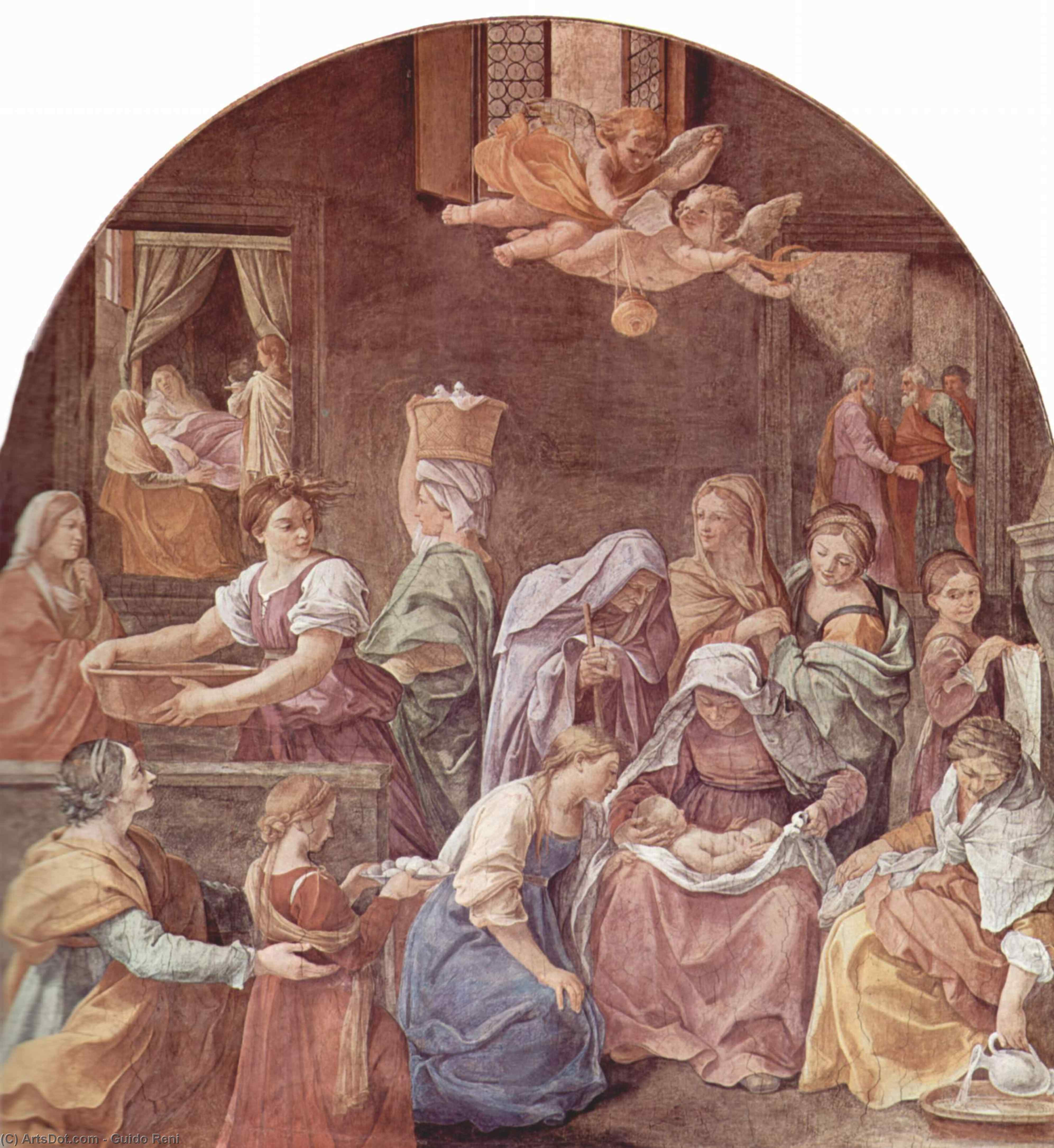
In the profound stillness of 1611, Guido Reni captured a moment of celestial significance in his masterpiece, Mary's Birth. This monumental work, measuring an impressive 360 x 335 cm, serves as a breathtaking window into the heart of the Baroque era. The scene unfolds within a dimly lit, intimate chamber, where the atmosphere is thick with reverence and quiet awe. At the center of this sacred drama lies the infant Jesus, resting in a manger, surrounded by a gathering of at least thirteen figures whose faces reflect a spectrum of devotion. Through his masterful use of chiaroscuro—the dramatic interplay between light and shadow—Reni directs our gaze toward the divine presence, allowing the darkness to recede and the holy light to illuminate the textures of cloth, skin, and emotion.
The composition is a triumph of Baroque complexity and emotional depth. As men and women kneel in prayer or stand in silent contemplation, the viewer is drawn into their shared experience of wonder. Reni employs tenebrism to heighten the theatricality of the scene, creating deep, velvety shadows that make the illuminated subjects appear almost sculptural. Even the smallest details contribute to the narrative's elegance; two subtle avian figures, positioned near the top left and center-right, add a delicate touch of natural grace to the heavy, spiritual atmosphere. For the collector or interior designer, this painting offers more than mere decoration; it provides a focal point of profound gravity that can anchor a room with its historical weight and artistic sophistication.
The Legacy of the Bolognese Master
To understand the brilliance of Mary's Birth, one must look to the hand of Guido Reni, often celebrated as "Le Guide" for his influential role in the Bolognese School. Born in Bologna in 1575, Reni was a product of rigorous classical training, having apprenticed under Denis Calvaert and studied alongside luminaries like Albani. His style represents a unique synthesis of anatomical precision and an ethereal, refined classicism. While many of his contemporaries focused solely on raw drama, Reni infused his religious subjects with a sense of poetic harmony and emotional restraint that became his hallmark.
This particular work exemplifies the transition from the intense energy of early Baroque to a more polished, elegant aesthetic. The way Reni handles the light suggests not just physical illumination, but a spiritual radiance emanating from the holy event itself. For those seeking to bring the grandeur of the Italian High-Baroque into a modern space, a high-quality oil reproduction of this work offers an unparalleled opportunity. Owning such a piece is an invitation to engage with the history of Western art, allowing the timeless beauty and the masterful technique of Reni to inspire daily contemplation and aesthetic delight.