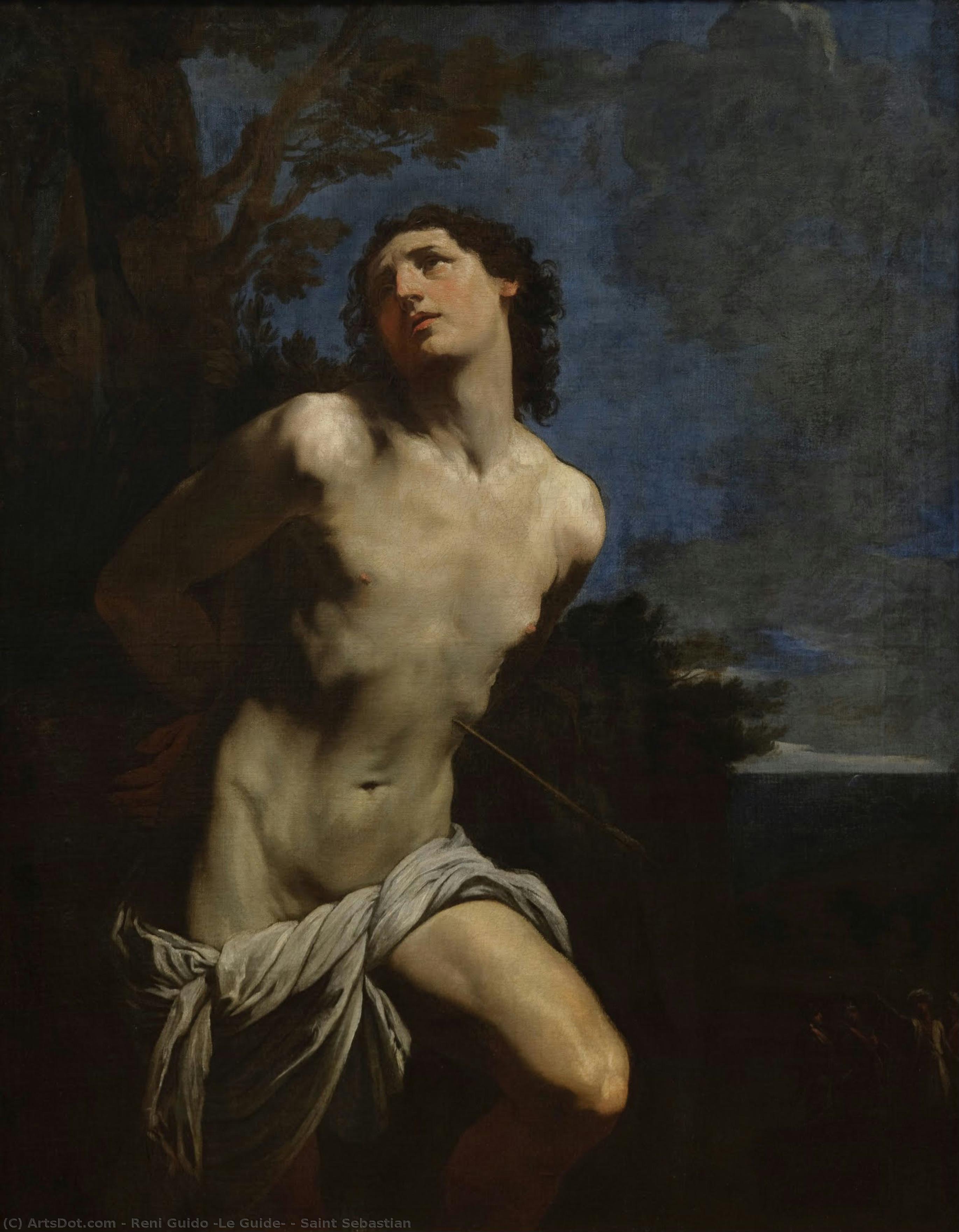
Guido Reni’s poignant Saint Sebastian painting, circa 1625, showcases the artist's masterful blend of classical beauty and emotional intensity, inspired by Michelangelo and the Belvedere Torso. Discover this exquisite hand-painted reproduction and bring a touch of Baroque grace to your space.
A Testament to Faith and Form: Guido Reni’s *Saint Sebastian*
Guido Reni's *Saint Sebastian*, painted between 1617 and 1621, stands as a pivotal work in the artist’s oeuvre and a remarkable synthesis of classical ideals with deeply felt religious devotion. This arresting depiction transcends mere iconography; it is an exploration of human suffering transformed into a profound expression of faith, a theme that resonated powerfully within the artistic landscape of its time. The painting's genesis lies in the enduring influence of antiquity, specifically the Belvedere Torso – a Roman marble sculpture discovered in 1503 and later residing in the Vatican collection. Reni masterfully seized upon this iconic form, a symbol of idealized male beauty, and imbued it with an unprecedented level of emotional realism and spiritual intensity.
- The Belvedere Echo: The direct lineage to the Belvedere Torso is undeniable. Reni’s Sebastian retains the muscular physique and serene composure of the ancient statue, yet he is no longer a cold, detached monument.
- Humanizing Pain: Crucially, Reni has rendered Sebastian as a living man, vulnerable and in agony. The wound inflicted by his tormentors is not merely a decorative element but a visceral representation of suffering, skillfully conveyed through delicate modelling and nuanced shading.
- A Dialogue with Divinity: Despite the physical pain, Sebastian’s gaze is fixed upwards, suggesting an unwavering trust in God. This combination of earthly anguish and spiritual aspiration elevates the painting beyond a simple depiction of martyrdom into a meditation on faith and resilience.
Technique and Materiality – A Silvered Embrace
Reni's mastery of technique is immediately apparent in *Saint Sebastian*. The artist employed a masterful understanding of oil paint, achieving an almost ethereal quality through his use of silvery pigments. This deliberate choice—a hallmark of Reni’s style—creates a luminous effect that seems to emanate from within the figure, further emphasizing his idealized beauty and spiritual grace. The delicate modelling of the flesh is breathtaking; every ripple of muscle, every subtle curve of bone, contributes to the sense of palpable realism. The restrained palette – dominated by cool blues, greens, and silvers – reinforces the painting’s contemplative mood and enhances the dramatic effect of Sebastian's suffering.
Symbolism and Historical Context
Beyond its immediate visual impact, *Saint Sebastian* is deeply rooted in the religious and artistic currents of 17th-century Italy. Sebastian was a popular martyr, often depicted in art as a symbol of Christian fortitude and devotion. Reni’s interpretation aligns with the Counter-Reformation's emphasis on emotional piety and the power of personal faith. The painting also subtly references Michelangelo’s *David*, echoing the biblical hero’s struggle against adversity and his ultimate triumph through faith. Carlo Cesare Malvasia, a contemporary art critic, famously lauded Reni’s ability to capture “heads with their eyes uplifted,” highlighting the artist's profound understanding of human emotion and spiritual aspiration.
A Timeless Masterpiece – Reproduction Possibilities
This meticulously crafted reproduction captures the essence of Reni’s masterpiece, offering a stunning addition to any art collection or interior space. The 92 x 9 cm size is ideal for showcasing this powerful image in a variety of settings. ArtsDot offers hand-painted reproductions that faithfully recreate the original's beauty and emotional depth, ensuring that you can experience the enduring legacy of Guido Reni’s *Saint Sebastian* firsthand.