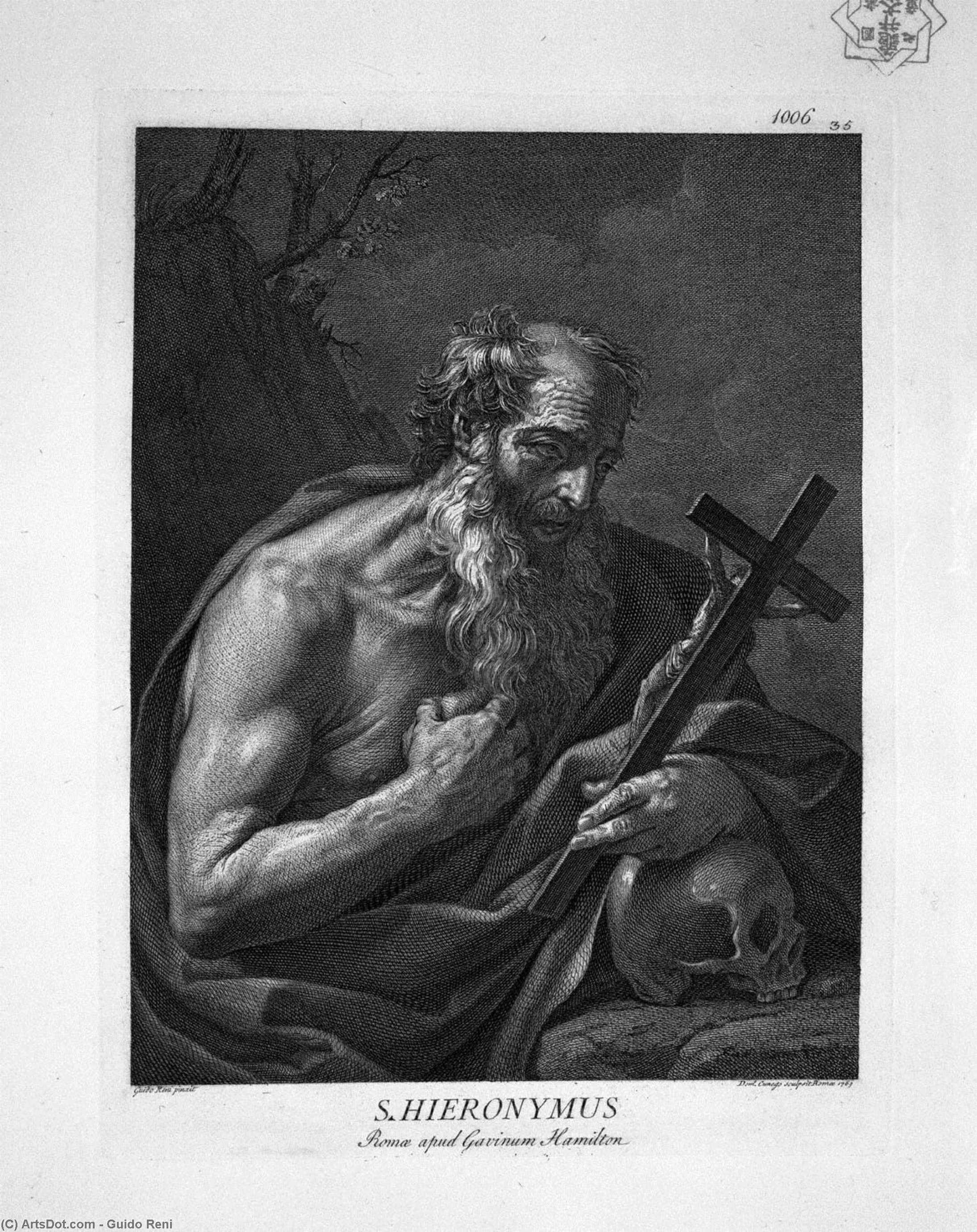
A Portrait of Contemplation: Guido Reni’s St. Jerome
Guido Reni's "St. Jerome," painted around 1635, is more than just a depiction of a revered biblical figure; it’s an immersive experience in solemnity and profound introspection. Rendered with the meticulous detail characteristic of the Baroque period, this oil on canvas work transports the viewer into the heart of St. Jerome's solitary existence – a life dedicated to prayer, translation, and wrestling with the weighty questions of faith and mortality. Reni, known as “Le Guide” (the Guide) for his masterful guidance in artistic technique, skillfully employs light and shadow to sculpt the figure’s form, creating an almost palpable sense of age and wisdom.
The painting's composition is deceptively simple yet profoundly effective. St. Jerome dominates the central space, his posture conveying a deep-seated contemplation. His hands, gnarled with age, rest upon a worn book – a symbol of his tireless work in translating the Holy Scriptures into Latin, a monumental task that cemented his place in Christian history. A stark skull rests at his feet, a potent reminder of human frailty and the inevitability of death, a visual anchor to the spiritual themes explored within the artwork. The background, rendered with subtle atmospheric perspective, suggests a vast, desolate landscape – mirroring the saint’s own internal journey.
Baroque Mastery: Technique and Detail
Reni's technical prowess is immediately evident in the painting’s exquisite detail. He masterfully utilizes *hatching* and *cross-hatching*, layering thin lines to build up tonal values and create a remarkable sense of texture, particularly in the folds of St. Jerome’s robe and the rough surface of his face. The artist's command of light is equally impressive; it falls dramatically across the figure, highlighting key features while casting deep shadows that emphasize his age and solitude. The use of *chiaroscuro* – the dramatic contrast between light and dark – not only adds depth but also imbues the scene with a sense of theatrical intensity.
The painting was executed in the manner of an engraving, utilizing metal plates and intricate carving techniques to achieve the precise lines that define the image. This method allowed for exceptional detail and clarity, hallmarks of Reni’s style. The careful rendering of St. Jerome's facial features – the furrowed brow, the deeply etched wrinkles, the piercing gaze – speaks volumes about his inner turmoil and unwavering devotion.
Symbolism and Spiritual Depth
Beyond its technical brilliance, “St. Jerome” is rich in symbolic meaning. The book represents not just the Bible but also the arduous process of intellectual and spiritual labor. The skull serves as a constant reminder of mortality and the importance of living a virtuous life. The cross, prominently displayed on St. Jerome’s arm, signifies his sacrifice and devotion to God. Furthermore, the saint's solitary pose reflects the contemplative nature of monastic life and the pursuit of inner peace.
The painting resonates with themes of repentance, faith, and the struggle between earthly desires and spiritual aspirations – core tenets of Christian theology. Reni’s portrayal of St. Jerome is not simply a portrait; it's an invitation to contemplate one’s own relationship with faith and mortality, offering a timeless meditation on the human condition.
A Legacy of Elegance: Context and Influence
Guido Reni was a pivotal figure in the development of Baroque painting in Italy. His work exemplifies the period's emphasis on realism, dramatic composition, and emotional intensity. He drew inspiration from both classical antiquity and the works of his contemporaries, particularly the Carracci brothers, while forging his own distinctive style characterized by elegance, refinement, and a profound sense of spirituality.
“St. Jerome” stands as a testament to Reni’s artistic skill and his ability to imbue religious subjects with both intellectual depth and emotional resonance. Reproductions of this powerful image continue to captivate viewers today, offering a glimpse into the world of 17th-century Italian art and inviting us to contemplate the enduring themes of faith, mortality, and the human spirit.