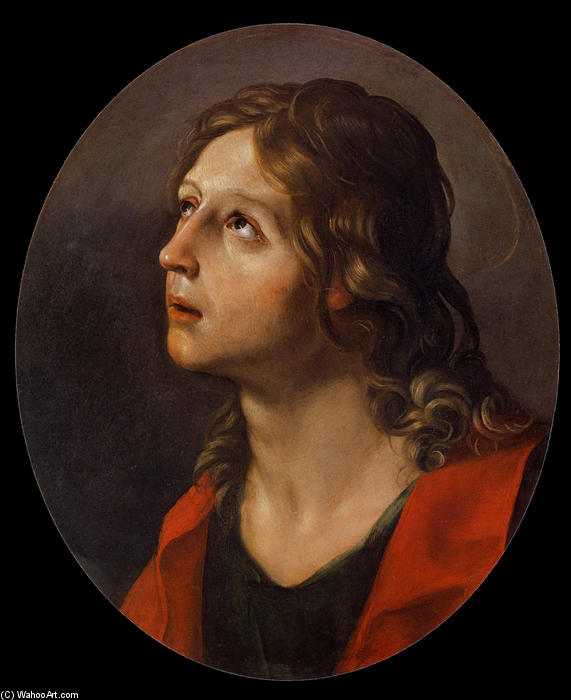
The
St. John the Evangelist painting by
Guido Reni is a captivating work of art that embodies the essence of Baroque style. Created in 1620, this oil on canvas piece measures 50 x 40 cm and is a testament to the artist's skill in conveying profound emotions through his subjects. The painting features a woman with long hair, possibly
St. John the Evangelist, wearing a red robe and gazing upwards or into the distance.
Artistic Style and Influences
Guido Reni's work is characterized by its dramatic lighting and intense emotions, which are hallmarks of the Baroque style. His eclectic classicism was widely influential, and he became the dominant figure in the
Bolognese School. The
St. John the Evangelist painting showcases Reni's mastery of capturing emotional depth and narrative complexity.
Other Notable Works by Guido Reni
Some of
Guido Reni's other notable works include
Allegory of Learning,
St. Jerome, and
David and Goliath. These paintings demonstrate his ability to convey a range of emotions and themes, from contemplation and devotion to drama and intensity. You can find more information about these works on the
ArtsDot.com website.
- Baroque style: characterized by dramatic lighting and intense emotions
- Bolognese School: a style of painting that emerged in Bologna, Italy, in the 16th century
- Eclectic classicism: a style that combines elements of classical art with other influences
Guido Reni's work can be found in various museums and collections, including the
Georgia Museum of Art and the
Museum San Paolo Maggiore in Bologna, Italy. You can learn more about his life and work on
ArtsDot.com or on
Wikipedia.
The
St. John the Evangelist painting is a must-see for anyone interested in Baroque art and the work of
Guido Reni. Its beauty and emotional depth make it a captivating piece that continues to inspire and influence artists to this day.