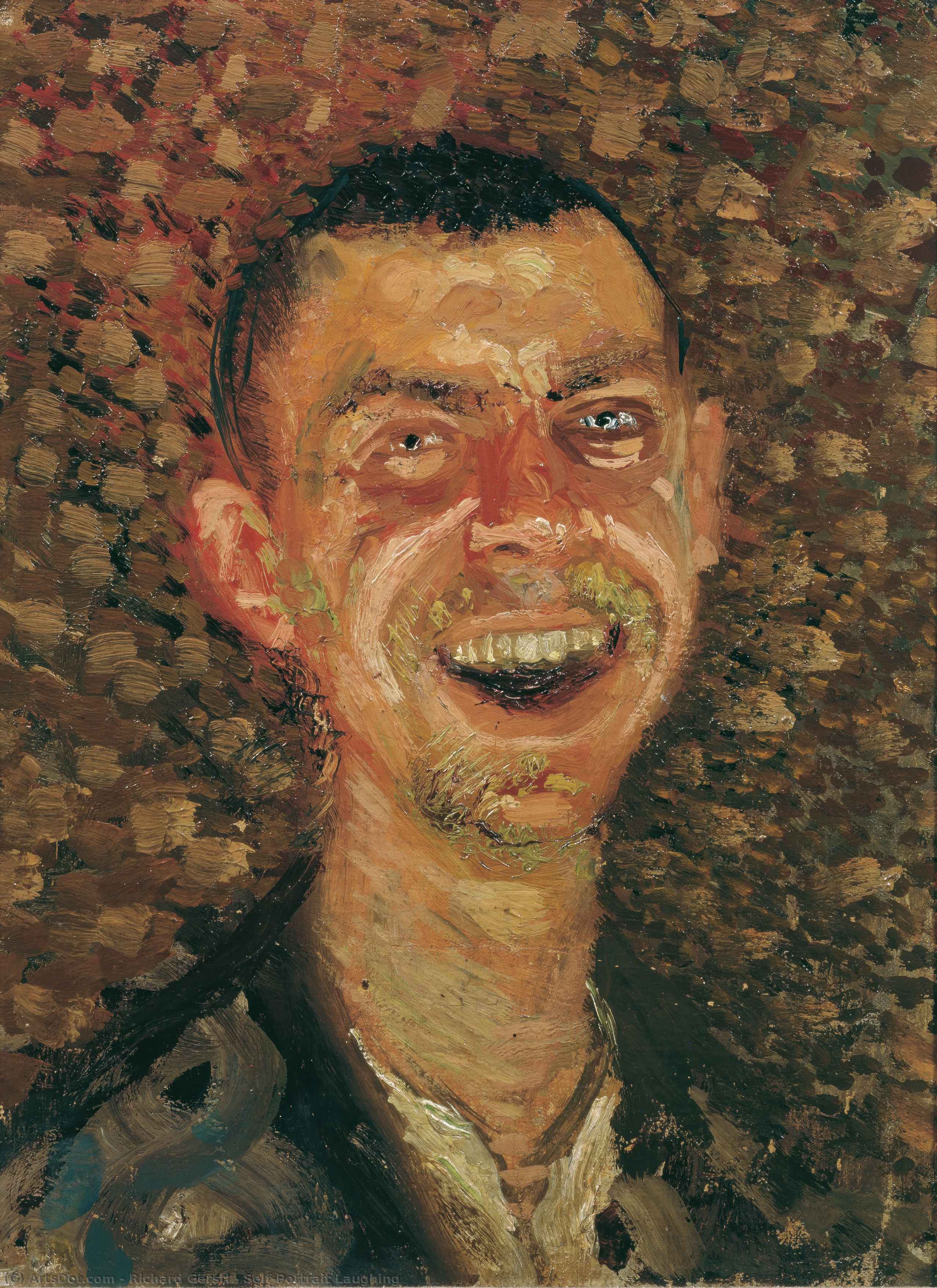
Richard Gerstl, an Austrian artist known for his bold and expressive works, created the captivating painting
Self-Portrait Laughing in 1907. This piece is a quintessential representation of the Expressionist movement, characterized by its vivid colors and distorted forms.
The Artist's Vision
Gerstl's self-portrait is more than just a depiction of his physical appearance; it is an exploration of his inner world. The artist's face, with its open mouth and exaggerated features, conveys a sense of joy and abandon. This emotional intensity is a hallmark of Expressionist art, which sought to convey the artist's inner experiences rather than merely represent reality.
Artistic Elements
The painting features several elements that add depth and interest to the composition:
- Facial Features: The man's face is the central focus of the painting, taking up most of the canvas. His beard and open mouth create a dynamic visual effect.
- Circles: Two small circles on either side of the man's head could be interpreted as eyes or other objects, adding an air of mystery to the piece.
- Background Texture: The patterned texture in the background adds an artistic touch and complements the vibrant colors used in the painting.
Context and Influence
Gerstl's work was influenced by various art movements, including Fauvism. His style is reminiscent of artists like
Hermann Max Pechstein, who also explored Expressionist themes. The Staedtische Kunsthalle Mannheim in Germany, established in 1907, has been a significant platform for showcasing such works. The museum's collection includes pieces from various centuries and styles, making it a comprehensive guide to art history.
Relevance Today
"CITE>Self-Portrait Laughing" remains a powerful example of Expressionist art, continuing to captivate audiences with its emotional intensity and artistic innovation. For those interested in exploring more works from this period,
Richard Gerstl: Self-Portrait Laughing is available for viewing on ArtsDot. In conclusion, Richard Gerstl's "Self-Portrait Laughing" is a masterpiece that embodies the spirit of Expressionism. Its bold colors and distorted forms create a visually striking image that continues to inspire art lovers today.