The Silent Majesty of Holy Trinity
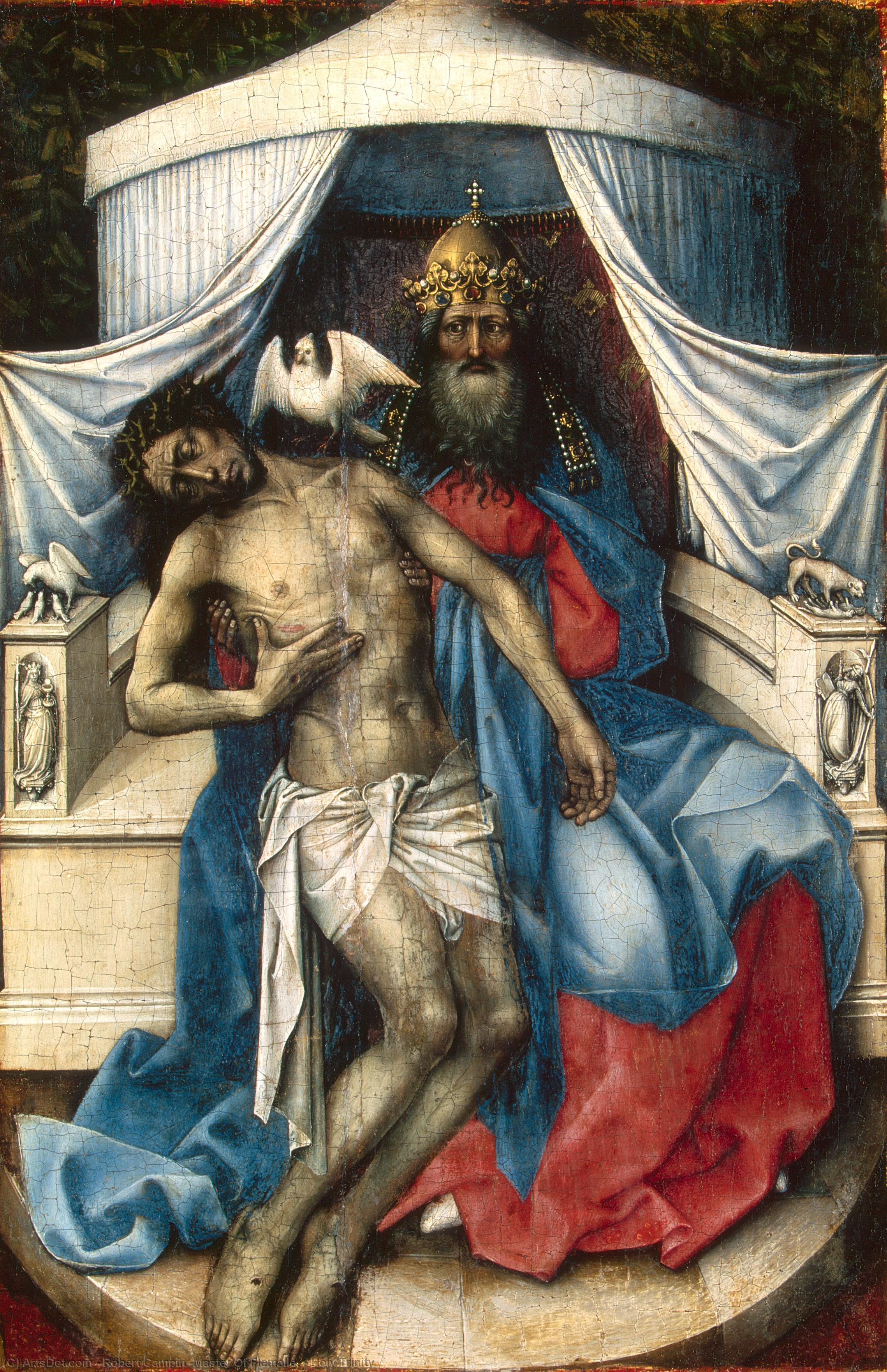
Robert Campin’s “Holy Trinity,” painted in Valenciennes around 1433, isn't merely a depiction of a sacred scene; it’s a profound meditation on faith, family, and the quiet dignity of earthly existence. Often referred to as the Master of Flémalle – a title reflecting his unparalleled mastery – Campin crafted this panel with an almost unnerving realism, a departure from the more stylized religious art of the period. The painting immediately draws the eye into a meticulously rendered interior space, dominated by the central figure of Christ, lying on a simple bed draped in rich fabrics. This isn’t the triumphant, idealized image of Christ found in later Renaissance works; instead, he appears vulnerable and serene, embodying a quiet acceptance of his fate.
Campin's genius lies not just in his technical skill – evident in the subtle gradations of light and shadow, the delicate rendering of textures like velvet and silk, and the remarkably lifelike portrayal of each figure – but also in his masterful use of space. The room feels intimate, almost claustrophobic, drawing the viewer into a deeply personal encounter with the subject matter. The inclusion of two additional figures—a regal king-like figure and an angelic presence—adds layers of meaning, suggesting a complex theological narrative centered on divine grace and human responsibility. These aren’t simply bystanders; they represent the roles of authority and spiritual guidance within the Christian faith.
A Window into Early Netherlandish Realism
“Holy Trinity” stands as a pivotal work in the development of Early Netherlandish painting, a movement characterized by an unprecedented attention to detail and a revolutionary approach to oil paint. Unlike the tempera-based techniques favored by earlier artists, Campin embraced the slow-drying properties of oil paints, allowing him to build up layers of color with incredible precision and achieve subtle tonal variations that were previously unattainable. This innovation dramatically enhanced the realism of his work, creating an illusion of depth and volume that was groundbreaking for its time.
The painting’s palette is restrained yet luminous, dominated by earthy tones—ochres, browns, and deep reds—contrasted with the shimmering gold and silver accents used to depict the king's crown and the fabrics. Campin’s meticulous observation of nature is also evident in the details: the folds of the bedclothes, the texture of the velvet, the delicate rendering of the birds perched above – each element contributes to a sense of tangible reality. This commitment to realism was not merely decorative; it served to elevate the spiritual message of the painting, making it more accessible and emotionally resonant for the viewer.
Symbolism and Spiritual Depth
Beyond its technical brilliance, “Holy Trinity” is rich in symbolic meaning. The central figure of Christ, lying prone, evokes the image of sacrifice and humility—a cornerstone of Christian theology. The king-like figure represents earthly authority and divine judgment, while the angel embodies spiritual guidance and grace. The presence of the birds, often associated with hope and resurrection, adds another layer of symbolic richness to the composition.
Notably, the painting’s setting—a modest interior space—contrasts sharply with the grand, opulent settings favored by many contemporary artists. This deliberate choice suggests that true devotion doesn't require elaborate displays of wealth or power; rather, it is rooted in a quiet, personal relationship with God. The scene feels deeply intimate and contemplative, inviting viewers to reflect on their own faith and spiritual journey.
A Legacy of Artistic Innovation
Robert Campin’s “Holy Trinity” represents more than just a beautiful painting; it's a testament to the artist’s extraordinary skill and his profound understanding of human nature. His pioneering use of oil paint, combined with his meticulous attention to detail and his masterful command of symbolism, established him as one of the most important figures in the development of Early Netherlandish art. Reproductions of this iconic work continue to captivate audiences today, offering a glimpse into a world of quiet contemplation, spiritual depth, and artistic innovation.