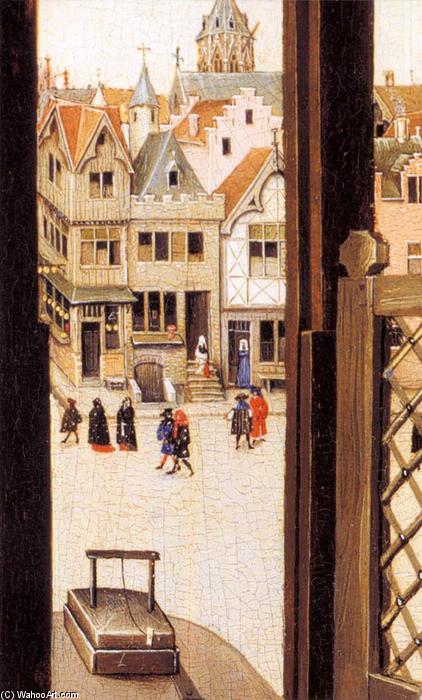
A Glimpse into Northern Life: The Mérode Altarpiece Detail
To stand before a detail from Robert Campin's Mérode Altarpiece is to be transported across the centuries, plucked directly into the vibrant, yet quietly observed, rhythm of a 15th-century Flemish town. This work, characteristic of the burgeoning Northern Renaissance, does more than merely depict a scene; it captures an atmosphere—a palpable sense of everyday life interwoven with profound spiritual weight. The meticulous rendering of the streetscape, with its pitched roofs and shuttered windows, immediately grounds the viewer in a tangible reality, inviting us to wander alongside the figures as if we were mere onlookers at a bustling market square.
Mastery of Detail: Technique and Realism
Campin’s technical prowess is breathtaking. His application of paint demonstrates an almost microscopic attention to texture; one can almost feel the rough weave of the period garments, the smooth wood of the architectural elements, and the subtle folds in the fabric draping over a nearby bench. This commitment to verisimilitude—to making the unreal seem utterly real—is a hallmark of Early Netherlandish painting. The artist employs fine brushwork with an astonishing delicacy, building depth through masterful perspective that draws the eye from the immediate foreground figures deep into the background architecture. It is a testament to his skill as a pioneer of realism.
The Social Tapestry and Period Life
Observe the inhabitants: their elaborate headwear, the structured ruffs adorning their necks, and the way they interact within this public space. These figures are not mere placeholders; they are portraits of social strata and daily routine. The color palette, dominated by rich earth tones, lends the scene a warm yet contemplative mood, suggesting the quiet dignity inherent in community life. This depiction serves as an invaluable historical document, offering us a window into the material culture and social interactions of the era before our own.
Symbolism and Emotional Resonance
While ostensibly a snapshot of daily activity, these details are imbued with deeper symbolic resonance typical of altarpiece art. The juxtaposition of the mundane—the architecture, the gathering people—against the sacred narrative that the full altarpiece conveys creates a powerful tension. Campin masterfully suggests that the divine is not confined to distant heavens but permeates the very fabric of human existence, visible in the quiet corner or the passing glance. Owning a reproduction of this detail allows one to bring home not just a painting, but a meditation on the sacredness found within the ordinary.
A Touch for the Modern Collector
For the discerning collector or designer seeking art that speaks with historical depth and unparalleled craftsmanship, this piece offers profound versatility. Its rich tonality pairs beautifully with both opulent and minimalist interiors. It is an object of contemplation, a conversation starter that whispers tales of 15th-century Flemish artistry. To reproduce such a work is to acquire a piece of enduring narrative art—a luminous echo from the dawn of modern painting.