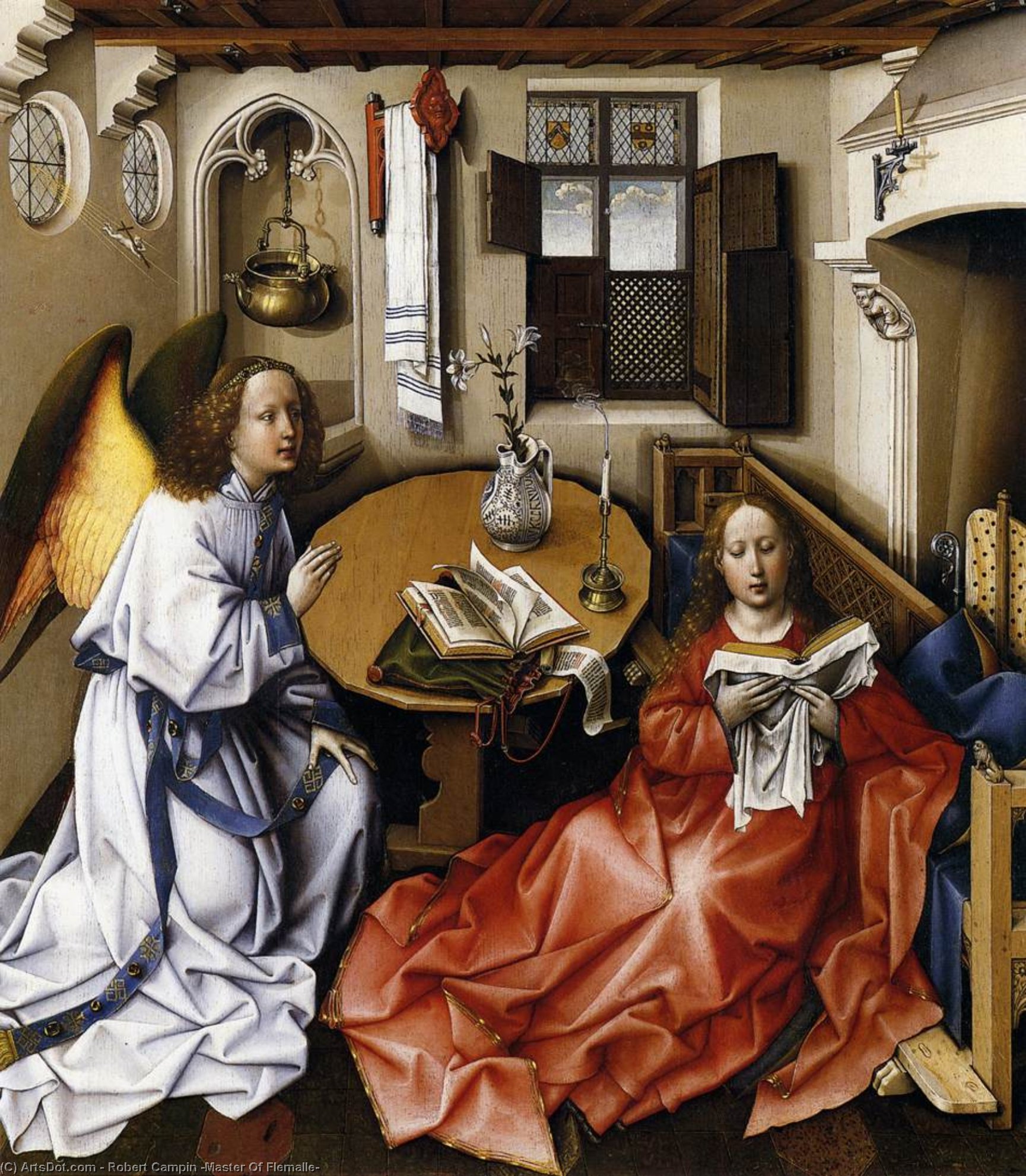
The Mérode Altarpiece: A Window into Fifteenth-Century Life
The Mérode Altarpiece, formally known as the Annunciation Triptych, is not merely a painting; it’s a meticulously crafted snapshot of 15th-century life, rendered with an unprecedented level of realism and psychological depth. Created by Robert Campin, often referred to as the Master of Flémalle, around 1427 in Tournai, Belgium, this remarkable work offers a rare glimpse into the domestic sphere of a wealthy merchant family – the Mérode – and stands as a cornerstone of Early Netherlandish painting. Its enduring appeal lies not just in its technical brilliance but also in the quiet intimacy it captures, inviting viewers to contemplate the everyday rituals and subtle emotions that shaped medieval existence.
Campin’s style represents a significant departure from the more stylized approaches prevalent at the time. He moved beyond the purely decorative, embracing a naturalistic portrayal of figures and settings. The painting is dominated by a sense of spatial recession – the room feels genuinely three-dimensional, with receding walls, a visible fireplace, and a carefully arranged table setting. This illusionism was achieved through masterful use of perspective, light, and shadow, techniques that would later become hallmarks of Renaissance art. The attention to detail is astonishing; from the folds in the clothing to the texture of the wooden furniture, every element contributes to the overall sense of realism.
A Domestic Scene, Rich with Symbolism
At first glance, the altarpiece depicts a simple scene: an angel announcing the birth of Jesus to Mary. However, beneath this biblical narrative lies a complex web of symbolism reflecting the Mérode family’s status and piety. The placement of objects within the room is laden with meaning. The open books suggest learning and religious devotion; the table setting, complete with bread, wine, and fruit, represents hospitality and abundance. The presence of two clocks – one hanging on the wall, the other on a table – symbolizes the passage of time and the urgency of faith. Even the arrangement of the figures is carefully considered, reflecting their social roles and relationships.
Notably, the central panel features a depiction of the Annunciation itself, with the angel Gabriel presenting Mary with the news. The inclusion of the family’s coat of arms – a golden chevron on sable with a chain of silver links – subtly asserts their identity and lineage within the community. The figures themselves are rendered with remarkable psychological acuity; Mary's expression is one of thoughtful contemplation, while Joseph observes with quiet concern. Campin masterfully conveys not just outward appearances but also inner emotions, a revolutionary approach for his time.
Technique and Materials: A Master’s Craft
The Mérode Altarpiece was executed in oil on oak panel, a relatively new medium at the time that allowed for greater detail and luminosity than traditional tempera paints. Campin's use of oil pigments created rich, vibrant colors – deep reds, blues, and greens – that still retain their intensity after six centuries. The layering of thin glazes of paint built up complex textures and subtle gradations of tone, contributing to the painting’s remarkable depth and realism. The artist’s meticulous preparation of the wood surface ensured a smooth, even ground for the pigments, further enhancing the quality of the final image.
Furthermore, Campin's innovative approach to depicting light is particularly noteworthy. He skillfully used chiaroscuro – the contrast between light and shadow – to create a sense of volume and drama within the scene. The warm glow emanating from the fireplace illuminates the figures, while shadows deepen the recesses of the room, drawing the viewer’s eye into the heart of the composition. This masterful manipulation of light not only enhances the painting's visual appeal but also contributes to its overall emotional impact.
A Legacy of Realism and Intimacy
The Mérode Altarpiece remains a profoundly moving work of art, offering a rare glimpse into the domestic life of a wealthy family in 15th-century Belgium. It’s a testament to Robert Campin's artistic genius – his ability to seamlessly blend religious symbolism with naturalistic observation and psychological insight. Today, reproductions of this masterpiece continue to captivate audiences worldwide, reminding us of the enduring power of art to illuminate our understanding of history, culture, and the human condition. Its quiet dignity and intimate portrayal of everyday life make it a timeless treasure, suitable for both private contemplation and grand interior design settings.