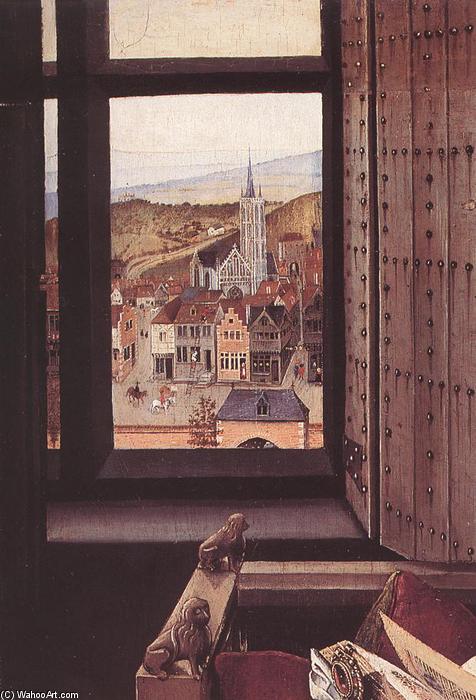
Experience Netherlandish realism with Campin's detailed 15th-century scene; observe the quiet life captured by this masterwork from the Early Renaissance.
Explore the groundbreaking art of Robert Campin (Master of Flémalle), a pioneer of Netherlandish painting. Discover his oil techniques, symbolic scenes & iconic works like the Merode Altarpiece.
Explore European art from the 13th-19th centuries at London's National Gallery! Discover masterpieces by Van Gogh, Rembrandt & more – free entry!
Robert Campin: Pioneer of Netherlandish Realism
Robert Campin (Valenciennes (France) c. 1375 - Tournai (Belgium) 26 April 1444), commonly known as the Master of Flémalle, stands as a pivotal figure in the burgeoning artistic landscape of 15th-century Belgium – specifically Tournai. Born around 1375 in Valenciennes, his life remains shrouded in relative obscurity compared to contemporaries like Jan van Eyck, yet his contribution to the stylistic evolution of Early Netherlandish painting is undeniable and profoundly influential. He achieved renown as a master painter within Tournai for over three decades, establishing himself as the foremost artistic talent of his time and shaping the visual culture of the region. Unlike many artists of his era who prioritized idealized beauty or religious dogma, Campin relentlessly pursued an unprecedented level of observational accuracy—a characteristic that would define the burgeoning movement he spearheaded.
Early Life and Artistic Training
Details concerning Campin’s formative years are scarce, reflecting the limitations of archival records during the period. However, it is believed he received his initial training in Valenciennes, where he honed his skills under the tutelage of Jean Fouquet, a fellow artist known for his expressive portraits and intricate decorative motifs. Fouquet's influence can be discerned in Campin’s early works—particularly his depictions of religious figures—where meticulous attention to detail and subtle shading techniques demonstrate a mastery of oil paint that would become synonymous with the Early Netherlandish style. This dedication to realism wasn’t merely stylistic preference; it represented a fundamental shift away from the conventions of Gothic art, marking the dawn of a new era in European painting.
The Masterpiece: The Virgin and Child Before a Firescreen (Detail)
Campin's magnum opus, “The Virgin and Child Before a Firescreen,” exemplifies this revolutionary approach to artistic representation. Painted around 1430 and housed in the National Gallery in London, this panel transcends mere visual depiction; it embodies a profound meditation on faith, domestic tranquility, and the sacredness of motherhood. The scene unfolds within a stylized Gothic chapel—a deliberate choice that underscores Campin’s commitment to capturing not just what was seen but also how it felt. Light emanates from the right, casting soft shadows across the interior walls and illuminating the figures with an ethereal glow—a technique borrowed directly from Jan van Eyck, whose mastery of chiaroscuro would become a cornerstone of Early Netherlandish painting.
Campin’s meticulous rendering of textures—the rough stone of the chapel wall, the smooth sheen of the firescreen, the delicate folds of Mary's robe—is breathtaking in its precision. Each brushstroke conveys an astonishing level of realism, capturing nuances of light and shadow that would have astonished artists of previous generations. The figures themselves are rendered with remarkable anatomical accuracy, reflecting Campin’s profound understanding of human anatomy—a skill honed through extensive dissection and observation. Furthermore, the composition is carefully balanced, creating a harmonious visual experience that invites contemplation.
Symbolism and Emotional Impact
Beyond its technical brilliance, “The Virgin and Child Before a Firescreen” resonates deeply with viewers on an emotional level. The inclusion of symbolic elements—the iris representing sorrow at Christ’s Passion, the columbine symbolizing divine grace—elevates the painting beyond mere visual representation into a complex tapestry of theological ideas. Campin's masterful use of color contributes to this emotive effect; muted earth tones dominate the palette, fostering a sense of serenity and solemn reverence. The gaze of Mary—direct, compassionate, and unwavering—commands attention, conveying an enduring message of maternal devotion and spiritual fortitude. This painting stands as a testament to Campin’s artistic genius—a beacon of realism and emotional depth that continues to inspire artists and collectors alike.
Size: Unknown
Date: 1430
Artist Information: robert campin (master of flemalle)
Birth Year: 1375
Death Year: 1444
Birth City: Valenciennes
Birth Country: France
Biography: Robert Campin, also known as the Master of Flémalle, stands as a pivotal figure in the burgeoning artistic landscape of 15th-century Belgium – specifically Tournai. Born around 1375 in Valenciennes, his life remains shrouded in relative obscurity compared to contemporaries like Jan van Eyck, yet his contribution to the stylistic evolution of Early Netherlandish painting is undeniable and profoundly influential. He achieved renown as a master painter within Tournai for over three decades, establishing himself as the foremost artistic talent of his time and shaping the visual culture of the region. Early Life and Artistic Training Details concerning Campin’s formative years are scarce, reflecting the limitations of archival records during the period. However, it is believed he received his initial training in Valenciennes, where he honed his skills under the tutelage of Jean Fouquet, a fellow artist known for his expressive portraits and intricate decorative motifs. Fouquet's influence can be discerned in Campin’s early works—particularly his depictions of religious figures—where meticulous attention to detail and subtle shading techniques demonstrate a mastery of oil paint that would become synonymous with the Early Netherlandish style. This dedication to realism wasn’t merely stylistic preference; it represented a fundamental shift away from the conventions of Gothic art, marking the dawn of a new era in European painting. The Masterpiece: The Virgin and Child Before a Firescreen (Detail) Campin's magnum opus, “The Virgin and Child Before a Firescreen,” exemplifies this revolutionary approach to artistic representation. Painted around 1430 and housed in the National Gallery in London, this panel transcends mere visual depiction; it embodies a profound meditation on faith, domestic tranquility, and the sacredness of motherhood. The scene unfolds within a stylized Gothic chapel—a deliberate choice that underscores Campin’s commitment to capturing not just what was seen but also how it felt. Light emanates from the right, casting soft shadows across the interior walls and illuminating the figures with an ethereal glow—a technique borrowed directly from Jan van Eyck, whose mastery of chiaroscuro would become a cornerstone of Early Netherlandish painting. Campin’s meticulous rendering of textures—the rough stone of the chapel wall, the smooth sheen of the firescreen, the delicate folds of Mary's robe—is breathtaking in its precision. Each brushstroke conveys an astonishing level of realism, capturing nuances of light and shadow that would have astonished artists of previous generations. The figures themselves are rendered with remarkable anatomical accuracy, reflecting Campin’s profound understanding of human anatomy—a skill honed through extensive dissection and observation. Furthermore, the composition is carefully balanced, creating a harmonious visual experience that invites contemplation. Symbolism and Emotional Impact Beyond its technical brilliance, “The Virgin and Child Before a Firescreen” resonates deeply with viewers on an emotional level. The inclusion of symbolic elements—the iris representing sorrow at Christ’s Passion, the columbine symbolizing divine grace—elevates the painting beyond mere visual representation into a complex tapestry of theological ideas. Campin's masterful use of color contributes to this emotive effect; muted earth tones dominate the palette, fostering a sense of serenity and solemn reverence. The gaze of Mary—direct, compassionate, and unwavering—commands attention, conveying an enduring message of maternal devotion and spiritual fortitude. This painting stands as a testament to Campin’s artistic genius—a beacon of realism and emotional depth that continues to inspire artists and collectors alike."