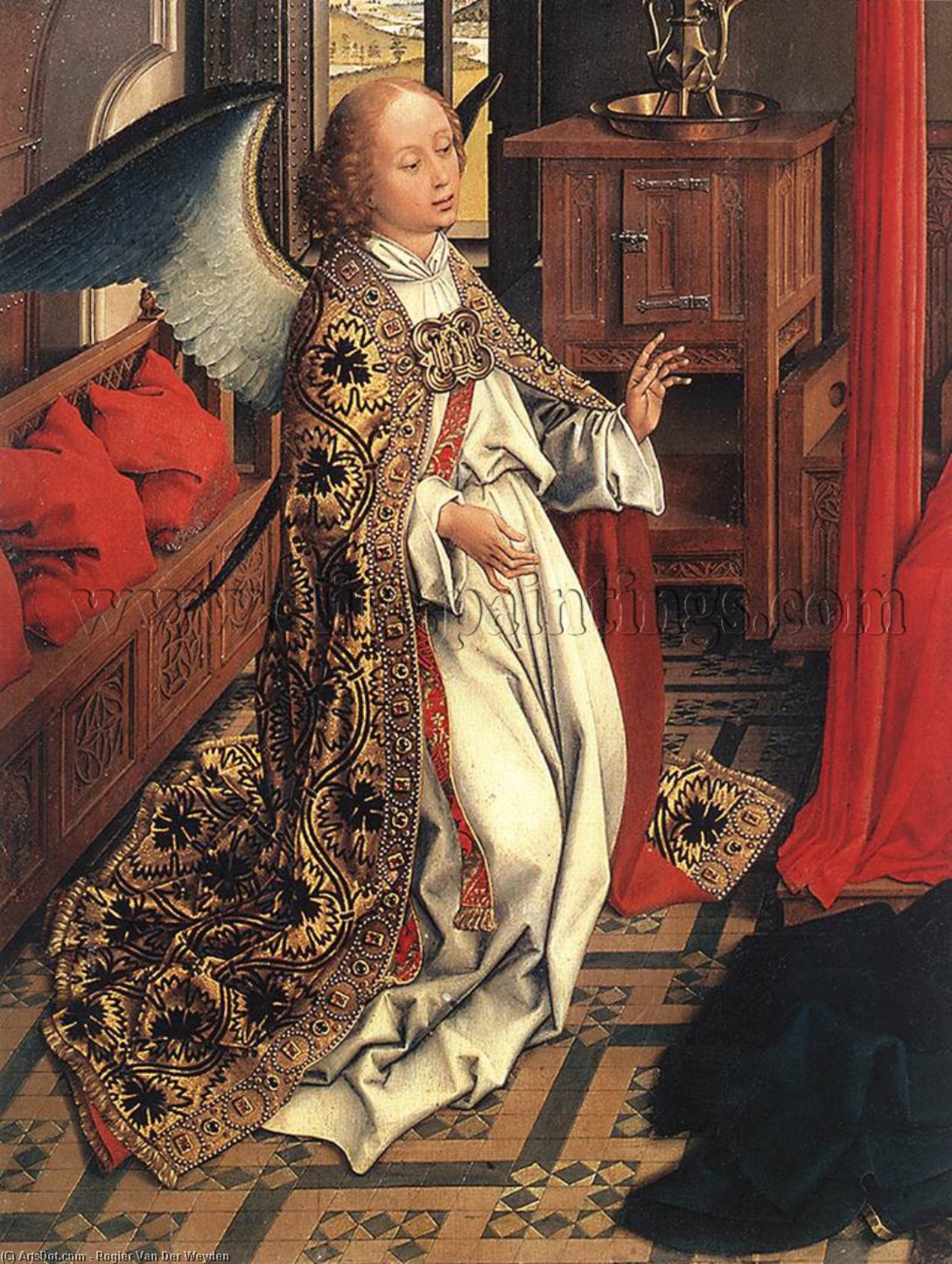
Delicate folds of drapery and serene expressions dominate this Annunciation detail by Rogier van der Weyden, capturing the profound emotion of faith during the Renaissance period. Admire the masterful artistry – explore a stunning hand-painted reproduction today.
Rogier van der Weyden (c. 1400-1464): Master of Early Netherlandish art, renowned for emotive religious paintings, rich colors & naturalistic detail. Explore 'Lamentation' & more!
A Moment Frozen in Time: Examining Rogier van der Weyden’s Annunciation Triptych Detail
The Annunciation Triptych, a cornerstone of Early Netherlandish art and arguably one of the most emotionally resonant depictions of biblical narrative ever conceived, continues to captivate audiences centuries after its creation. Produced around 1435-1436 during van der Weyden’s prolific period in Brussels, this monumental panel showcases not just artistic skill but a profound understanding of humanist ideals and theological contemplation. Let's delve deeper into what makes this particular detail so compelling—and why it remains a treasured subject for art historians and collectors alike.
The Artist’s Vision: Rogier van der Weyden – A Master of Psychological Realism
Rogier van der Weyden (1400-1464) stands as a titan amongst his contemporaries, recognized primarily for his unparalleled ability to convey human emotion with breathtaking accuracy. Unlike many artists of his time who prioritized idealized representations, van der Weyden relentlessly pursued realism—a daring ambition that demanded meticulous observation and an unwavering commitment to anatomical precision. His training as a goldsmith undoubtedly informed this approach, fostering a mastery of texture and surface treatment that distinguishes his paintings from others. This dedication is palpable in every brushstroke, particularly evident in the subtle nuances of expression on Mary’s face – a gaze filled with humility and apprehension as she receives the divine messenger. He wasn't simply portraying figures; he was capturing souls.
Technique and Material: Layers of Brilliance
The Annunciation Triptych exemplifies van der Weyden’s masterful technique, utilizing oil paint on wood panels—a relatively new medium at the time that allowed for unprecedented luminosity and depth. The artist employed a glazing technique, applying thin layers of translucent pigment over opaque undercoats to achieve remarkable tonal gradations and simulate the effects of light and shadow with astonishing realism. Notice how the angel’s wings shimmer subtly, reflecting ambient light and conveying an ethereal quality. Similarly, the drapery folds are rendered with painstaking detail—each crease and ripple meticulously sculpted to create a convincing illusion of fabric movement. The use of gold leaf – particularly prominent in the upper panels – adds another dimension of splendor, symbolizing divine majesty and elevating the entire composition.
Symbolism Within Sacred Narrative
Beyond its technical brilliance, the Annunciation Triptych is laden with symbolic significance rooted in Christian theology. The angel Gabriel’s outstretched hand represents divine grace—the messenger of God delivering the momentous news of Mary's conception. The cup symbolizes purity and contemplation, mirroring Mary’s inner devotion as she awaits the arrival of Christ. The books represent knowledge and scripture – highlighting the importance of faith and understanding within the Christian tradition. Even seemingly simple objects like the bowl and the placement of figures contribute to a carefully orchestrated visual narrative designed to inspire spiritual reflection.
Emotional Resonance: A Window into Medieval Faith
Perhaps most powerfully, the Annunciation Triptych communicates an overwhelming sense of reverence and humility. Van der Weyden’s portrayal of Mary embodies compassion and acceptance—a woman overwhelmed by grace yet grounded in unwavering faith. This depiction transcends mere visual representation; it invites viewers to contemplate profound questions about divine providence and human vulnerability. It's a testament to the artist’s ability to capture not just what was seen but what was felt – an enduring reminder of the transformative power of religious imagery and its capacity to evoke deep emotional responses. Its impact continues to inspire artists and collectors today, cementing van der Weyden’s legacy as one of the greatest painters of his era.