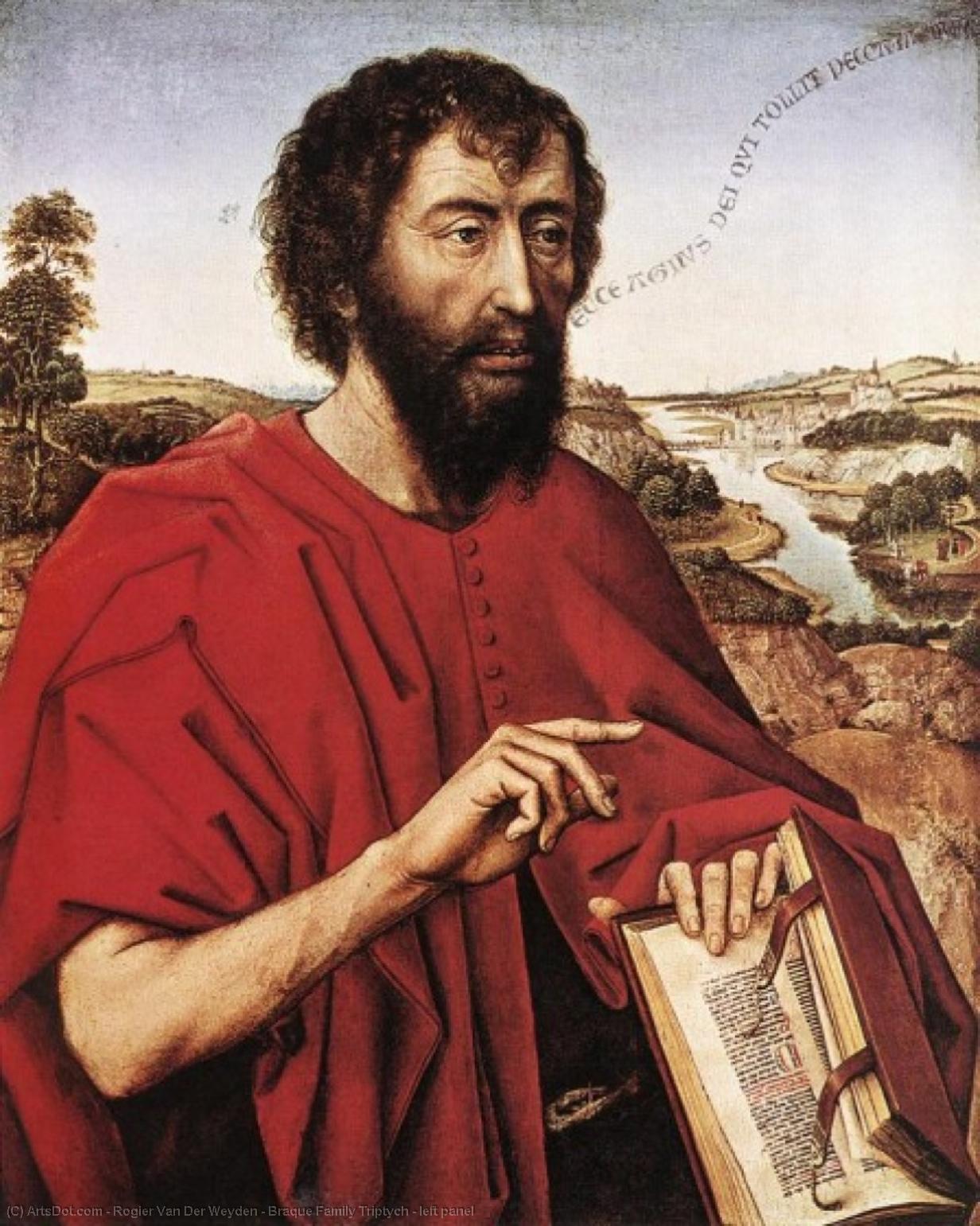
A Window into the Burgundian Soul: Rogier van der Weyden’s Braque Family Triptych – Left Panel
The left panel of Rogier van der Weyden's celebrated Braque Family Triptych offers a profound glimpse into the artistic and intellectual landscape of 15th-century Flanders. More than simply a portrait, it’s a meticulously crafted meditation on knowledge, faith, and the human condition – a testament to Van der Weyden’s mastery of realism, symbolism, and his deep understanding of the psychological complexities of his subjects. Created around 1452 for the wealthy family of Jean Braque, this oil-on-panel work transcends its initial function as a devotional image, evolving into a complex visual narrative that continues to resonate with viewers today.
The panel immediately draws the eye to its central figure: a dignified man, likely Jean Braque himself, rendered in exquisite detail. He’s presented against a subtly atmospheric landscape – a body of water reflecting a sky dotted with clouds, and two small boats navigating its surface. This isn't merely a backdrop; it establishes a sense of depth and tranquility, grounding the figure within a carefully considered environment. The man wears a rich red robe, a color associated with royalty and piety in this era, further emphasizing his status and importance. His posture is one of quiet contemplation, as if absorbed in the book held gently in his hand.
The Language of Symbolism
Van der Weyden’s genius lies not just in his technical skill but also in his masterful deployment of symbolism. The open book, a recurring motif in his work, is far more than a simple prop. It represents knowledge, wisdom, and the pursuit of spiritual understanding – values highly prized within the Burgundian elite. The specific text inscribed on the pages—likely from the Gospel of John—reinforces this theme, inviting viewers to contemplate the divine message contained within its words. The inclusion of a dog at the bottom left corner adds another layer of meaning; dogs have long been associated with loyalty and fidelity, qualities highly valued in both human and familial relationships.
Beyond the book, subtle details throughout the panel contribute to the overall symbolic weight. The landscape itself is carefully constructed to evoke a sense of harmony between humanity and nature – a reflection of Renaissance ideals emphasizing the interconnectedness of all things. The boats suggest journeys, both literal and metaphorical, representing life’s passage and the search for meaning.
Technique and Artistic Context
Van der Weyden's skill is immediately apparent in the remarkable realism achieved through his use of oil on panel. This medium allowed him to build up layers of paint with incredible precision, capturing subtle textures – the folds of the robe, the sheen of the water, the delicate details of the man’s face. His attention to detail extends beyond mere representation; he imbues each element with a sense of life and vitality. The painting is executed in the Early Netherlandish style, characterized by its meticulous observation of nature, its use of atmospheric perspective, and its profound psychological insight.
This period, known as Flemish Primitives or Early Netherlandish Painting, marked a significant departure from the more stylized approaches of preceding generations. Artists like Van der Weyden were driven to create works that felt utterly lifelike, capturing not just appearances but also emotions and inner states. The Braque Triptych stands as a prime example of this ambition – a window into the soul of a man and his family, rendered with unparalleled skill and symbolic depth.
A Legacy of Emotional Resonance
The Braque Family Triptych is more than just a beautiful painting; it’s a powerful expression of human experience. Van der Weyden's ability to convey both intellectual and emotional complexity has ensured its enduring appeal. Reproductions, like those offered by ArtsDot.com, allow viewers to appreciate the nuances of this masterpiece in their own homes, bringing its quiet contemplation and profound symbolism into a contemporary setting. It’s a piece that invites reflection on themes of knowledge, faith, family, and the timeless search for meaning – a true treasure of the Renaissance.