A Moment Frozen in Prayer: Examining Rogier van der Weyden’s Crucifixion Triptych (Left Wing)
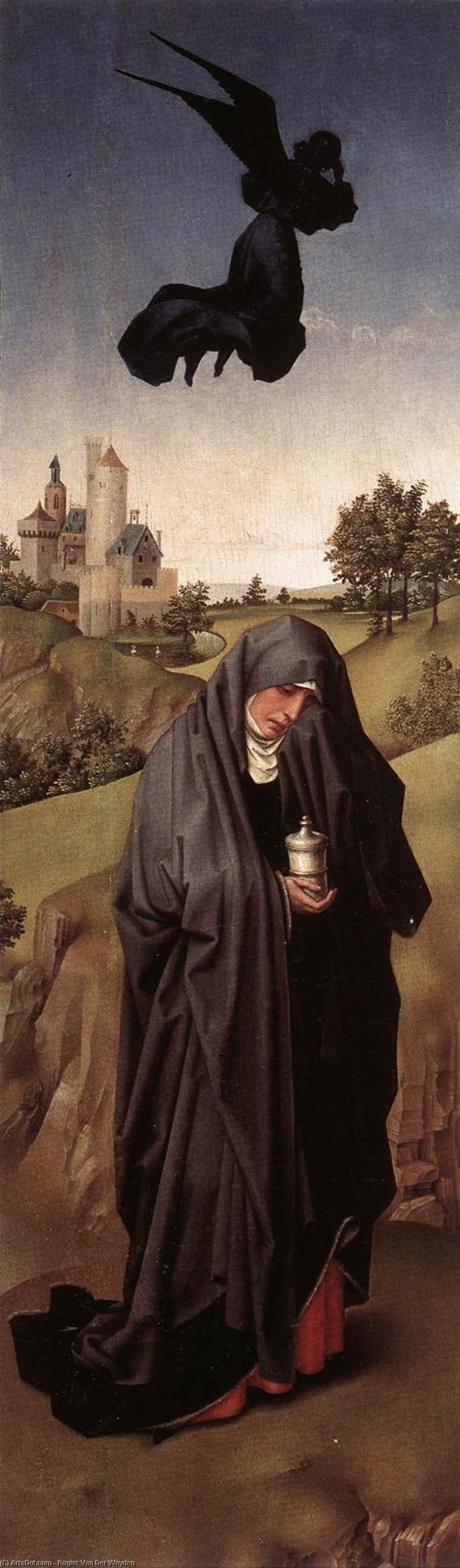
The left wing panel of Rogier van der Weyden's monumental Crucifixion Triptych stands as a testament to the artist’s unparalleled mastery of emotion and detail—a cornerstone of Early Netherlandish painting that continues to captivate audiences centuries later. Painted circa 1445, this exquisite depiction transcends mere representation; it strives for spiritual resonance, inviting contemplation on themes of faith, sorrow, and divine compassion. The scene unfolds with a solemn grace, centered around a woman draped in dark robes—a figure radiating quiet devotion as she holds aloft a flickering candle. This simple gesture speaks volumes about the artist’s intention to convey profound inner experience.
- Subject Matter: The panel portrays a woman engaged in prayerful meditation, illuminated by candlelight against the backdrop of a stylized castle—a deliberate architectural choice that symbolizes strength and permanence amidst vulnerability.
- Style & Technique: Van der Weyden’s signature style is characterized by its meticulous realism combined with expressive idealism. He employs oil paint on panel, layering thin glazes to achieve astonishing luminosity and depth – a technique perfected during his time and considered revolutionary for its ability to capture subtle nuances of light and shadow.
The artist's masterful use of color contributes significantly to the emotional impact of the piece. The dominant hues—deep blues and reds—are carefully calibrated to evoke feelings of melancholy and reverence. Notice particularly the rich crimson drapery, meticulously rendered with painstaking detail, mirroring the solemnity of the occasion. This deliberate chromatic palette underscores the spiritual significance of the scene, guiding the viewer’s gaze toward the central figure and reinforcing the overarching theme of piety.
Historical Context: Painted during a period marked by fervent religious fervor—the Burgundian Renaissance—this triptych reflects the artistic sensibilities of its time. Rogier van der Weyden was deeply influenced by humanist ideals, yet he remained firmly rooted in Christian iconography. The Crucifixion Triptych exemplifies the prevailing belief that art could serve as a conduit for spiritual contemplation and moral instruction. Its placement within the larger composition—alongside depictions of Christ’s suffering and ascension—further emphasizes its role as a visual meditation on salvation.
Symbolism: Beyond its aesthetic beauty, the panel is laden with symbolic significance. The candle represents divine illumination—a beacon guiding the soul toward enlightenment—while the woman embodies humility and unwavering faith. The castle symbolizes God’s eternal kingdom, offering reassurance amidst earthly trials. These carefully chosen symbols elevate the artwork beyond a mere depiction of an event; they invite viewers to engage in a deeper exploration of spiritual truths.
Ultimately, Rogier van der Weyden's Crucifixion Triptych (Left Wing) transcends time, continuing to inspire awe and contemplation. Its enduring appeal lies not only in its technical brilliance but also in its profound emotional depth—a testament to the artist’s ability to capture the essence of human experience within the framework of Christian faith. A reproduction offers a remarkable opportunity to appreciate this masterpiece firsthand, bringing its serene beauty and spiritual resonance into any interior space.