A Symphony of Sorrow: The Emotional Depth of the Deposition
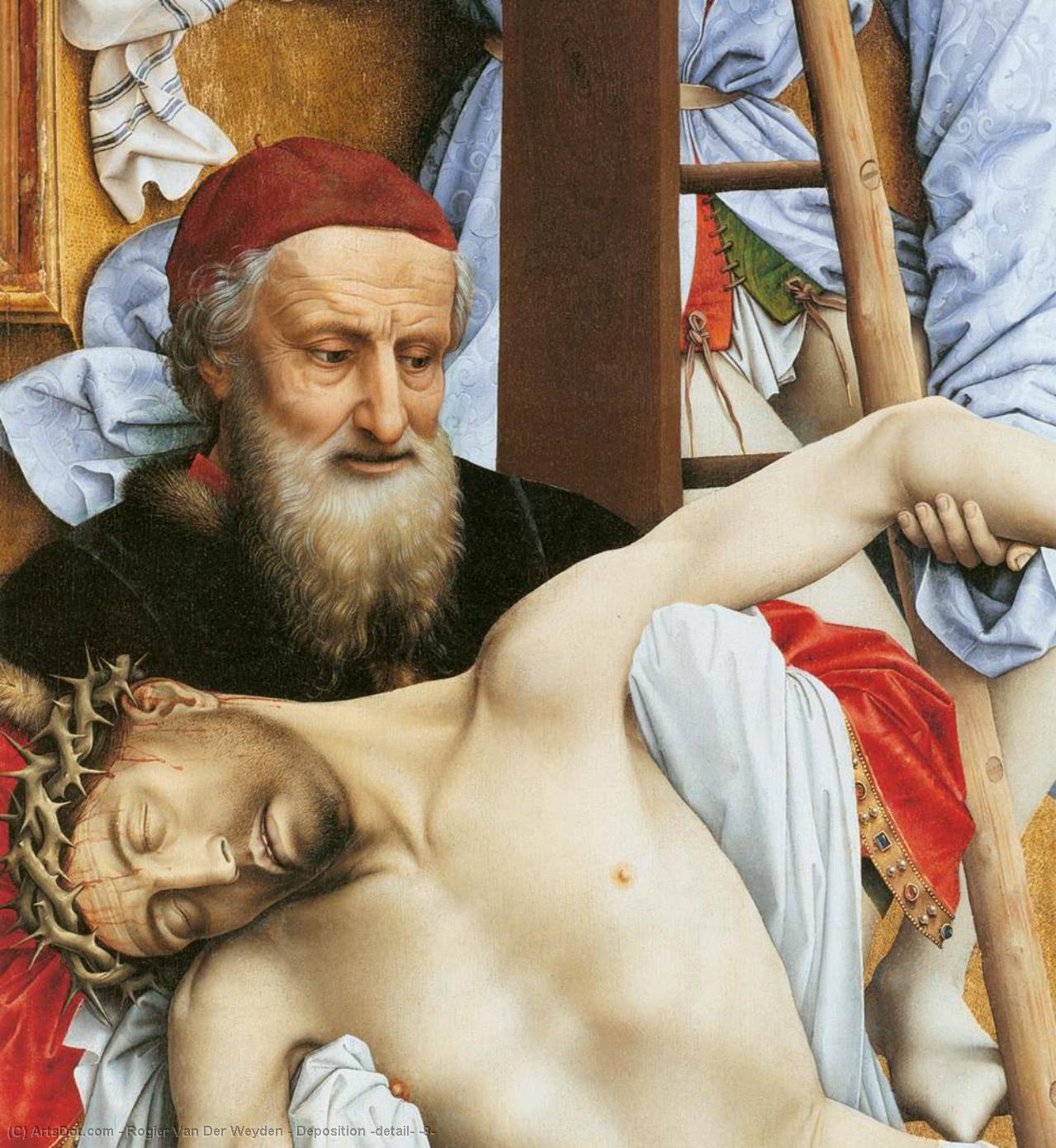
In the quiet, hallowed halls of the Museo del Prado, there exists a moment frozen in time, a masterpiece that transcends the boundaries of mere paint and wood to touch the very soul of humanity. Rogier van der Weyden’s Deposition, completed around 1435, is not simply a religious tableau; it is an unparalleled exploration of grief, a visceral encounter with the weight of loss. As we gaze upon this cornerstone of Early Netherlandish painting, we are drawn into a tightly framed, intimate space where the air seems heavy with the scent of mortality and the silent echoes of lamentation. The scene captures the pivotal instant when the lifeless body of Christ is lowered from the cross, a moment that serves as both a theological climax and a profound psychological study.
The composition is a masterclass in emotional architecture. Van der Weyden directs our eyes through a rhythmic arrangement of figures, each embodying a different facet of mourning. The Virgin Mary, cradling her son, becomes the emotional anchor of the work, her sorrow mirrored in the slumped, heavy grace of Christ’s body. This interaction is not merely a depiction of a biblical event but an invitation to empathize with the divine through the lens of human suffering. For the collector or the lover of fine art, the painting offers more than visual beauty; it provides a window into the profound spiritual contemplation that defined the 15th-century Flemish consciousness.
The Alchemy of Light and Texture
What truly elevates this work to the realm of the sublime is Van der Weyden’s revolutionary technical prowess. A former goldsmith by training, the artist brought an exacting, almost obsessive precision to his canvases. He utilized the advanced technique of glazing—applying multiple thin, translucent layers of oil paint over a meticulous underpainting—to achieve a luminosity that seems to radiate from within the panel itself. This method allows for subtle gradations of color and a breathtakingly realistic depiction of light as it dances across varied surfaces.
To observe the Deposition is to embark on a sensory journey through texture. One can almost feel the cool, smooth skin of the deceased Christ, the heavy, tactile weight of the crimson robes, and the intricate, delicate folds of the drapery that cascade like frozen waves. The artist’s ability to render the ruggedness of a beard or the metallic sheen of a tool with such anatomical accuracy creates a sense of hyper-realism that was ahead of its time. For interior designers seeking to bring a sense of historical grandeur and sophisticated detail to a space, the textures present in this work offer endless inspiration, embodying a luxury that is both ancient and eternally modern.
A Legacy of Humanism and Devotion
Emerging from the thriving artistic hub of Bruges during a period of immense innovation, the Deposition reflects the burgeoning humanist ideals of the era. While much of the art preceding this period favored idealized, distant forms, Van der Weyden embraced a raw, unflinching naturalism. He sought to represent the human condition with honesty, capturing the tension in a muscle, the moisture in an eye, and the profound exhaustion of a grieving heart. This commitment to realism serves to bridge the gap between the sacred and the secular, making the divine narrative accessible and deeply personal to the viewer.
The symbolic language within the painting is equally rich, utilizing earthy tones of ochre, brown, and deep red to ground the celestial event in a tangible, earthly reality. Every element, from the wooden scaffolding that suggests the physical labor of the descent to the somber expressions of the onlookers, contributes to a cohesive narrative of sacrifice and remembrance. Owning or displaying a high-quality reproduction of such a masterpiece is an act of preserving this legacy—bringing a piece of the Northern Renaissance's most poignant emotional landscape into the contemporary home, where it continues to inspire awe, reflection, and a deep appreciation for the enduring power of art.