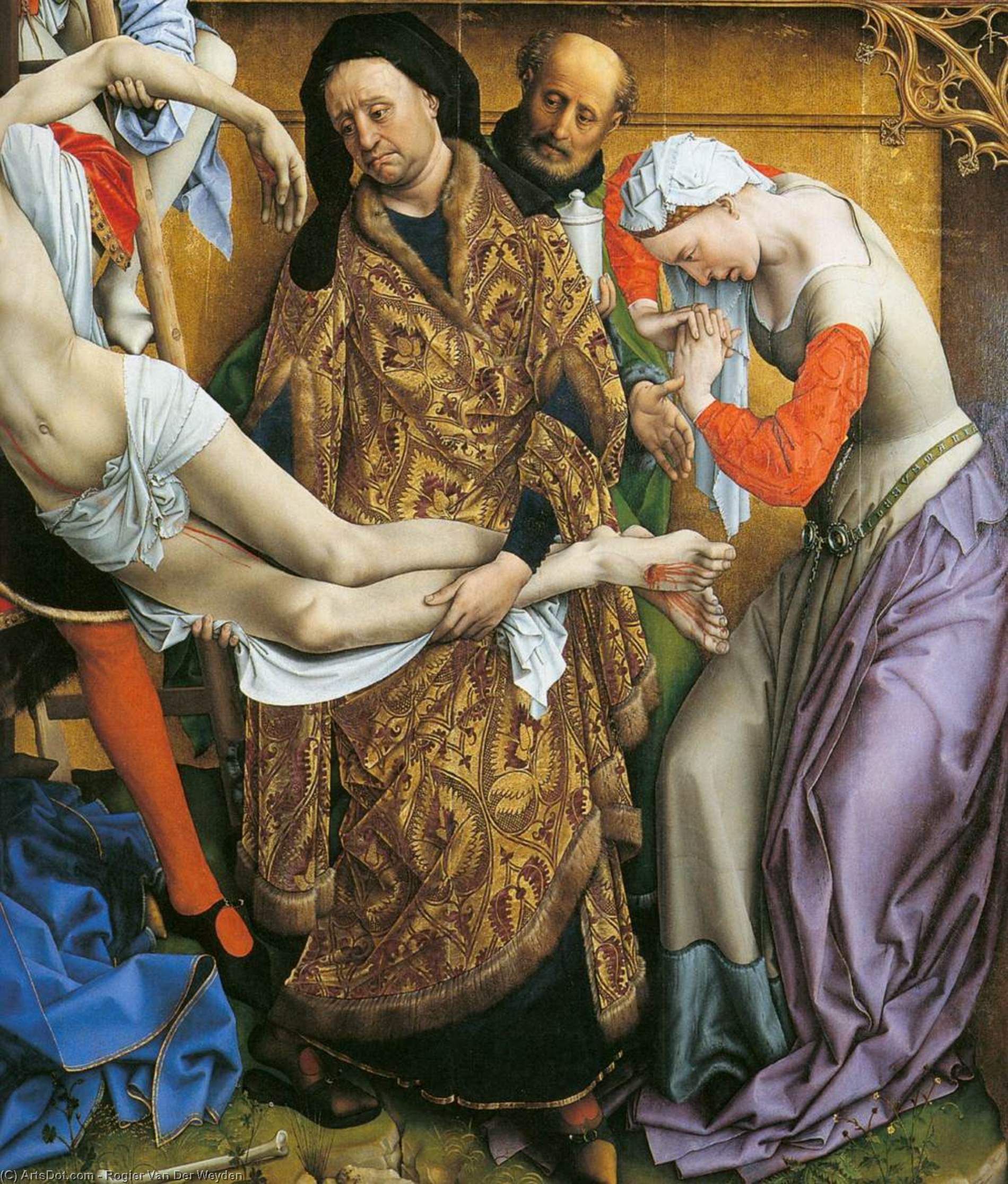
A Testament to Grief and Artistic Brilliance
Rogier van der Weyden’s *The Descent from the Cross*, completed around 1435, stands as arguably the most influential Netherlandish painting depicting Christ's crucifixion. Commissioned by the Leuven Schutterij guild – a brotherhood of crossbowmen – this monumental panel transcends mere representation; it embodies a profound emotional response to religious faith and exemplifies the zenith of Early Netherlandish artistic achievement.
- Artist: Rogier van der Weyden (c. 1400-1464)
- Date: c. 1435
- Location: Museo del Prado, Madrid
- Medium: Oil on panel
Style and Technique: Sculpted Surfaces and Vivid Color
Van der Weyden’s style is characterized by an unparalleled dedication to realism—a hallmark of the Northern Renaissance. He achieved this remarkable feat through meticulous observation and painstaking execution, employing techniques honed during his apprenticeship with Robert Campin. The painting's surfaces are sculpted with astonishing precision, mirroring the influence of Florentine sculpture, particularly Michelangelo Buonarroti’s David. This sculptural quality lends an almost palpable physicality to the figures depicted.
Furthermore, Van der Weyden utilized a vibrant palette dominated by reds, whites and blues—colors that were considered exceptionally luminous at the time. These hues weren't merely decorative; they served to heighten emotional impact and convey the solemn atmosphere of the funeral procession.
Historical Context: Patronage and Religious Reform
The Schutterij’s patronage reflects a broader trend toward civic engagement and religious fervor during the fifteenth century. Following the rediscovery of scholastic theology, artists like Van der Weyden sought to express theological concepts through visual imagery—a deliberate effort to communicate spiritual truths to their audience.
This painting aligns perfectly with the artistic sensibilities of its era, mirroring the stylistic innovations championed by Giovanni Antonio da Brescia and Joachim Patenier. It represents a pivotal moment in the evolution of European art, demonstrating the transformative power of humanist ideals combined with devout religious conviction.
Symbolism: The T-Shape and Emotional Resonance
The composition itself is laden with symbolic significance. Christ’s body is positioned in the T-shape of a crossbow—a deliberate reference to the Schutterij's emblem, signifying strength and righteousness. This gesture underscores the solemnity of the event and reinforces the painting’s overarching message: the triumph of faith over death.
As Erwin Panofsky famously observed, “It may be said that the painted tear, a shining pearl born of the strongest emotion, epitomizes that which Italians most admired in Early Flemish painting: pictorial brilliance and sentiment.” *The Descent from the Cross* continues to captivate viewers centuries later due to its masterful depiction of grief and its unwavering commitment to artistic excellence—a testament to Van der Weyden’s enduring legacy.