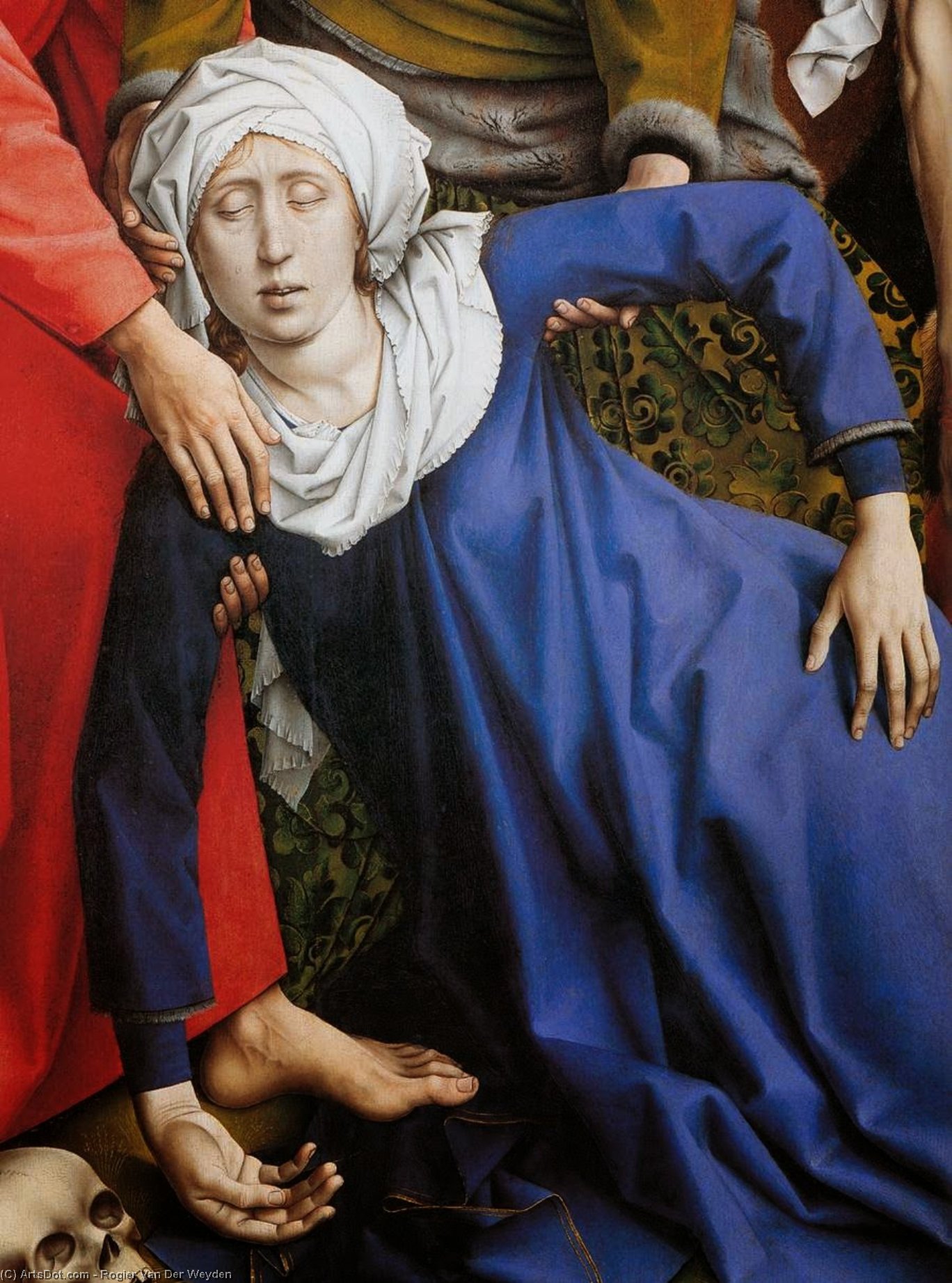
Rogier van der Weyden’s Descent from the Cross: A Masterpiece of Emotion and Detail
Rogier van der Weyden’s *The Descent from the Cross*, completed around 1435, stands as arguably the most influential Netherlandish painting depicting Christ’s crucifixion—a testament to his unparalleled skill in capturing profound emotion and meticulous realism. Commissioned by the Leuven Schutterij guild, this monumental panel transcends mere representation; it embodies a deeply considered theological meditation on suffering and redemption.
- Subject Matter: The painting portrays Christ’s lifeless body being lowered from the cross by Joseph of Arimathea and Nicodemus—a scene recounted in the Gospels as central to the Passion narrative.
- Style & Technique: Van der Weyden's style is characterized by a sculptural quality achieved through painstaking modeling of flesh, drapery folds, and facial expressions. He employed oil paint on oak panel, utilizing glazing techniques that created luminous surfaces and enhanced textural depth—a revolutionary approach for its time compared to tempera painting.
- Historical Context: Painted during the Early Netherlandish Renaissance, *The Descent from the Cross* reflects the humanist fascination with anatomy and naturalism alongside a fervent devotion to Christian iconography. It exemplifies the artistic fervor of Leuven’s burgeoning civic culture and underscores the importance of religious patronage in shaping artistic production.
- Symbolism: The composition itself is laden with symbolic significance. The T-shape of Christ's body echoes the crucifixion, while the careful positioning of figures—particularly Nicodemus—suggests contemplation and sorrow. The skull at the base symbolizes mortality and serves as a poignant reminder of Christ’s sacrifice for humanity’s salvation.
- Emotional Impact: Erwin Panofsky famously described *The Descent from the Cross* as “epitomizing that which Italians most admired in Early Flemish painting: pictorial brilliance and sentiment.” Indeed, the painting's expressive faces—particularly those of Mary Magdalene and Nicodemus—capture a palpable sense of grief and compassion. Van der Weyden’s masterful rendering of emotion elevates the artwork beyond mere visual spectacle into a deeply moving meditation on faith and human suffering.
Further research suggests connections to Giovanni Antonio da Brescia, an influential Italian Renaissance engraver whose prints mirrored van der Weyden's stylistic innovations—a testament to the cross-cultural exchange of artistic ideas during this transformative period.
Explore the profound beauty and emotional resonance of Rogier van der Weyden’s *The Descent from the Cross* through a high-quality reproduction at ArtsDot.com.