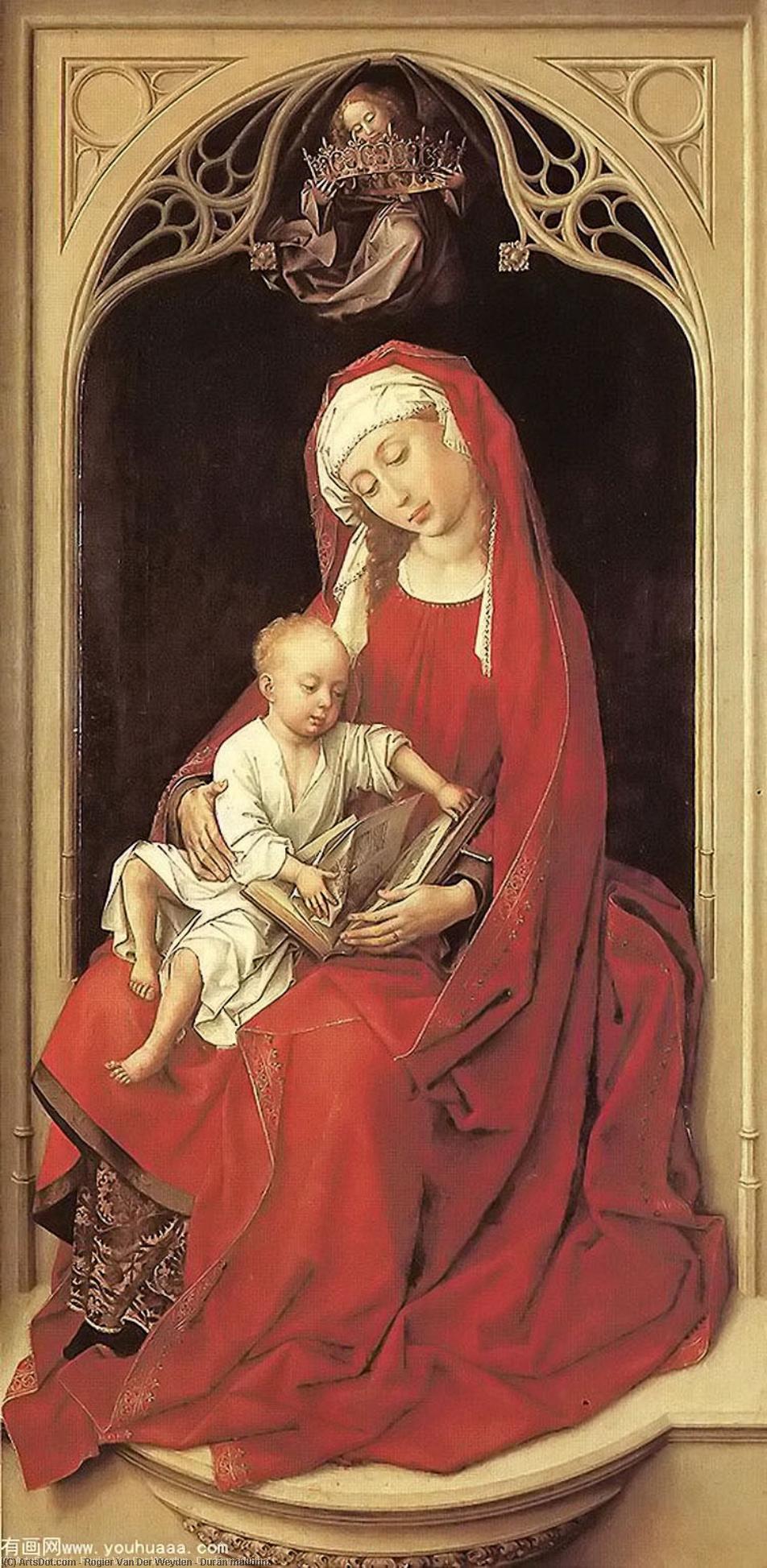
Experience Rogier van der Weyden’s iconic ‘Durán Madonna,’ a profoundly emotional masterpiece of the Early Netherlandish period featuring Mary and Jesus. This exquisitely detailed depiction captures timeless faith and family devotion – discover or own this stunning reproduction.
The Heart of Devotion: A Masterpiece of Early Netherlandish Art
Rogier van der Weyden’s “Durán Madonna” is more than just a depiction of the Virgin Mary and Child; it's a profound meditation on faith, motherhood, and the enduring human connection. Painted around 1440-1445, this iconic work transcends its religious subject matter to become a timeless testament to Van der Weyden’s unparalleled skill and emotional depth. The painting immediately draws the viewer into a world of quiet reverence, inviting contemplation on the tender bond between Mary and Jesus – a scene rendered with an almost sculptural quality that speaks directly to the soul.

(Image Placeholder - Replace with actual image)
A Technical Revelation: Van der Weyden’s Revolutionary Approach
Van der Weyden's artistic genius stemmed, in part, from his background as a goldsmith. This meticulous training translated directly into his paintings, most notably within the “Durán Madonna.” He was a pioneer in the use of oil paint, a relatively new medium at the time, allowing him to achieve levels of detail and luminosity previously unattainable. Observe the way Mary’s drapery appears to be sculpted from velvet and silk – each fold meticulously rendered with an almost obsessive attention to texture. The subtle gradations of color, particularly in Jesus's swaddling clothes and the polished surfaces of the bench, demonstrate Van der Weyden’s mastery of light and shadow, creating a sense of three-dimensionality that was revolutionary for its time. It is evident he wasn't simply painting; he was meticulously crafting an illusion of reality with unparalleled precision.
Symbolism Woven into the Sacred Scene
The composition itself is rich in symbolic meaning, reflecting the profound theological significance of the Virgin Mary and Child iconography. The bench, a recurring motif in Van der Weyden’s work, represents humility and earthly connection – Mary's deliberate choice to sit rather than stand emphasizes her role as a compassionate mother. The attentive figures in the background, likely donors, further reinforce the painting’s devotional purpose. Beyond these explicit symbols, the scene evokes a universal sense of peace and serenity, inviting viewers to contemplate the timeless virtues of love, faith, and devotion.
A Legacy of Emotional Resonance
The “Durán Madonna” remains one of the most celebrated works in the history of Early Netherlandish painting. Its enduring appeal lies not only in Van der Weyden’s technical brilliance but also in his ability to capture a moment of profound tenderness and spiritual grace. This reproduction offers an opportunity to experience firsthand the emotional power of this masterpiece, bringing its beauty and serenity into your home or studio. A truly exceptional piece for collectors and interior designers seeking to infuse their spaces with timeless elegance and artistic significance.