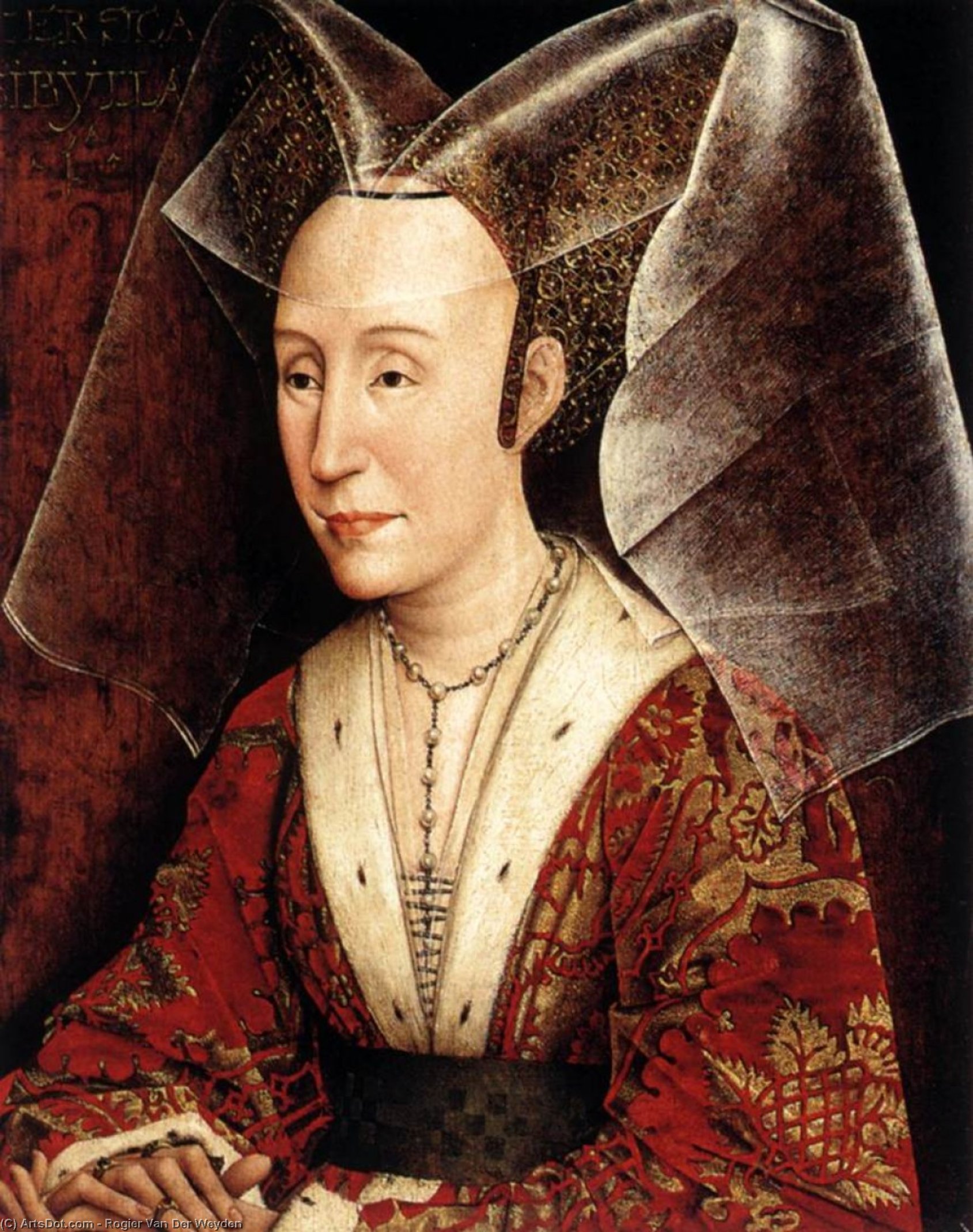
A Portrait of Regal Grace: Rogier van der Weyden’s Isabella of Portugal
This captivating portrait by Rogier van der Weyden, painted around 1500, offers a remarkable glimpse into the world of Renaissance nobility. Currently residing at the J. Paul Getty Museum in Los Angeles, this oil on panel (47 x 38 cm) is a testament to the artist’s mastery and the burgeoning artistic innovations of the Early Netherlandish school.
The Subject: A Queen Defined
The painting depicts Isabella of Portugal (1397-1471), Duchess of Burgundy, a woman of significant political influence in 15th-century Europe. Her serene expression and dignified posture immediately convey her royal status. Van der Weyden doesn’t simply present a likeness; he crafts an image that embodies power, intelligence, and composure – qualities essential for a queen navigating complex courtly life.
Artistic Style & Technique: Northern Renaissance Realism
Van der Weyden was a pivotal figure in the Early Netherlandish painting movement, renowned for its meticulous detail and naturalistic representation. Unlike the developing Italian Renaissance focus on idealized forms and classical antiquity, Northern artists prioritized *observational accuracy*. This is strikingly evident here. The artist’s technique involves layering thin, translucent glazes of oil paint to build up color and luminosity, creating a remarkable sense of depth and texture. Note the delicate rendering of Isabella's skin, the sheen of her garments, and the intricate details of her headdress – all achieved through painstaking observation and masterful brushwork. The composition is carefully balanced, drawing the viewer’s eye directly to Isabella’s face, emphasizing her presence and authority.
Symbolism & Iconography: Layers of Meaning
Every element within the portrait carries symbolic weight. Isabella's crown and rich red dress are overt symbols of her royal status. The elaborate headdress, fashionable during this period (see
1400–1500 in European fashion), signifies wealth, social standing, and marital status. While seemingly decorative, these details were understood by contemporary viewers as indicators of Isabella’s position within the complex hierarchy of European courts. The pearls adorning her attire represent purity, wealth, and prestige. The dark background serves to isolate and emphasize the figure, focusing attention on her inner qualities rather than a specific setting.
Historical Context: A Bridge Between Worlds
Painted around 1500, “Isabella of Portugal” exists at an interesting juncture in art history. While Early Netherlandish painting developed independently from the Italian Renaissance for much of the 15th century, influences were beginning to cross borders. Van der Weyden’s work demonstrates a unique blend of Northern realism and emerging Renaissance ideals – a subtle shift towards greater naturalism and psychological depth. The period also saw increasing patronage of the arts by wealthy merchants and rulers, fostering an environment for artistic innovation.
Emotional Impact & Lasting Legacy
Beyond its technical brilliance and historical significance, “Isabella of Portugal” possesses a profound emotional resonance. Van der Weyden captures not just Isabella’s physical appearance but also her *inner life*. Her gaze is direct yet gentle, conveying both strength and vulnerability. The painting invites contemplation, prompting viewers to consider the complexities of power, identity, and womanhood in the 15th century. It remains a powerful example of Northern Renaissance portraiture, influencing generations of artists with its realism, psychological insight, and enduring beauty.
Explore More