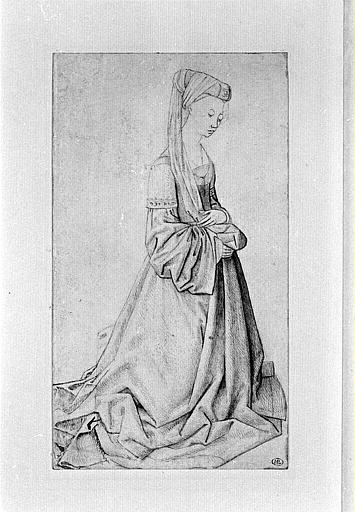
A Study in Quiet Contemplation: Examining Rogier van der Weyden’s Kneeling Woman
Rogier van der Weyden's “Kneeling Woman,” a monochrome drawing executed around 1460, stands as a testament to the enduring power of Early Netherlandish artistic vision. This deceptively simple composition—a solitary female figure rendered in meticulous graphite shading—captures an essence of piety and grace that transcends its modest scale.
- Subject Matter & Symbolism: The depiction centers on a woman kneeling, a posture frequently associated with prayer and devotion within medieval Christian iconography. Her serene expression and folded drapery convey humility and reverence—elements central to the spiritual ethos of the period. Scholars believe this image may represent an allegorical portrayal of Mary Magdalene, reflecting the profound influence of Marian piety on artistic sensibilities.
- Style & Technique: Van der Weyden’s style aligns perfectly with the broader trends of Early Netherlandish painting—characterized by unparalleled realism and a commitment to capturing human emotion. The artist employs dry point technique, utilizing graphite strokes to achieve remarkable tonal variation through cross-hatching. This painstaking method ensures that every nuance of light and shadow is faithfully reproduced, creating an illusion of three-dimensionality.
- Historical Context: Created during the Burgundian Renaissance in Brussels, “Kneeling Woman” embodies a shift towards humanist ideals alongside religious fervor. The artwork reflects the burgeoning interest in naturalism and psychological depth—traits that distinguished Northern European art from its Italian counterparts. It’s considered part of Van der Weyden's prolific output, showcasing his mastery of portraiture and devotional imagery.
- Emotional Impact: Beyond mere visual representation, “Kneeling Woman” evokes a palpable sense of tranquility and introspection. The artist skillfully conveys the inner state of mind—a quiet contemplation focused on faith—through subtle gestures and facial expressions. This enduring quality speaks to the timeless appeal of art that aspires to communicate profound spiritual truths.
Further exploration into Rogier van der Weyden’s oeuvre reveals a remarkable artist who profoundly shaped the artistic landscape of his time. Consider commissioning a high-quality reproduction of “Kneeling Woman” – a captivating piece that embodies the beauty and solemnity of Early Netherlandish art.