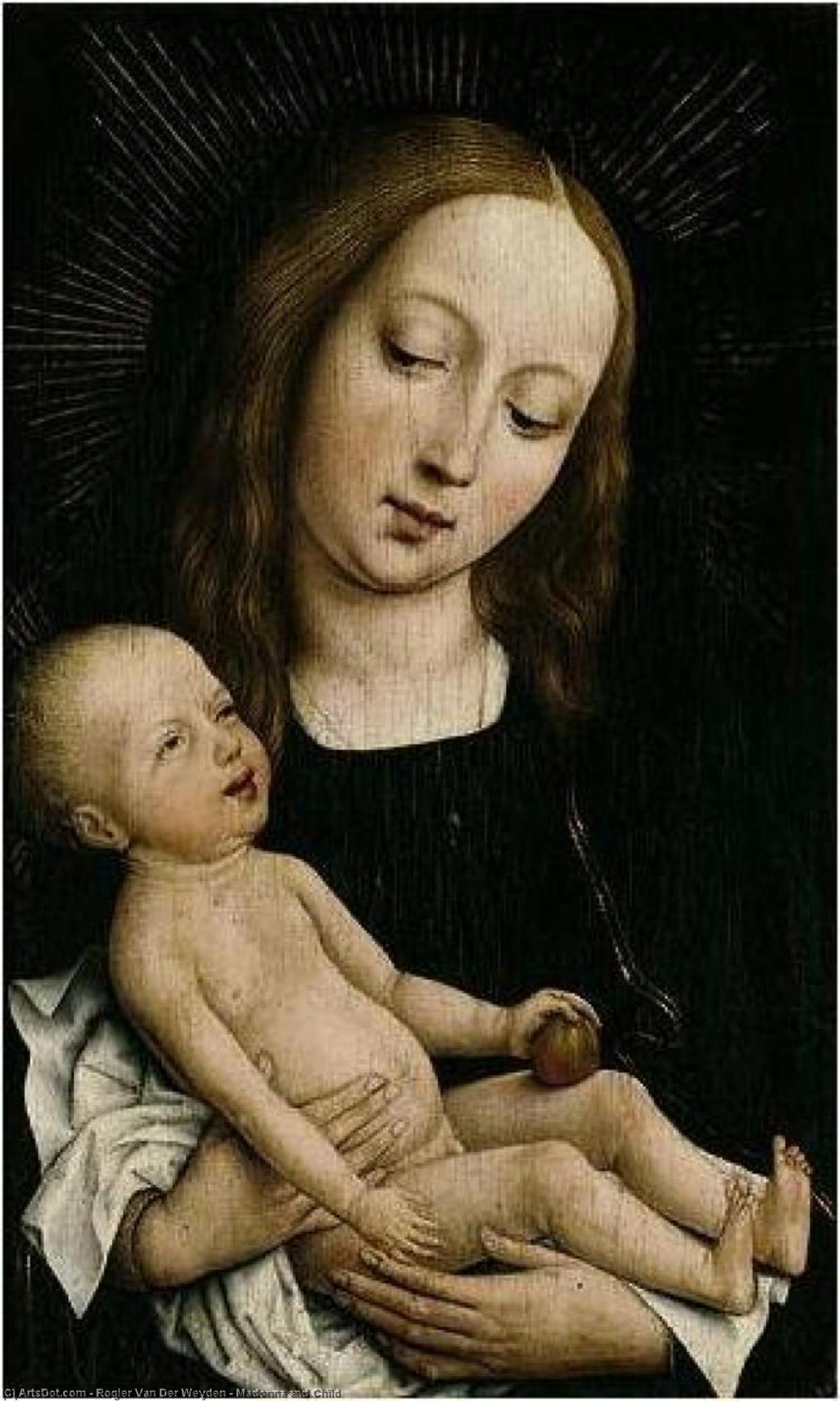
Experience the profound emotion of Rogier van der Weyden’s iconic Madonna and Child painting, a masterpiece of Early Netherlandish art showcasing Mary's tender embrace of her infant son amidst a scene rich in detail and intimacy – discover or own this timeless treasure.
A Timeless Portrait of Devotion: Rogier van der Weyden’s Madonna and Child
Rogier van der Weyden's Madonna and Child stands as a cornerstone of Early Netherlandish painting, a testament to the artist’s unparalleled skill in capturing profound emotion and meticulous detail. Executed around 1440-1450, this iconic image transcends mere representation; it embodies the very essence of maternal love and spiritual devotion. Van der Weyden, born in Tournai in 1400, was a master craftsman whose training as a goldsmith profoundly shaped his artistic approach – an obsession with texture, light, and the believable rendering of human form that would define his legacy.
- Subject Matter: The painting depicts Mary, cradling the infant Jesus in her arms. The intimate scene captures the moment of nursing, a symbol of nourishment—both physical and spiritual—central to Christian iconography.
- Style & Technique: Van der Weyden’s style is characterized by its realism and emotional intensity. He employed a technique known as ‘clousure,’ meticulously building up layers of paint to create a shimmering effect, particularly evident in the fabrics worn by Mary and Jesus. The figures are rendered with an almost sculptural quality, their faces imbued with a palpable sense of tenderness and serenity.
Symbolism Woven into the Fabric
Beyond its immediate depiction, the Madonna and Child is rich in symbolic meaning. The presence of two apples – one held by the Christ child, the other resting nearby – alludes to the Garden of Eden, representing innocence and temptation. The bowl on the left side may symbolize Mary’s purity and virginity, while the figure observing from the background could represent Joseph or perhaps a viewer invited into this sacred space. These subtle details elevate the painting beyond a simple portrait, transforming it into a complex theological statement.
- Apples: Representing innocence and temptation, echoing the biblical story of Adam and Eve.
- Bowl: A traditional symbol of Mary’s purity and virginity.
- Observer Figure: Potentially Joseph or a viewer, emphasizing the devotional nature of the scene.
Historical Context & Van der Weyden's Influence
Van der Weyden worked during a period of immense artistic innovation in Flanders. His influence extended far beyond his own lifetime, shaping the course of Northern Renaissance painting. He was a pioneer in depicting human emotion with such depth and realism, moving away from the stylized representations prevalent in earlier Gothic art. The meticulous detail and psychological insight evident in this Madonna and Child established him as one of the most important artists of his era, influencing generations of painters who followed.
Rogier van der Weyden’s mastery lies not just in technical skill but in his ability to evoke a profound emotional response. This reproduction captures that essence perfectly, offering a window into a world where faith and beauty converge—a timeless masterpiece for contemplation and admiration.
Perfect for Display – A Statement of Grace
This hand-painted reproduction offers an exceptional opportunity to bring the grandeur of Van der Weyden’s Madonna and Child into your home or office. Its exquisite detail and vibrant colors will serve as a focal point, adding a touch of elegance and spiritual depth to any space. Ideal for collectors, interior designers seeking to infuse their projects with classic beauty, or anyone drawn to the profound emotional power of this iconic image.