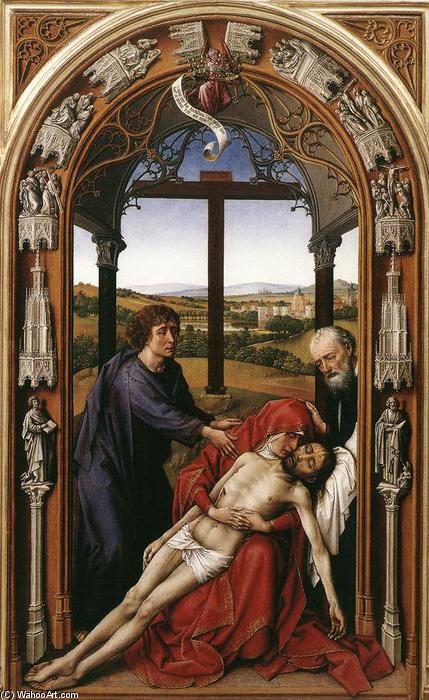
Van der Weyden employed oil paint on oak panel, utilizing glazing techniques to achieve luminous colors and subtle gradations of tone. His masterful rendering of drapery—particularly the flowing robes of the priests—demonstrates an unparalleled understanding of fabric texture and form. The composition is carefully balanced, guiding the viewer’s gaze towards the central figure.
Miraflores Altarpiece (Central Panel): A Testament to Emotion and Detail
The Miraflores Altarpiece, created around 1440 by Rogier van der Weyden, stands as one of the pinnacles of Early Netherlandish painting—a masterpiece that continues to captivate viewers centuries later. Commissioned for the newly founded Miraflores Monastery near Burgos, Spain, this monumental panel embodies Van der Weyden’s signature blend of psychological realism and meticulous craftsmanship, cementing his place among the foremost artists of his era.
- Subject Matter: The central panel depicts a poignant scene of grief – the Lamentation over Christ’s Corpse. Three figures surround the lifeless body of Jesus, their expressions conveying profound sorrow and compassion. This wasn't merely an illustration of religious dogma; Van der Weyden sought to capture the visceral experience of mourning, imbuing the composition with palpable emotion.
- Style & Technique: Van der Weyden’s style is characterized by its dramatic use of chiaroscuro—the interplay between light and shadow—creating a sense of depth and realism unparalleled for its time. He employed glazing techniques, applying thin layers of translucent paint over thicker undercoats to achieve luminous colors and subtle tonal variations. This painstaking process ensured that every brushstroke conveyed maximum impact.
- Historical Context: The altarpiece reflects the burgeoning humanist spirit of the Burgundian Netherlands during Van der Weyden’s lifetime. While rooted in Christian iconography, it demonstrates a sophisticated understanding of human anatomy and emotion—traits that distinguished Northern Renaissance art from its Italian counterpart. It exemplifies the artistic ambition to portray the human condition with sensitivity and accuracy.
- Symbolism: The composition is laden with symbolic references. The outstretched arms of Christ represent humility and acceptance of divine judgment, while the weeping figures embody compassion and grief—universal emotions that transcend religious boundaries. The open window behind the mourners symbolizes God’s presence illuminating the scene, reinforcing the spiritual significance of the tableau.
- Emotional Impact: Viewing the Miraflores Altarpiece evokes a powerful response – one of empathy and contemplation. Van der Weyden's masterful rendering of human grief compels viewers to confront mortality and consider the profound implications of faith. It remains an enduring symbol of sorrow, compassion, and artistic excellence.
Detailed Examination: Composition & Color Palette
The central panel’s composition is deliberately austere yet emotionally resonant. The figures are arranged in a pyramidal structure, drawing the eye upwards towards Christ's corpse—a compositional device that reinforces the solemnity of the scene. Van der Weyden skillfully utilizes light to sculpt the forms of his subjects, highlighting musculature and drapery folds with dramatic contrasts. Furthermore, the color palette is restrained but impactful, dominated by muted blues, browns, and reds—colors chosen to convey grief and dignity. The subtle gradations of tone contribute to the overall sense of realism and emotional depth.
Influence & Legacy
Rogier van der Weyden’s Miraflores Altarpiece profoundly influenced subsequent generations of artists. Its meticulous attention to detail, expressive portrayal of emotion, and masterful use of technique established a new standard for religious painting—inspiring painters throughout Europe to strive for greater psychological realism and artistic innovation. It continues to serve as an exemplar of Early Netherlandish art, demonstrating the transformative power of observation and empathy in capturing the human experience.
Reproductions & Decorative Applications
Today, high-quality reproductions of the Miraflores Altarpiece offer a stunning opportunity to appreciate Van der Weyden’s artistic genius within the context of interior design. Its serene beauty and evocative symbolism lend themselves particularly well to spaces seeking tranquility and contemplation—creating an immersive experience that honors the legacy of one of art history's most celebrated masters.