A Moment of Grace: Rogier van der Weyden’s Visitation
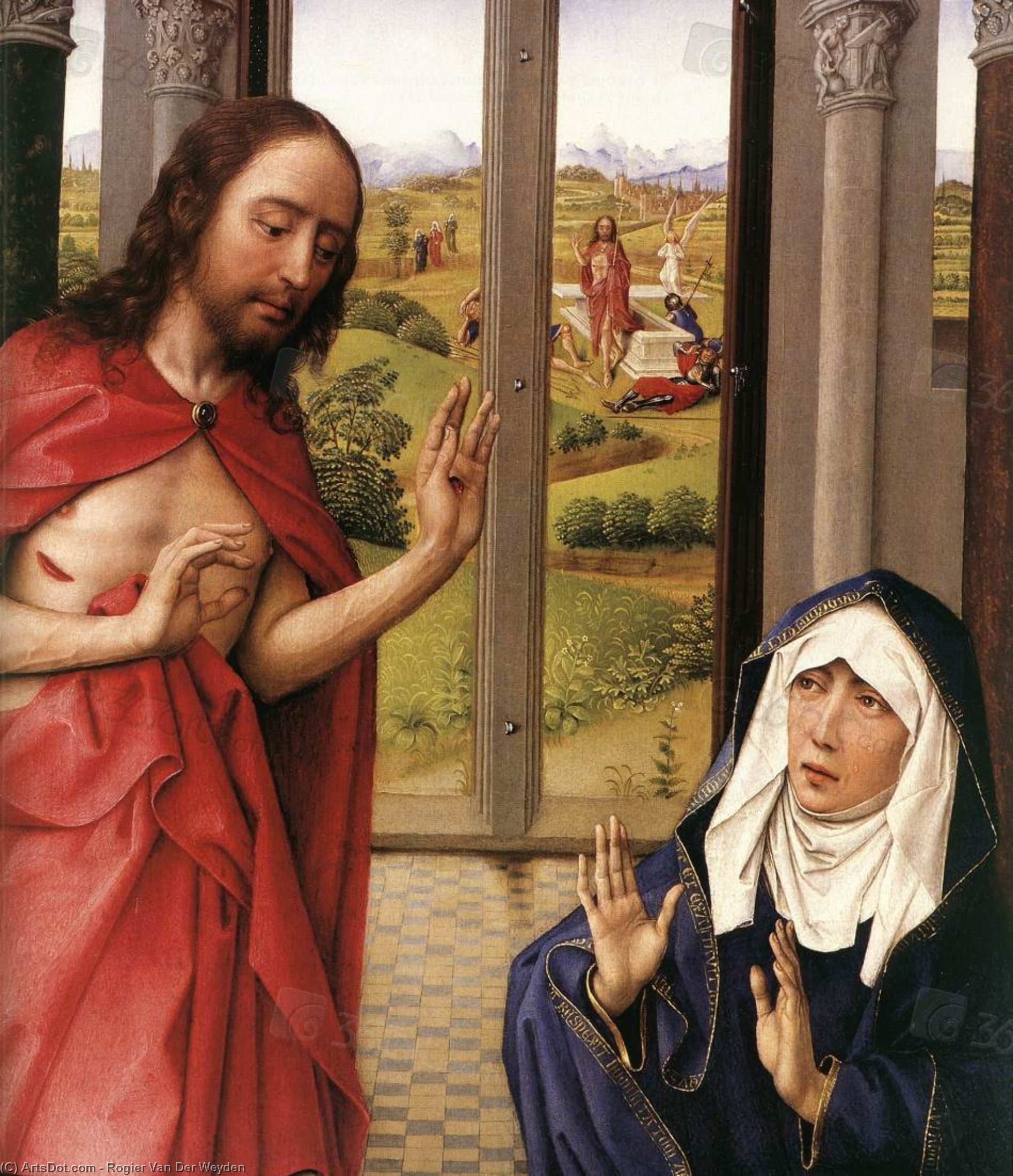
This exquisite detail from Rogier van der Weyden's *Miraflores Altarpiece* (c. 1440) offers a captivating glimpse into the heart of Early Netherlandish painting. The scene depicts the Visitation – the moment when Mary, pregnant with Jesus, visits her cousin Elizabeth, who is also carrying John the Baptist. This encounter, recounted in the Gospel of Luke, is rendered with Van der Weyden’s signature blend of realism, emotional depth, and symbolic richness.
Masterful Technique & Style
Van der Weyden, a leading figure of the Northern Renaissance, elevates oil painting to new heights here. The meticulous detail – evident in the folds of drapery, the delicate rendering of skin tones, and the architectural precision – is characteristic of his style. He employs a layered glazing technique, building up luminosity and depth with translucent layers of paint on a wood panel.
Notice how light dramatically illuminates the figures’ faces and hands, creating a powerful contrast between light and shadow that emphasizes their emotional states. The composition, while symmetrical, avoids rigidity through subtle variations in pose and gesture. This is not merely representation; it's an exploration of human emotion conveyed through masterful technique.
Symbolism & Narrative Context
The ornate doorway framing the scene isn’t simply a decorative element. It acts as a symbolic threshold, separating the earthly realm from the divine encounter unfolding within. The landscape visible through the doorway provides context – a suggestion of the wider world touched by this sacred event.
The rich color palette, dominated by reds and blues (colors often associated with royalty and divinity respectively), further reinforces the scene’s spiritual significance. Mary's modestly veiled head and downcast gaze convey humility, while Elizabeth’s welcoming gesture signifies acceptance and reverence. The entire composition is imbued with a quiet dignity that invites contemplation.
Van der Weyden & the Early Netherlandish Tradition
Born in Tournai (modern-day Belgium) around 1400, Rogier van der Weyden quickly rose to prominence as one of the most sought-after artists of his time. His work was admired for its emotional intensity and naturalism – qualities that distinguished him from earlier Gothic styles. He surpassed even Jan van Eyck in popularity during his lifetime, receiving commissions from prominent patrons across Europe.
Van der Weyden’s influence on subsequent generations of Northern European painters is immeasurable. His emphasis on realistic detail, expressive faces, and symbolic depth laid the foundation for a new era in art history.
Emotional Resonance & Interior Design
This detail from the *Miraflores Altarpiece* evokes a sense of reverence, vulnerability, and spiritual connection. It’s a scene that invites quiet contemplation and offers a moment of respite from the everyday world.
As an artwork for interior design, it would lend itself beautifully to spaces intended for reflection – libraries, studies, or meditation rooms. The rich colors and intricate details will add depth and sophistication to any setting, while its historical significance provides a compelling conversation starter. A high-quality reproduction of this masterpiece offers not only aesthetic beauty but also a tangible link to the artistic achievements of the Renaissance.
Further Exploration
- Explore more about Rogier van der Weyden’s life and work through resources like Wikipedia.
- Discover the full *Miraflores Altarpiece* and other masterpieces on art databases such as this artwork database.