A Moment of Reverence: Exploring Rogier van der Weyden’s Portrait Diptych of Jean de Gros
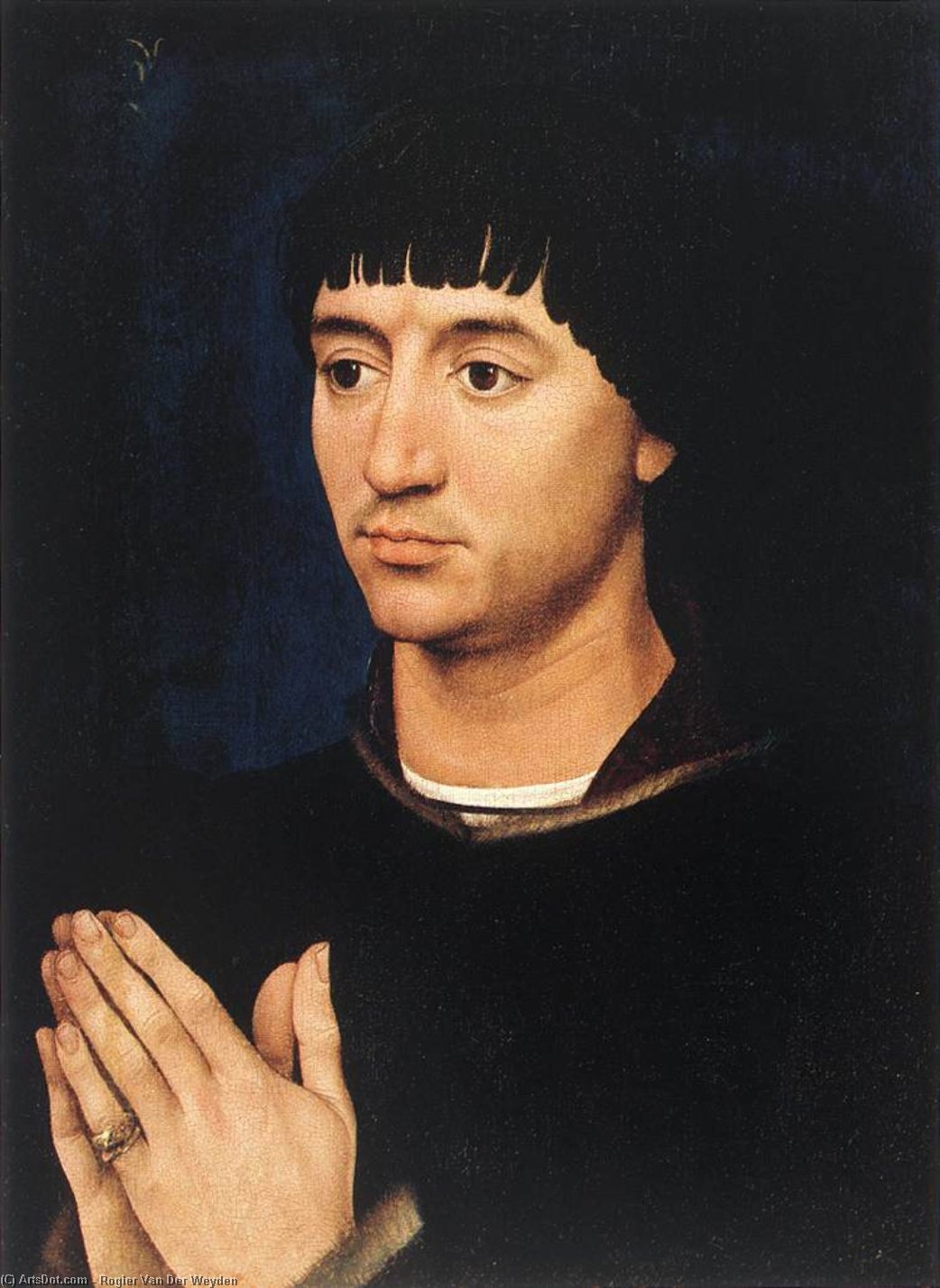
Rogier van der Weyden's "Portrait Diptych of Jean de Gros" stands as a testament to the artistic fervor of Early Netherlandish painting—a period characterized by profound spiritual contemplation and meticulous craftsmanship. Executed around 1450, this monumental artwork transcends mere representation; it delves into the psychological landscape of its subject, Jean de Gros, capturing an arresting tableau of piety and solemn reflection. The diptych, comprised of two panels depicting Jean de Gros on the right wing and Philippe de Croy on the left wing, exemplifies Van der Weyden’s mastery of oil paint—a revolutionary medium that allowed for unprecedented realism and tonal subtlety.
- Style & Technique: Van der Weyden's style is firmly rooted in Gothic traditions yet decisively pushes toward Renaissance ideals. He employs a technique known as sfumato, painstakingly layering thin glazes of pigment to achieve soft transitions between tones—a masterful illusionistic device that renders the drapery and flesh tones with breathtaking accuracy. The artist’s unwavering attention to detail extends beyond surface appearance; he meticulously sculpts form through subtle shading, conveying an astonishing sense of volume and texture.
- Historical Context: Created during a time of burgeoning humanist thought and artistic innovation, the diptych reflects the broader cultural preoccupation with portraiture as a means of commemorating noble patrons. Jean de Gros’s pose—kneeling in prayer—is emblematic of the spiritual fervor prevalent within Burgundian courts, where piety was considered essential for maintaining social order and securing divine favor.
Symbolism & Emotion: The darkened background serves as a deliberate counterpoint to Jean de Gros’s luminous figure, emphasizing his centrality and intensifying the emotional impact of the scene. His upward gaze—a gesture frequently interpreted as yearning for transcendence—communicates an inner state of profound devotion. The artist skillfully utilizes facial expression—characterized by solemn seriousness—to convey Jean de Gros's unwavering faith and humility. This portrayal isn’t simply a likeness; it aspires to capture the essence of spiritual experience, inviting viewers into a contemplative dialogue about faith and contemplation.
- Material & Scale: Painted on oak panels approximately 38 x 28 cm, “Portrait Diptych of Jean de Gros” demonstrates Van der Weyden’s commitment to monumental scale—a stylistic choice that underscores the importance of its subject and elevates it beyond mere decorative function.
- Decorative Potential: The diptych's rich textural qualities and evocative imagery lend themselves beautifully to interior design projects. Reproductions crafted with archival pigments offer a stunning opportunity to infuse spaces with artistic grandeur—bringing forth the contemplative spirit of Early Netherlandish art into modern homes.
Concluding Remarks: Rogier van der Weyden’s “Portrait Diptych of Jean de Gros” remains an enduring masterpiece—a poignant meditation on faith and human dignity executed with unparalleled skill. Its legacy continues to inspire artists and collectors alike, cementing its place as a cornerstone of European art history and a timeless symbol of spiritual contemplation.