A Dramatic Narrative in Silver and Crimson: Rogier van der Weyden’s “Saint George and the Dragon”
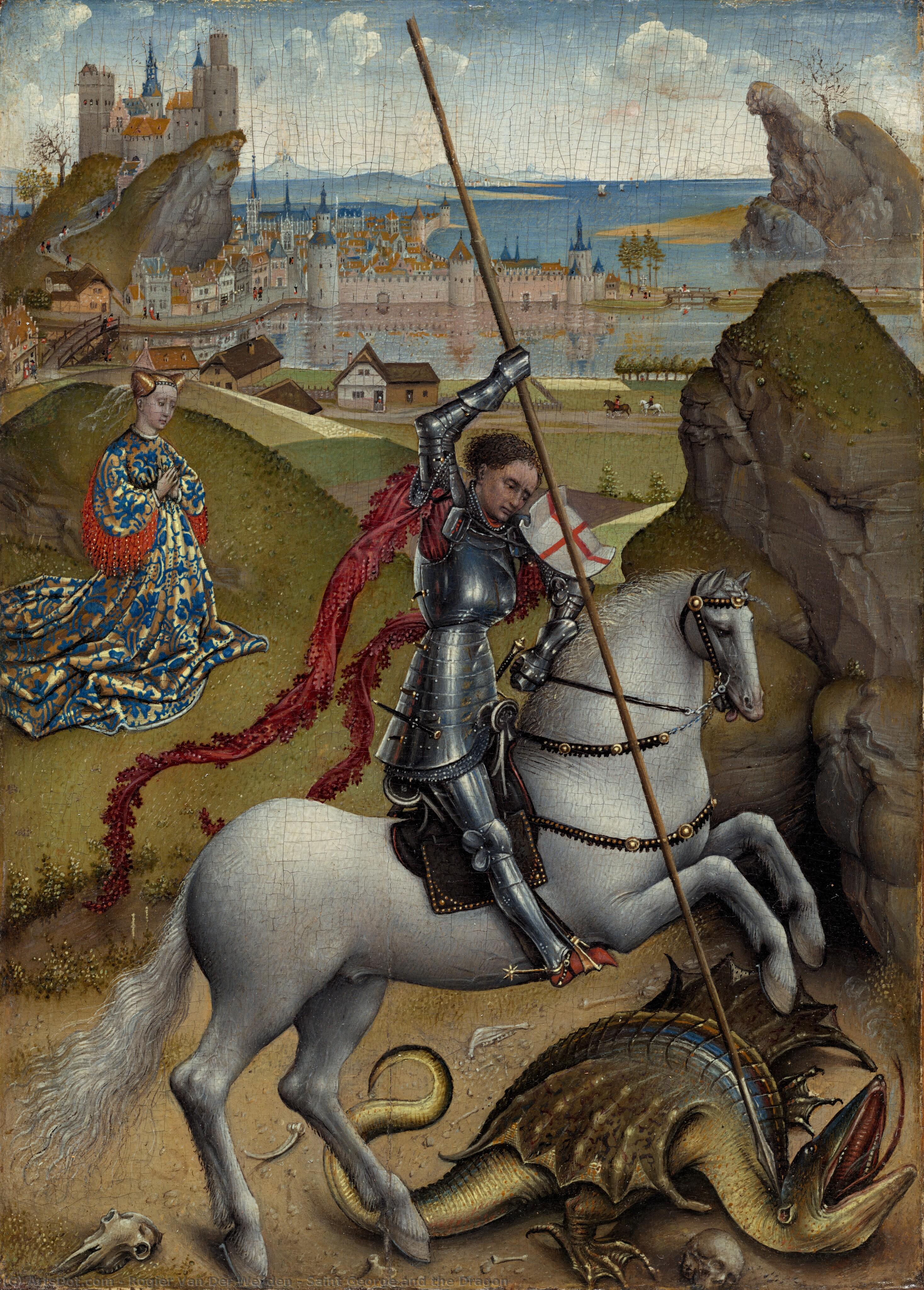
Rogier van der Weyden's "Saint George and the Dragon," painted in 1435, isn’t merely a depiction of a legendary hero; it’s a meticulously crafted tableau brimming with symbolic weight and rendered with an almost unsettling realism. This vertical composition, measuring a modest 24 x 20 cm, immediately draws the viewer into a scene of intense action and profound moral struggle. The painting pulsates with a palpable tension – the rearing horse, the straining lance, the dragon’s menacing posture – all contributing to a narrative that transcends simple heroism and delves into themes of faith, courage, and the triumph of good over evil.
Van der Weyden's mastery is immediately evident in his painstaking attention to detail. The armor of Saint George, gleaming silver and flawlessly rendered, speaks volumes about his training as a goldsmith; it’s not simply painted metal but an illusion of tactile reality. The rich burgundy-red banners unfurling behind him are equally impressive, their folds and textures suggesting movement and drama. Conversely, the dragon itself is a study in reptilian power – its olive-green scales, royal-blue stripe, and forked tongue all contribute to a terrifyingly lifelike portrayal of primal force. The scattered skulls and bones at the base of the beast underscore the cost of this victory, reminding us that even triumph carries a price.
The Anatomy of Emotion: Van der Weyden’s Technique
Van der Weyden was renowned for his ability to imbue his figures with an extraordinary degree of psychological depth. This is particularly evident in the portrayal of Saint George himself. His pale peach face, framed by brown hair and bare feet, suggests a vulnerability beneath the armor – a humanity that elevates him beyond a simple symbol of virtue. The woman kneeling before the scene, draped in a translucent veil and adorned with blue and gold fabrics, embodies both piety and sorrow; her expression hints at a quiet reverence for the sacrifice being made. The artist’s use of *sfumato*, a subtle blurring technique, softens edges and creates an atmospheric depth that anchors the entire composition.
Technically, the painting showcases Van der Weyden's innovative approach to oil paint – a relatively new medium at the time. He employed layering techniques to achieve incredible luminosity and detail, particularly in the rendering of fabrics and armor. The way light catches on the silver, reflecting off the lance, is a testament to his understanding of how color interacts with form. The diagonal thrust of the lance, dominating the composition, not only directs the viewer’s eye but also symbolizes the decisive action required to overcome evil.
Symbolism and Context: A Medieval Tapestry
“Saint George and the Dragon” is rich in symbolic meaning, deeply rooted in medieval Christian iconography. Saint George's slaying of the dragon was a potent symbol of Christ’s victory over sin and death – a narrative frequently depicted throughout the Middle Ages. The setting itself—a village with buildings lining a body of water—represents the world being redeemed by faith. The distant castle, visible on the ridge above the kneeling woman, could symbolize the authority of the Church, reinforcing the moral message of the scene.
Painted in 1435, this work reflects the burgeoning artistic sophistication of Early Netherlandish painting. It’s a period marked by an increasing interest in realism and naturalism, driven by the patronage of wealthy merchants and nobles. Van der Weyden's meticulous attention to detail and his ability to capture human emotion were highly valued, establishing him as one of the most influential artists of his time. The inclusion of elements like the dog near the bottom left corner adds a touch of earthly realism, grounding the fantastical narrative in a recognizable world.
A Timeless Masterpiece: Reproduction Possibilities
ArtsDot offers exquisite hand-painted reproductions of Rogier van der Weyden’s “Saint George and the Dragon,” meticulously recreating every nuance of this iconic work. Whether you're an art collector, interior designer seeking a statement piece, or simply captivated by the drama and symbolism of this painting, our reproductions provide a stunning way to bring this masterpiece into your home or office. Each reproduction is created using archival-quality materials and techniques, ensuring that it will retain its beauty and vibrancy for generations to come. Consider how the rich colors and dynamic composition would complement a variety of interior styles – from traditional to contemporary.