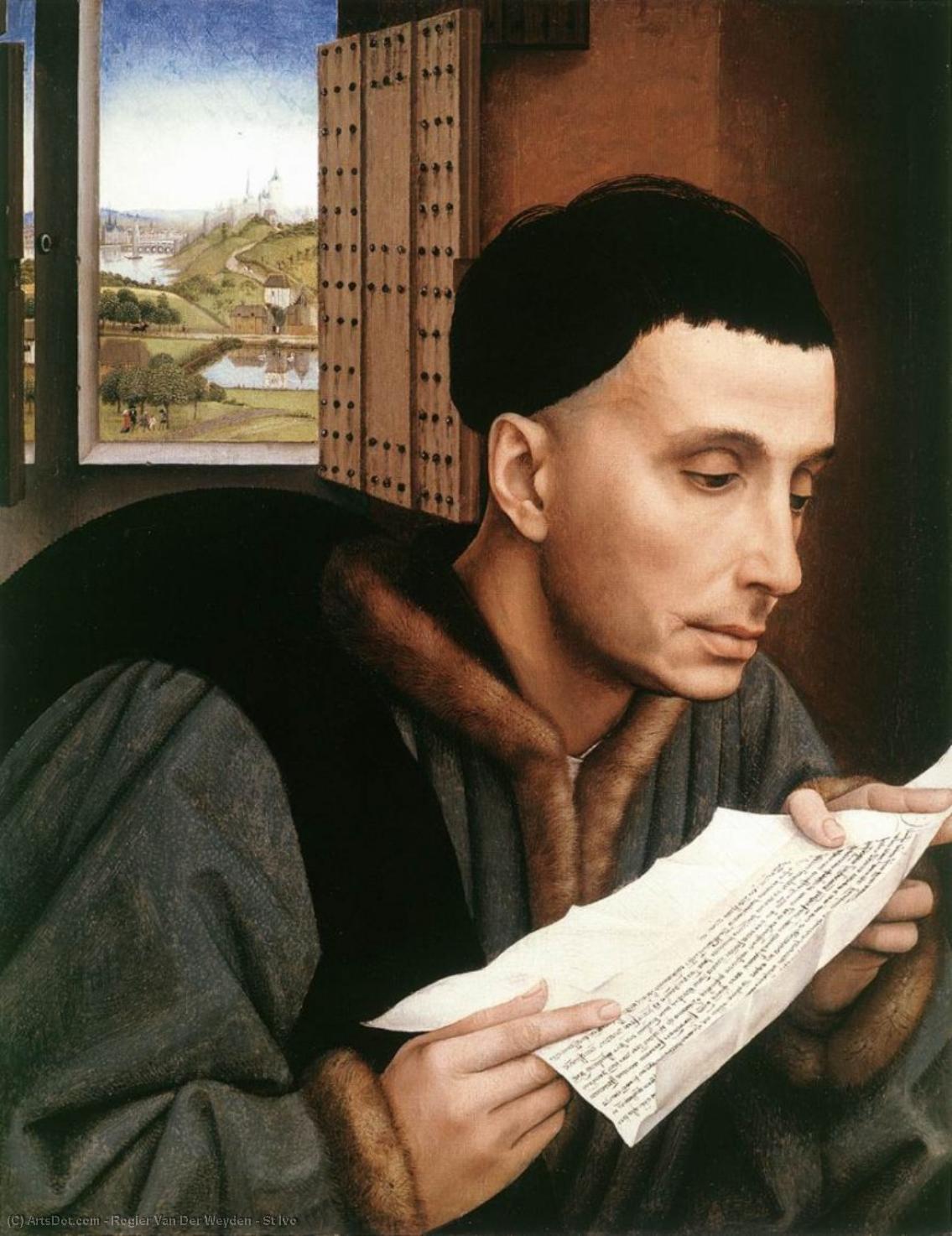
A Window into Faith and Formality – Rogier van der Weyden’s St Ivo
Rogier van der Weyden's “St Ivo,” painted circa 1450, stands as a testament to the burgeoning humanist spirit of the Burgundian Netherlands while simultaneously embodying the profound emotional depth characteristic of Early Netherlandish painting. More than just a depiction of a man seated at a window, this portrait is an exquisitely crafted meditation on piety, contemplation, and the solemn gravity of intellectual pursuit.
- Subject Matter: The central figure portrays Ivo of Kermartin, Bishop of Lisieux, a prominent Dominican theologian and spiritual advisor known for his unwavering devotion to Saint Augustine. His posture exudes calm assurance as he engages in reading—a deliberate gesture signifying the importance of scripture and reasoned theological discourse within medieval piety.
- Style & Technique: Van der Weyden’s mastery is evident in every brushstroke. Employing meticulous detail, he achieves a remarkable level of realism – particularly noticeable in the rendering of Ivo's drapery and facial features. The artist skillfully utilizes chiaroscuro—the dramatic interplay of light and shadow—to sculpt Ivo’s form and imbue the scene with an atmosphere of solemn dignity.
- Historical Context: Painted during a period marked by significant intellectual and artistic advancements, “St Ivo” reflects the humanist fascination with classical ideals alongside Christian faith. The inclusion of a window suggests both physical space and metaphorical openness—a yearning for divine illumination within the confines of earthly existence. It’s considered part of the Middelburg Altar commissioned by Willem III van Artevelde, a monumental undertaking that showcased the artistic prowess of the Burgundian court.
Symbolism: Light and Reflection – Layers of Meaning
Beyond its visual splendor, “St Ivo” is rich in symbolic resonance. The window itself serves as a powerful emblem—representing not merely natural light but also divine grace penetrating the darkness of human ignorance. Ivo’s gaze directs upwards, mirroring the spiritual aspiration inherent in his profession and conveying a sense of inner contemplation.
- The Letter: The document held by Ivo symbolizes intellectual engagement and the pursuit of knowledge—a cornerstone of Augustine's theological framework. It underscores the importance of reasoned reflection alongside faith as pathways to understanding God’s divine plan.
- The Clock: The timepiece hanging on the wall subtly reinforces the passage of time and serves as a reminder of mortality – prompting viewers to consider the eternal dimension of Christian belief.
Emotional Impact & Artistic Legacy
"St Ivo" transcends mere representation; it aspires to evoke empathy and admiration for Ivo’s unwavering faith. Van der Weyden's ability to convey psychological nuance—captured in Ivo’s subtle expression—established him as a pioneer of emotional realism within Early Netherlandish art. His meticulous attention to detail and masterful use of technique continue to inspire artists today, cementing “St Ivo”’s place as an enduring masterpiece of Renaissance humanism.
- Interior Setting: The carefully constructed interior space contributes to the painting's contemplative mood, emphasizing the importance of solitude and introspection in spiritual practice.
- Color Palette: Dominated by muted earth tones—particularly browns and reds—the palette reinforces the solemn atmosphere and underscores Ivo’s connection to the natural world as interpreted through Christian theology.