A Window into Emotion: Examining Rogier van der Weyden’s ‘St Ivo’
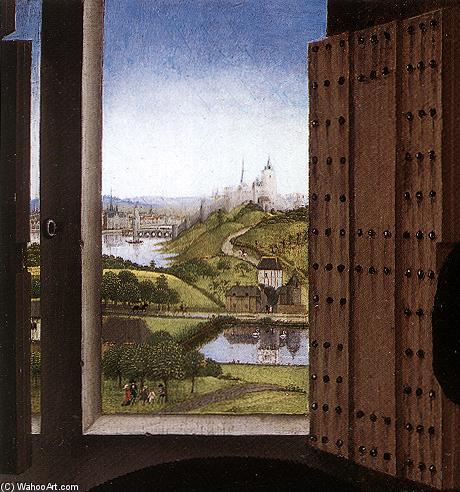
Rogier van der Weyden’s “St Ivo,” painted circa 1450, stands as a testament to the burgeoning humanist spirit of the Early Netherlandish Renaissance while simultaneously anchoring itself in deeply rooted Christian iconography. More than just a depiction of a cityscape—a bustling town nestled beneath a commanding castle—the painting operates on multiple levels, inviting contemplation about faith, human experience, and artistic mastery.
- Subject Matter: The scene portrays Saint Ivo, a Flemish saint venerated for his piety and devotion to God. He is positioned prominently within the composition, gazing outwards with an expression of serene contemplation—a hallmark of van der Weyden’s signature style.
- Style & Technique: Van der Weyden's approach distinguishes itself from its predecessors through a profound commitment to emotional realism. Unlike earlier depictions that prioritized idealized forms and distant perspectives, “St Ivo” captures the palpable atmosphere of medieval life with meticulous attention to detail. The artist employs oil paint on panel—a technique favored for its luminosity and ability to render textures convincingly—resulting in an image brimming with nuanced shading and subtle color variations.
- Historical Context: Created during a period marked by significant intellectual and artistic advancements, “St Ivo” reflects the humanist fascination with portraying human emotion authentically. The painting’s setting—a fortified town—symbolizes protection from external threats, both physical and spiritual, aligning perfectly with Saint Ivo's role as guardian of faith.
- Symbolism: The inclusion of a river flowing through the cityscape serves as a powerful visual metaphor for the flow of life itself, mirroring the saint’s unwavering devotion to God. Furthermore, the castle represents authority and divine providence—a reminder that earthly concerns are ultimately subordinate to spiritual aspirations.
Detailed Examination: Artistic Innovation & Emotional Resonance
What truly elevates “St Ivo” beyond mere visual representation is van der Weyden’s masterful manipulation of light and shadow. Observe how the artist skillfully utilizes chiaroscuro—the dramatic contrast between illuminated areas and darkened recesses—to sculpt Saint Ivo's figure and imbue the entire scene with a sense of depth and realism unparalleled in its time. This technique wasn’t merely aesthetically pleasing; it served to heighten the emotional impact of the image, conveying Saint Ivo’s inner tranquility and spiritual contemplation.
- Color Palette: The painting utilizes a restrained yet harmonious color palette dominated by earthy tones—browns, ochres, and reds—reflecting the prevailing artistic conventions of the period. However, subtle variations in hue contribute to the overall sense of atmosphere and enhance the visual richness of the composition.
- Compositional Arrangement: Van der Weyden’s compositional choices are deliberate and purposeful. The central figure is positioned at eye level, drawing the viewer's gaze directly into Saint Ivo’s contemplative expression. Surrounding elements—the castle, the river, and the figures within the town—are arranged to create a balanced visual narrative that reinforces the painting’s thematic concerns.
Legacy & Influence: A Masterpiece Enduring Through Time
"St Ivo" remains an enduring symbol of artistic excellence and emotional depth. Its influence can be traced throughout subsequent generations of painters, who sought to emulate van der Weyden's groundbreaking technique and profound sensitivity to human psychology. Today, reproductions of this iconic artwork continue to inspire admiration for its beauty and intellectual sophistication—a testament to the artist’s unwavering commitment to capturing the essence of faith and human experience with breathtaking precision.