A Divine Encounter: Exploring Rogier van der Weyden’s *St John Altarpiece (central panel)*
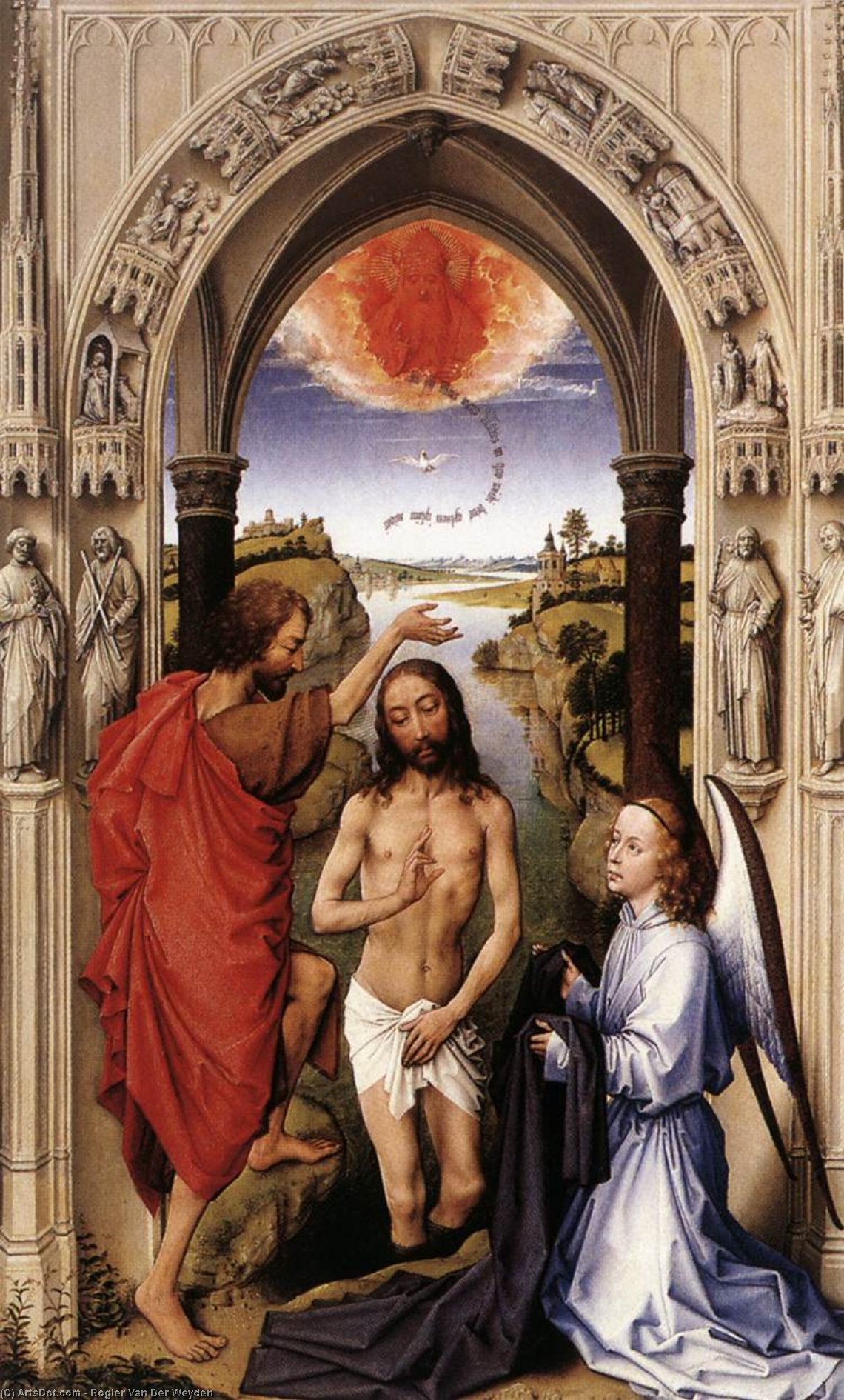
This exquisite central panel from Rogier van der Weyden's *St John Altarpiece*, created in 1455, offers a deeply moving depiction of the Baptism of Christ – a cornerstone moment in Christian theology. Measuring 77 x 48 cm, this oil-on-wood masterpiece exemplifies the pinnacle of Early Netherlandish painting, rivaling the meticulous detail and spiritual intensity found in the works of Jan van Eyck.
Subject & Narrative
The scene unfolds with serene solemnity as John the Baptist bestows baptism upon Christ, partially immersed in crystalline waters. To the right, an angel presents a cloth – a gesture of humility and preparation. The backdrop is dominated by a sweeping landscape bathed in radiant sunlight, symbolizing divine grace and illumination. Van der Weyden doesn’t merely *illustrate* the biblical story; he invites us to witness a sacred event unfolding with profound reverence.
Style & Technique: A Masterclass in Realism
Van der Weyden's style is characterized by an unparalleled attention to detail and a masterful command of oil painting techniques.
Meticulous realism defines every element, from the delicate folds of drapery to the subtle textures of skin and stone. He employed layers of thin glazes (grisaille) built up over time, creating a luminous quality that seems to emanate from within the panel itself. The composition is structured with precise lines and geometric forms – arches, rectangles, and stylized figures – yet softened by atmospheric perspective which creates depth despite the flattened spatial qualities typical of the period.
Impasto techniques are subtly used to highlight key areas, adding tactile richness.
Symbolism & Meaning
The painting is rich in symbolic meaning. The water represents purification and spiritual rebirth, while the cloth offered by the angel signifies humility and service. The radiant sun in the background embodies divine light and God’s presence. Van der Weyden's careful selection of colors – deep reds, vibrant blues, and shimmering golds – further enhances the painting’s symbolic weight and emotional impact.
Historical Context & Artistic Legacy
Rogier van der Weyden (c. 1400-1464), born in Tournai, Belgium, was one of the most influential artists of his time. His work gained acclaim throughout the Netherlands, Italy, and Spain. He distinguished himself through rich coloration, expressive figures, and a unique ability to convey pathos and naturalism. This altarpiece reflects the growing devotional fervor of the 15th century and demonstrates Van der Weyden’s skill in creating emotionally resonant religious imagery. His influence can be seen in subsequent generations of artists who sought to emulate his technical brilliance and spiritual depth.
Emotional Impact & Interior Design
The *St John Altarpiece (central panel)* evokes a sense of profound reverence, peace, and spiritual contemplation. The painting’s rich colors and luminous quality create an atmosphere of tranquility and grace.
- For collectors:
- This piece represents a significant investment in a historically important work by a master artist.
- Its relatively small size makes it suitable for both private residences and smaller gallery spaces.
- For interior designers:
- The painting’s rich color palette complements a variety of décor styles, from traditional to contemporary.
- It serves as a stunning focal point in any room, adding a touch of elegance and sophistication.
This artwork is not merely a visual representation of a biblical scene; it's an invitation to connect with the divine and experience the power of faith.