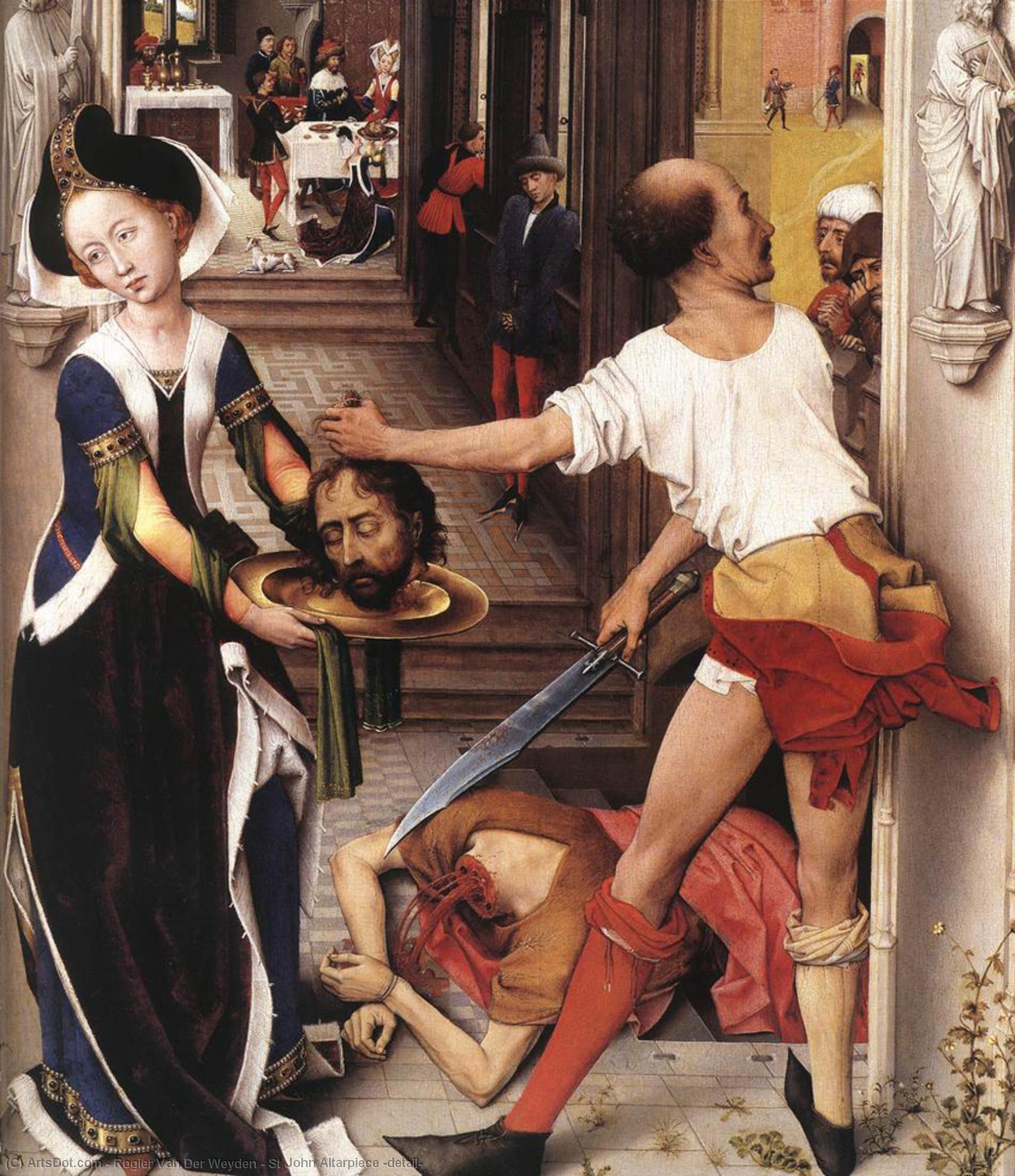
A Study in Grief and Divine Grace: Examining Rogier van der Weyden’s St John Altarpiece
The *Saint John Altarpiece*, completed around 1455-1460, stands as one of Rogier van der Weyden's most profoundly emotive achievements—a testament to his mastery of psychological realism and a cornerstone of Early Netherlandish art. Currently housed in the Gemäldegalerie Alte Meister in Dresden, Germany, this monumental triptych transcends mere depiction; it strives to convey an overwhelming sense of sorrow intertwined with spiritual contemplation, capturing the essence of Christian piety during the Burgundian Renaissance.
- Subject Matter: The altarpiece portrays a dramatic scene depicting Christ’s baptism by John the Baptist in the Jordan River. However, Van der Weyden doesn't simply record an event; he imbues it with palpable emotion—the solemnity of the ritual juxtaposed against the vulnerability of Jesus and the unwavering devotion of Saint John.
- Style: Characteristic of Van der Weyden’s oeuvre is his meticulous attention to detail, achieved through a technique known as sfumato – a subtle blending of tones that creates an illusion of depth and softens contours. This masterful manipulation of light and shadow contributes significantly to the painting's expressive power, conveying both physical realism and psychological nuance.
- Technique: Employing oil paint on oak wood panels, Van der Weyden utilized layering techniques—glazes applied over glazes—to build up color gradually, resulting in luminous hues and remarkable textural richness. The artist’s painstaking craftsmanship is evident in every brushstroke, demonstrating an unparalleled dedication to capturing the subtleties of human anatomy and drapery.
Historical Context: Burgundian Patronage and Artistic Innovation
The altarpiece was commissioned by Philip the Good, Duke of Burgundy—a wealthy patron who championed artistic innovation and fostered a vibrant cultural environment. This commission coincided with a period of significant intellectual ferment in Europe, marked by humanist scholarship and renewed interest in classical ideals. Van der Weyden’s work reflects these influences, incorporating elements of Byzantine iconography alongside Northern European realism to produce an artwork that is both spiritually resonant and aesthetically groundbreaking. The Burgundian court recognized Van der Weyden's genius, propelling him to international acclaim and establishing him as a leading figure in the artistic landscape of his time.
Symbolism: Layers of Meaning Beyond Representation
Beyond its narrative depiction of baptism, the altarpiece is replete with symbolic imagery designed to elevate the viewer’s spiritual understanding. The flowing robes of Christ and John are rendered with exquisite detail, symbolizing purity and divine grace—concepts central to Christian theology. Furthermore, the inclusion of figures like Saint Zachary and Elizabeth underscores the miraculous nature of Jesus' birth, reinforcing the overarching theme of God’s intervention in human affairs. Each element contributes to a complex tapestry of symbolism that invites contemplation and reinforces the altarpiece’s profound emotional impact.
Emotional Impact: Capturing the Soul of Faith
Perhaps most powerfully, Van der Weyden succeeds in conveying the anguish and reverence inherent in witnessing Christ's baptism. The artist’s masterful portrayal of Jesus’ face—characterized by a subtle furrowed brow and melancholic gaze—captures the vulnerability of humanity confronted with divine majesty. This emotive depiction resonates deeply with viewers today, reminding us of the enduring power of art to communicate profound spiritual truths and evoke visceral emotional responses – a legacy that cements Van der Weyden's place as one of the greatest painters of his era.