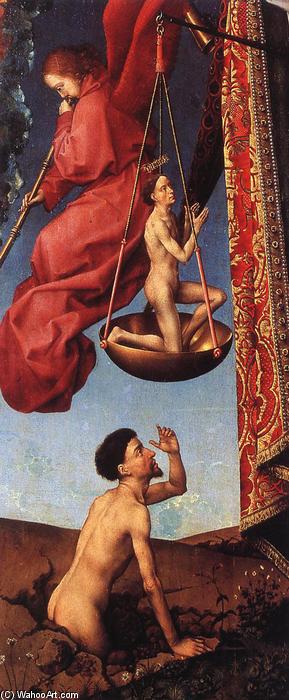
A Symphony of Sorrow and Salvation: Examining Rogier van der Weyden’s ‘The Last Judgment’ Detail
Rogier van der Weyden's 'The Last Judgment,' specifically this arresting detail from the monumental Polyptych housed in Beaune Cathedral, transcends mere depiction; it embodies a profound meditation on mortality and divine justice. Completed around 1446-52 during the Burgundian Renaissance, this painting stands as an unparalleled achievement of Early Netherlandish art—a testament to Van der Weyden’s mastery of emotion and meticulous craftsmanship. Commissioned by Nicolas Rolin, a wealthy patron who envisioned Beaune Cathedral as a beacon of piety, the altarpiece aimed to inspire awe and contemplation within its viewers.
- Style & Technique: Van der Weyden's signature style is characterized by an astonishing realism—a departure from the stylized conventions prevalent in earlier artistic movements. He employed oil paint on wood panel, a technique that allowed for unprecedented luminosity and textural nuance. Observe how he painstakingly renders the folds of drapery, conveying weight and movement with remarkable accuracy. The subtle gradations of color contribute to the overall dramatic effect, capturing the ethereal glow of heaven and the grim darkness of hell.
- Historical Context: The painting reflects the anxieties surrounding death and judgment prevalent in fifteenth-century Europe—a period marked by plague outbreaks and a heightened preoccupation with theological concerns. It draws heavily upon biblical narratives concerning the Second Coming of Christ and the final reckoning before God, themes central to Christian belief at the time.
- Symbolism: The composition itself is laden with symbolic significance. At its core lies the scale held aloft by Jesus Christ—a visual representation of divine judgment, weighing souls against righteousness. The figures surrounding him embody various roles in salvation and damnation, reflecting the complexities of Christian theology. Notably, the kneeling Adam symbolizes humanity’s fallen state, awaiting divine redemption.
- Emotional Impact: Van der Weyden's masterful portrayal captures the visceral experience of confronting mortality—a palpable sense of sorrow mingled with hope. The faces of the figures are etched with anguish and despair, conveying the gravity of their predicament. Yet, amidst the gloom, there’s a glimmer of divine compassion, embodied in Jesus’ gaze and the serene expressions of angelic beings.
Comparative Perspective: Michelangelo's Vision
While Van der Weyden’s approach prioritizes psychological depth and textural realism—a hallmark of Northern European art—Michelangelo’s monumental fresco depicting ‘The Last Judgment’ in the Sistine Chapel embodies a distinctly Roman aesthetic. Unlike Van der Weyden’s restrained palette and meticulous detail, Michelangelo utilized vibrant colors to convey grandeur and dynamism. However, both artists share a fundamental aim: to communicate the profound theological message of divine judgment and eternal salvation—a timeless concern that resonates across cultures and eras.
Beyond Reproduction: Embracing Artistic Legacy
A high-quality reproduction of ‘The Last Judgment’ detail offers an opportunity to appreciate Van der Weyden's artistic genius and immerse oneself in the spiritual atmosphere of fifteenth-century Burgundy. ArtsDot.com presents meticulously crafted reproductions that faithfully capture the painting’s luminosity, texture, and emotional intensity—allowing collectors and interior designers alike to bring this iconic masterpiece into their homes. Explore the collection today!