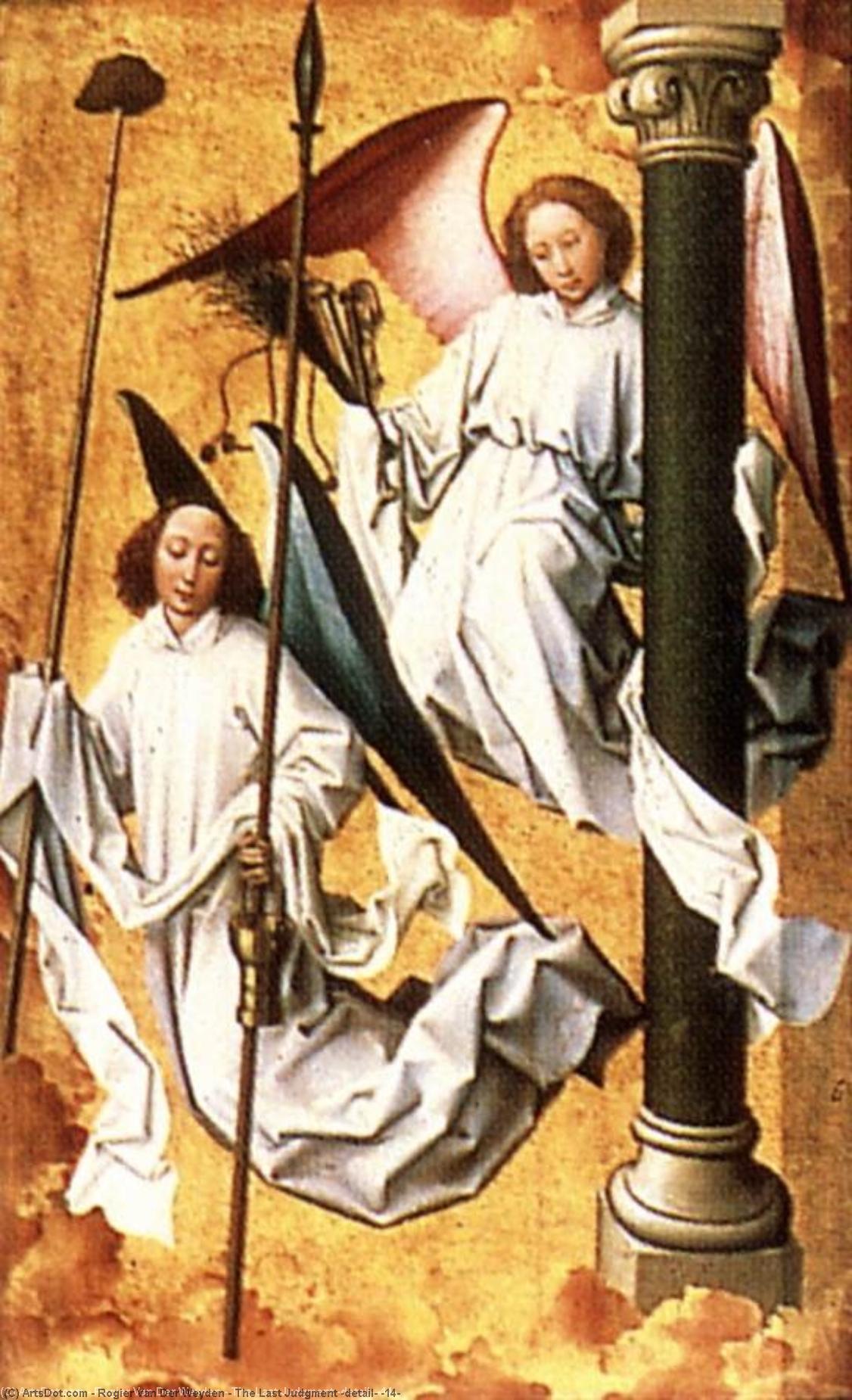
A Descent into Divine Judgment: Examining Rogier van der Weyden’s ‘The Last Judgment’ Detail
Rogier van der Weyden's 'The Last Judgment,' specifically this arresting detail from the monumental Polyptych housed in St. John’s Cathedral, Brussels, stands as a testament to the profound artistic achievements of Early Netherlandish painting—a movement characterized by its meticulous realism and deeply felt spiritual conviction. Painted circa 1446, it's not merely an illustration of biblical scripture; rather, it’s a visceral experience rendered in oil paint on wood panel, capturing the harrowing drama unfolding at the terminus of human existence.
- Style & Technique: Van der Weyden’s style embodies the culmination of Gothic artistic traditions while simultaneously forging new paths toward expressive naturalism. He eschewed the stylized grandeur favored by his predecessors, opting instead for a strikingly sober palette dominated by muted reds and browns—colors deliberately chosen to convey solemnity and sorrow. The artist's mastery is evident in every brushstroke; observe the subtle gradations of light and shadow that sculpt the figures with astonishing accuracy, creating an illusion of palpable depth and texture. This painstaking attention to detail aligns perfectly with the prevailing artistic ethos of his time – a desire to portray God’s majesty alongside humanity’s vulnerability.
- Historical Context: The Polyptych itself was commissioned by Pieter van Artevelde, a wealthy Bruges patrician embroiled in turbulent political disputes. Its creation coincided with a period of intense religious fervor within Europe—the Hussite Wars raged across Bohemia and Poland, challenging papal authority and fueling anxieties about divine judgment. Van der Weyden’s depiction reflects this pervasive spiritual preoccupation, portraying the Last Judgment not as an abstract theological concept but as a terrifyingly immediate confrontation with mortality.
- Symbolism & Composition: The detail focuses on two angelic figures ascending towards the heavens, their wings outstretched in a gesture of divine grace. Beneath them lies a chaotic tableau populated by tormented souls—the deceased awaiting resurrection—each rendered with agonizing realism. Notably, the inclusion of a handbag – an unexpected element within this sacred scene – has been interpreted as a subtle commentary on earthly possessions and anxieties. The central figure holding aloft the crucifix embodies Christian faith and sacrifice, while the arrow piercing through the body symbolizes divine retribution. These symbols resonate powerfully across centuries, prompting contemplation about themes of salvation and damnation.
- Emotional Impact: Van der Weyden’s intention wasn't to inspire awe or admiration; he aimed to provoke empathy and sorrow. The faces of the damned are etched with despair—eyes wide with terror—reflecting the inescapable reality of judgment day. This unflinching portrayal distinguishes ‘The Last Judgment’ from many other religious artworks of its era, prioritizing psychological depth over decorative splendor. It compels viewers to confront their own mortality and grapple with questions of faith and morality.
This exquisite detail offers a glimpse into the artistic genius of Rogier van der Weyden—a painter who elevated realism to new heights while simultaneously conveying an unparalleled sense of spiritual anguish. A reproduction captures not only the visual splendor but also the profound emotional resonance of this iconic masterpiece.