A Masterpiece of Medieval Drama: Unveiling Rogier van der Weyden’s “The Last Judgment”
Rogier van der Weyden's "The Last Judgment," a detail from his monumental 1446 painting, isn’t merely a depiction of biblical narrative; it’s a visceral exploration of human emotion and the weighty consequences of earthly actions. Born in Tournai around 1400, Van der Weyden wasn’t simply a painter; he was a goldsmith first, an experience that instilled within him an unparalleled dedication to meticulous detail and a profound understanding of texture and light – qualities that would become instantly recognizable in his religious works. This background informed every brushstroke, imbuing the scene with a startling realism and emotional intensity rarely seen in contemporary art. The painting itself, originally part of a larger altarpiece commissioned for the Beaune Cathedral, captures a pivotal moment: Christ’s ascension to judge humanity, a scene brimming with sorrow, fear, and the promise of eternal reward or damnation.
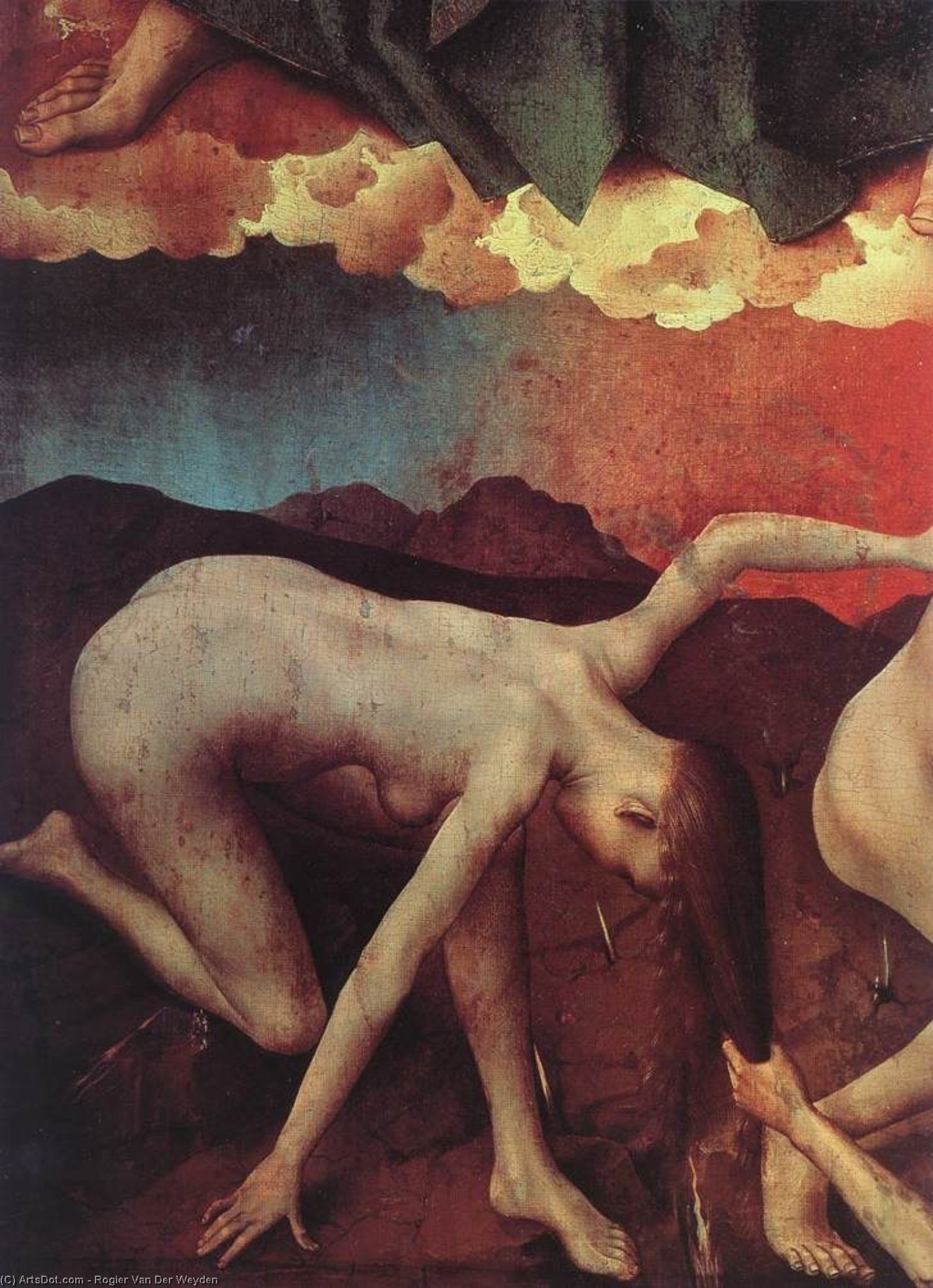
The detail presented here focuses on the immediate aftermath of Christ's descent – a chaotic tableau of souls being drawn towards their final destination. Mary Magdalene kneels at his feet, her face etched with grief and humility, while figures in various states of mourning and witnessing surround them. The composition is dominated by a dramatic interplay of light and shadow, characteristic of Van der Weyden’s style, which he honed through years of studying the works of Jan van Eyck. Notice how the rich reds of Christ's robe contrast sharply with the somber blues and purples that envelop the scene, drawing the eye to the central figure and amplifying the emotional weight of the event. The mountains in the background aren’t merely a backdrop; they create a sense of depth and grandeur, underscoring the scale of this cosmic judgment.
The Language of Emotion: Van der Weyden's Innovative Approach
What distinguishes “The Last Judgment” is not simply its technical brilliance – though that’s undeniable. It’s the raw emotionality conveyed through Van der Weyden’s masterful use of human form. He moved beyond the stylized representations common in earlier religious art, opting instead for a level of naturalism previously unseen. His figures aren't idealized; they are flawed, vulnerable, and deeply affected by the events unfolding before them. The subtle shifts in expression – the furrowed brows, the downcast eyes, the outstretched hands – communicate a spectrum of emotions with remarkable subtlety. This focus on individual psychology was revolutionary for its time, reflecting Van der Weyden’s belief that art should not merely depict religious truth but also evoke a profound emotional response in the viewer.
Consider Mary Magdalene's posture: her head bowed in sorrow, her hands clasped together in supplication. Her expression is one of utter humility and acceptance, suggesting a deep understanding of her own sinfulness. Conversely, the figures on the right – those destined for damnation – are depicted with a sense of anguish and despair. The artist’s ability to capture these nuanced emotional states is what elevates “The Last Judgment” beyond a simple illustration of biblical narrative; it becomes a powerful meditation on human morality and the consequences of our choices.
Symbolism and Historical Context
Beyond its immediate depiction, "The Last Judgment" is rich in symbolic meaning. The presence of Christ as the central figure underscores his role as judge and savior. The figures ascending to his right represent those who will be saved, while those descending to his left are destined for eternal punishment. The inclusion of Mary Magdalene, a symbol of repentance and redemption, highlights the possibility of forgiveness through faith. The painting was created during a period of intense religious fervor in Europe, as the Church sought to reaffirm its authority and combat heresy. Van der Weyden’s work reflects this climate of piety and anxiety, capturing the profound sense of uncertainty and spiritual struggle that characterized the era.
Furthermore, it's important to note that Van der Weyden was a highly sought-after artist in his time, working for wealthy patrons across Europe. His portraits, such as “Portrait of a Lady,” demonstrate his skill at capturing individual character and personality – a talent he brought to bear on this monumental religious work. The influence of earlier works, particularly those of Jan van Eyck and the tradition of depictions of the Last Judgment in Pisa, is evident in Van der Weyden’s composition and style, yet he ultimately forged his own distinctive artistic voice.
Bringing “The Last Judgment” to Your Space: A Hand-Painted Reproduction
ArtsDot offers meticulously crafted hand-painted reproductions of Rogier van der Weyden's "The Last Judgment" detail. Each reproduction is created by skilled artists using traditional techniques, ensuring that the painting’s rich colors, intricate details, and emotional depth are faithfully preserved. Whether you’re an art collector, a design enthusiast, or simply someone seeking to add a touch of timeless beauty to your home or office, our reproductions provide a stunning way to experience this masterpiece firsthand. Explore our collection today and bring the drama and spirituality of “The Last Judgment” into your world.