A Vision of Eternity: The Divine Drama of Rogier van der Weyden
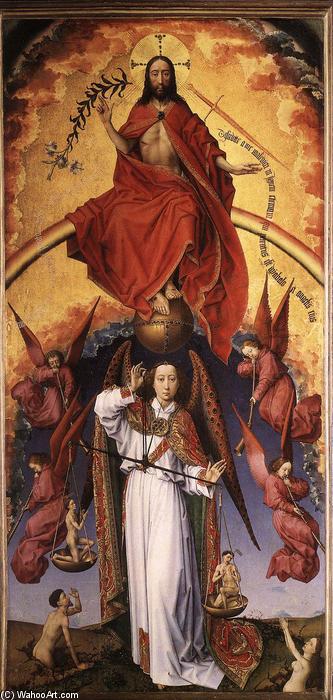
To gaze upon this detail from Rogier van der Weyden’s The Last Judgment is to step through a portal into the profound spiritual intensity of the fifteenth century. Created around 1446, this masterpiece does not merely depict a biblical event; it orchestrates a cosmic reckoning. At its heart lies the figure of Jesus Christ, radiating an unparalleled authority that is simultaneously terrifying and deeply compassionate. He sits at the epicenter of a swirling, celestial vortex, where the boundaries between the divine and the damned blur amidst a sea of angels and demons. For the modern viewer, this fragment serves as a breathtaking window into the Early Netherlandish soul, offering a moment of stillness within a grand, eternal movement.
The technical brilliance of Van der Weyden is nothing short of revolutionary. Moving away from the flatter, more stylized traditions of the preceding era, he embraced an almost unsettling realism. Through the meticulous application of translucent oil glazes—a technique perfected by the masters of his time—he achieved a depth of color and texture that feels palpable to the touch. One can almost feel the weight of the heavy, sculptural folds in Christ’s robes and the delicate, luminous skin of the surrounding figures. Every brushstroke is an exercise in precision, capturing the subtle gradations of light that dance across faces etched with a spectrum of human emotion: from the wide-eyed awe of the saved to the visceral terror of those facing judgment.
Symbolism and the Weight of History
Beyond its aesthetic splendor, this work is steeped in the turbulent atmosphere of its era. The mid-15th century was a time of significant religious and social upheaval in Europe, marked by the shadows of the Hussite Wars and a growing existential anxiety regarding salvation. Van der Wey Weyden translates these historical tensions into visual language. The composition itself acts as a moral compass; the arrangement of figures—some ascending toward the light, others descending into shadow—serves as a powerful allegory for the ultimate destiny of the human soul. Even the inclusion of subtle natural elements, such as the small bird or the distant horse, grounds this cosmic event in a recognizable reality, bridging the gap between the earthly and the divine.
For the discerning collector or interior designer, a reproduction of this detail offers more than just decoration; it provides a focal point of profound intellectual and emotional depth. The painting’s ability to command attention through its dramatic chiaroscuro and intricate detail makes it an exquisite addition to any curated space. Whether placed in a quiet study to inspire contemplation or as a centerpiece in a grand hall to evoke historical grandeur, this work brings the timeless mastery of the Northern Renaissance into the contemporary home, inviting a continuous dialogue between the viewer and the sublime.