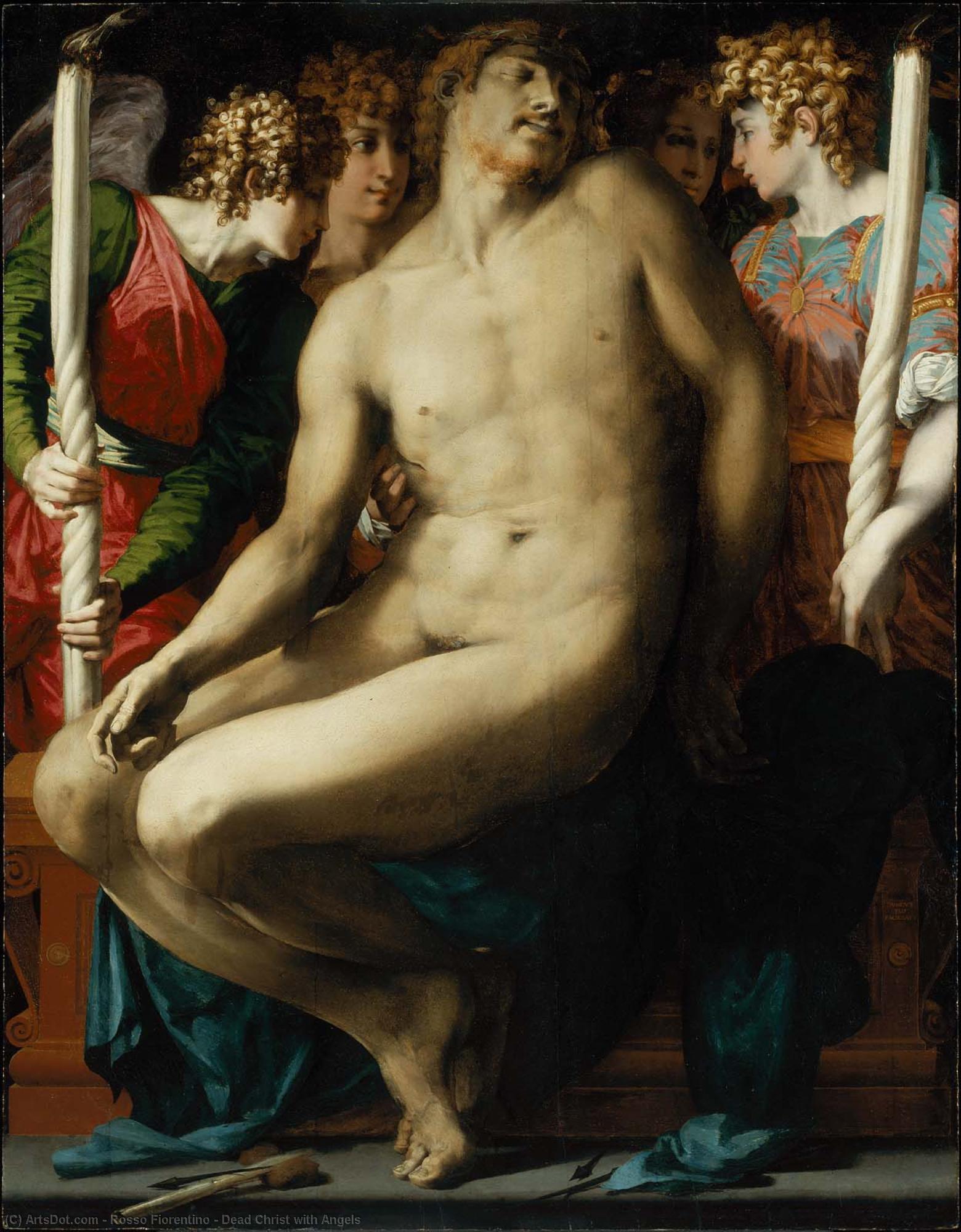
The Lamentation of Christ – A Masterpiece of Mannerist Drama
Rosso Fiorentino’s “Dead Christ with Angels,” painted in 1525, isn't merely a depiction of death; it’s a visceral exploration of grief, faith, and the unsettling beauty of mortality. Created during a turbulent period of artistic transition – bridging the High Renaissance’s classical ideals with the burgeoning complexities of Mannerism – this work stands as a testament to Rosso’s innovative spirit and his willingness to challenge established conventions. The painting resides within the Museum of Fine Arts in Boston, offering viewers an intimate encounter with a scene both profoundly sorrowful and strikingly dramatic.
At first glance, the composition is arresting. A colossal Christ, rendered with an almost unsettling physicality, dominates the canvas. His body, limp and pale, lies prone on a simple linen cloth, devoid of the idealized perfection typically associated with Renaissance depictions of the dead Savior. The angels surrounding him are not serene mourners; they’re figures caught in moments of intense, almost frenzied lamentation. Their gestures are sharp, their faces contorted with grief – a deliberate departure from the more restrained emotional expressions favored by earlier masters. Rosso masterfully employs a limited palette dominated by earthy browns, ochres, and muted reds, creating an atmosphere of somber contemplation rather than overt pathos.
A Bridge Between Eras: Rosso’s Mannerist Vision
Rosso Fiorentino's artistic journey is inextricably linked to the shifting landscape of 16th-century Florence. Trained under Andrea del Sarto, he initially absorbed the master’s meticulous realism and classical influences. However, his time in Rome exposed him to the revolutionary innovations of Michelangelo and Raphael, sparking a desire to push beyond traditional boundaries. This led him to embrace Mannerism – an artistic style characterized by elongated figures, distorted perspectives, and heightened emotional intensity. “Dead Christ with Angels” perfectly embodies these hallmarks. The exaggerated scale of Christ, the subtly unsettling angles of the angels’ limbs, and the deliberate ambiguity of their expressions all contribute to a sense of unease and psychological depth.
The painting's historical context is crucial to understanding its significance. Created during the Sack of Rome in 1527 – a devastating event that marked the end of the High Renaissance and ushered in an era of political instability – “Dead Christ with Angels” reflects the anxieties and uncertainties of the time. The fragmented, emotionally charged depiction of death mirrors the broader sense of chaos and disillusionment experienced by Europe’s artistic elite.
Symbolism and Emotional Resonance
Beyond its formal innovations, the painting is rich in symbolic meaning. The red and orange hues of the angels' garments – a deliberate departure from the traditional white – are often interpreted as representing the fiery passion of Christ’s sacrifice. The absence of overt markers of martyrdom—the wounds or crown of thorns—further emphasizes the painting’s focus on the raw, unadulterated grief surrounding death. The positioning of the spear wound, subtly shifted to the opposite side of the body, adds a layer of complexity and invites contemplation about the nature of resurrection and divine justice.
Furthermore, the scene itself—Mary Magdalene discovering the empty tomb—is laden with theological significance. It speaks to themes of loss, faith, and the promise of redemption. Rosso’s masterful manipulation of light and shadow intensifies the emotional impact, drawing the viewer into the heart of this profound moment of mourning.
A Timeless Masterpiece: Reproduction Possibilities
Reproductions of “Dead Christ with Angels” offer a remarkable opportunity to bring this powerful work into any setting. ArtsDot’s hand-painted reproductions meticulously recreate Rosso Fiorentino's original techniques, capturing the painting’s dramatic intensity and nuanced symbolism. The choice of canvas size allows for versatile integration into various interior spaces – from intimate studies to grand salon settings. The vibrant colors and exquisite detail ensure that this iconic masterpiece continues to resonate with viewers for generations to come.
- Size Options:** Available in 133 x 104 cm, offering a perfect balance of detail and scale.
- Hand-Painted Reproduction:* Each reproduction is meticulously crafted by skilled artists using traditional techniques.
- High-Quality Materials: Printed on archival canvas with fade-resistant pigments for lasting beauty.