The Profound Stillness After the Storm
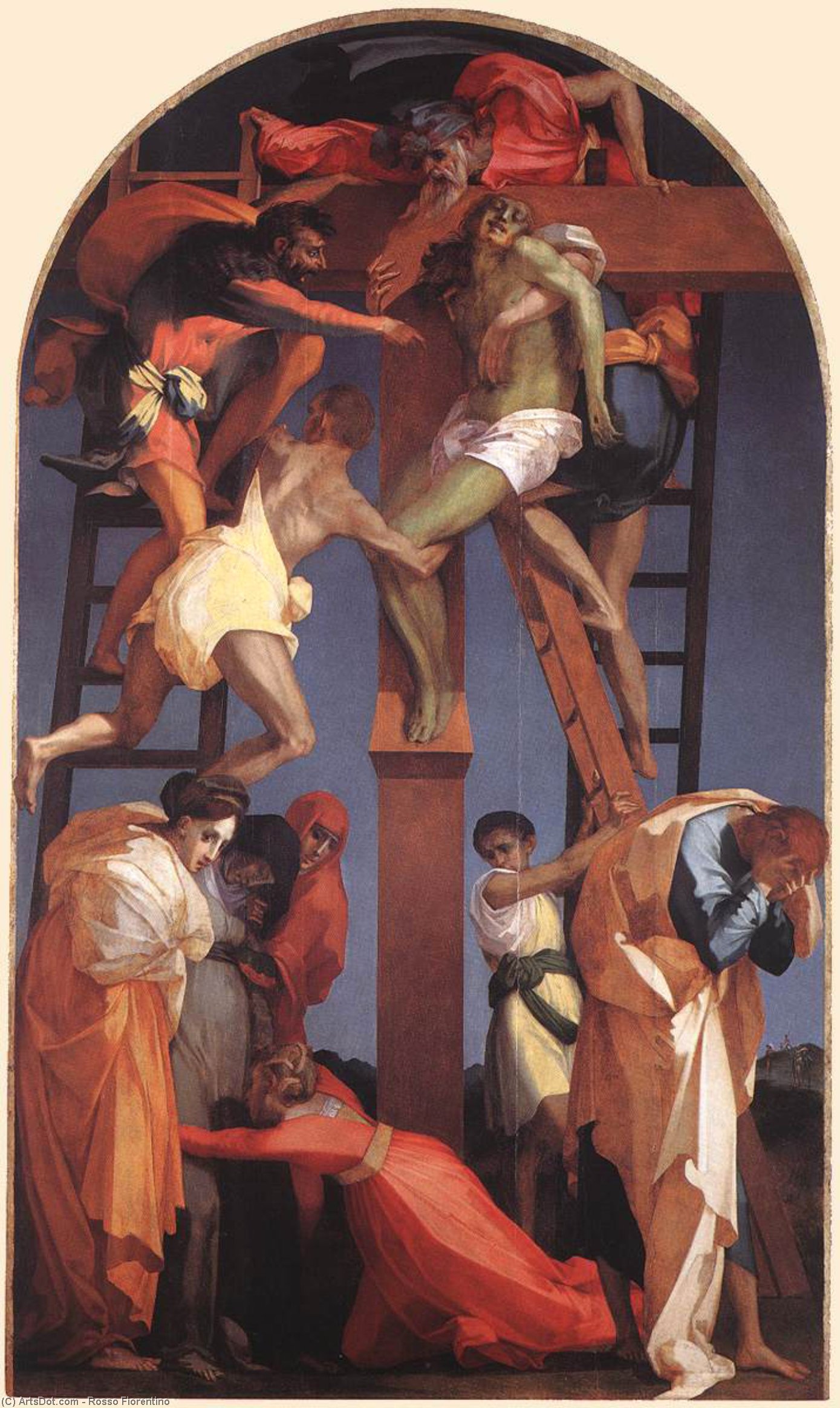
To stand before Rosso Fiorentino's Descent from the Cross is to confront art at its most visceral and emotionally charged peak. This monumental canvas, dating from 1521, does not merely depict a historical event; it captures the agonizing breath held in the moment of ultimate sacrifice. The scene is steeped in the dramatic tension that defined Rosso’s genius—a style that dared to push beyond the serene balance of the High Renaissance into the passionate turbulence of Mannerism. One feels the weight of history, the gravity of divine suffering, rendered with a startling immediacy that seems to pull the viewer directly into the dusty, somber air of Calvary.
Mannerist Drama and Technical Mastery
Rosso Fiorentino, known for his fiery spirit, channeled this intensity into every brushstroke. The composition itself is a masterclass in dramatic arrangement. While the central focus remains on the body of Christ hanging from the cross—a depiction of profound stillness following immense struggle—the surrounding figures are anything but passive. Observe the clustered groups of mourners; their gestures are exaggerated, their anguish palpable. Notice the figure positioned near the ladder in the upper left corner, seemingly caught in a moment of desperate action or contemplation. Rosso employs color and form not just to represent reality, but to amplify emotion. The musculature, the drapery, even the very light seems imbued with an almost feverish energy, characteristic of the Mannerist period's embrace of artifice and heightened feeling.
Symbolism Woven into Suffering
The symbolism within this work is rich and deeply theological. The descent itself speaks to themes of redemption, mortality, and the enduring human capacity for both suffering and devotion. Every individual present—the grieving women, the witnesses, the figures clustered at the base—serves as a reflection of humanity’s relationship with sacrifice. It is a meditation on empathy; we are invited not just to observe the event, but to participate in the collective sorrow. The sheer scale of this piece (375 x 196 cm) demands that it be viewed as an immersive experience, allowing the viewer's eye to wander through the narrative complexity Rosso so meticulously constructed.
Bringing the Drama Home
For those who wish to bring the profound drama and unparalleled artistry of this period into a modern space, acquiring a high-quality reproduction of Descent from the Cross is an act of curatorial devotion. It allows one to possess a piece that speaks volumes about artistic evolution—a bridge between classical idealism and emotional expressionism. The depth achieved by Rosso Fiorentino ensures that this artwork will never feel static; it remains a vibrant, emotionally resonant centerpiece, capable of transforming any room into a space charged with historical weight and sublime artistry.