The
Rosso Fiorentino painting,
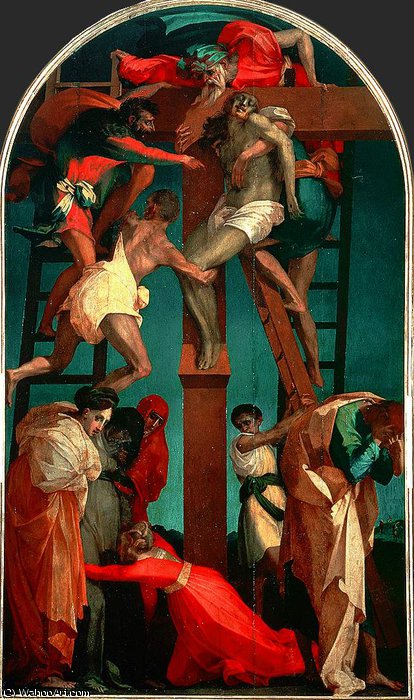
Korsnedtagningen, pinacot, is a remarkable work of art that showcases the artist's skill and mastery of the Renaissance style. Created in 1521, this large-scale oil on panel painting measures 330 x 195 cm and is a testament to the artist's ability to capture the emotional depth of religious scenes.
The Artistic Context
The
Cinquecento Art Movement, which emerged in Italy during the 16th century, played a significant role in shaping the artistic style of
Rosso Fiorentino. This movement, characterized by its use of new techniques in manipulating light and darkness, is evident in the
Korsnedtagningen, pinacot painting. The artist's use of chiaroscuro, a technique that uses strong contrasts between light and dark to create a sense of volume, adds depth and emotion to the scene.
Key features of the painting include the dramatic use of light and shadow, as well as the intense emotions expressed by the figures surrounding the cross. The Pinacot style, characterized by its use of bold colors and dramatic lighting, is also evident in this work.
Comparison with Other Works
The
Korsnedtagningen, pinacot painting can be compared to other works of the Renaissance period, such as the
Crucifixion with Mourners and Sts Dominic and Thomas Aquinas (Cell 37) by
Fra Angelico, which can be found on
ArtsDot.com. This painting, created in 1441, showcases the artist's ability to capture the emotional depth of religious scenes and is a testament to the
Early Renaissance style.
- The use of light and shadow in the Korsnedtagningen, pinacot painting creates a sense of drama and tension.
- The intense emotions expressed by the figures surrounding the cross add to the emotional depth of the scene.
- The Pinacot style, characterized by its use of bold colors and dramatic lighting, is evident in this work.
Handmade oil painting reproductions of the
Korsnedtagningen, pinacot painting can be found on
ArtsDot.com, allowing art lovers to own a piece of history.
The
Korsnedtagningen, pinacot painting is a masterpiece of the Renaissance period and a testament to the skill and mastery of
Rosso Fiorentino. Its dramatic use of light and shadow, intense emotions, and bold colors make it a work of art that continues to inspire and captivate audiences today.